10 Poolside Landscape Design Ideas for 2026
Transform your backyard with our top 10 poolside landscape design ideas. Explore modern, tropical, and xeriscape styles for a stunning outdoor oasis in 2026.
From Drab to Dream. Enhance Your Poolside Experience
Your pool might already be the centerpiece of the yard, but if the space around it feels like a ring of hot pavement and a few tired shrubs, the whole backyard falls flat. That's usually the point where homeowners start saving photos, second-guessing materials, and wondering why some pool areas feel like boutique resorts while others feel unfinished.
The difference usually isn't the pool shell. It's the design plan around it. Good poolside design ideas solve several problems at once. They shape traffic flow, create privacy, control debris, soften glare, add shade, and make the space usable long after a quick swim. They also keep you from making common mistakes, like placing messy plants too close to the water or crowding the deck until nobody can move comfortably.
One practical rule matters in almost every style. A strong pool layout usually keeps about 60% hardscape and 40% softscape, which helps preserve clear circulation and sightlines while still leaving room for privacy planting and shade. That balance also makes it easier to fit features like a fire pit, tanning ledge, or outdoor dining area without turning the yard into a maze.
The ideas below go beyond aesthetics. Each one includes the concept, layout approach, planting direction, material choices, lighting, safety, and realistic trade-offs. And if you want to test these looks before committing to stone, plants, or layout changes, tools like OutdoorBrite can help you visualize them on your own property.
Table of Contents
- 1. Mediterranean Poolside Oasis
- 2. Modern Minimalist Pool Design
- 3. Tropical Paradise Poolside
- 4. Japanese Zen Poolside Retreat
- 5. Rustic Farmhouse Pool Landscape
- 6. Contemporary Resort-Style Poolscape
- 7. Native Plant Wildlife-Friendly Pool Garden
- 8. Modern Industrial Poolside Design
- 9. Transitional Poolside Landscape Blended Styles
- Poolside Design: 10-Style Comparison
- Poolside Design: 10-Style Comparison
- Visualize and Build Your Perfect Poolside
1. Mediterranean Poolside Oasis
Mediterranean poolscapes work best when the house already has some warmth to it. Stucco, cream paint, clay tones, arched openings, or even just sun-washed masonry give this style something to connect to. Without that context, the look can feel staged.
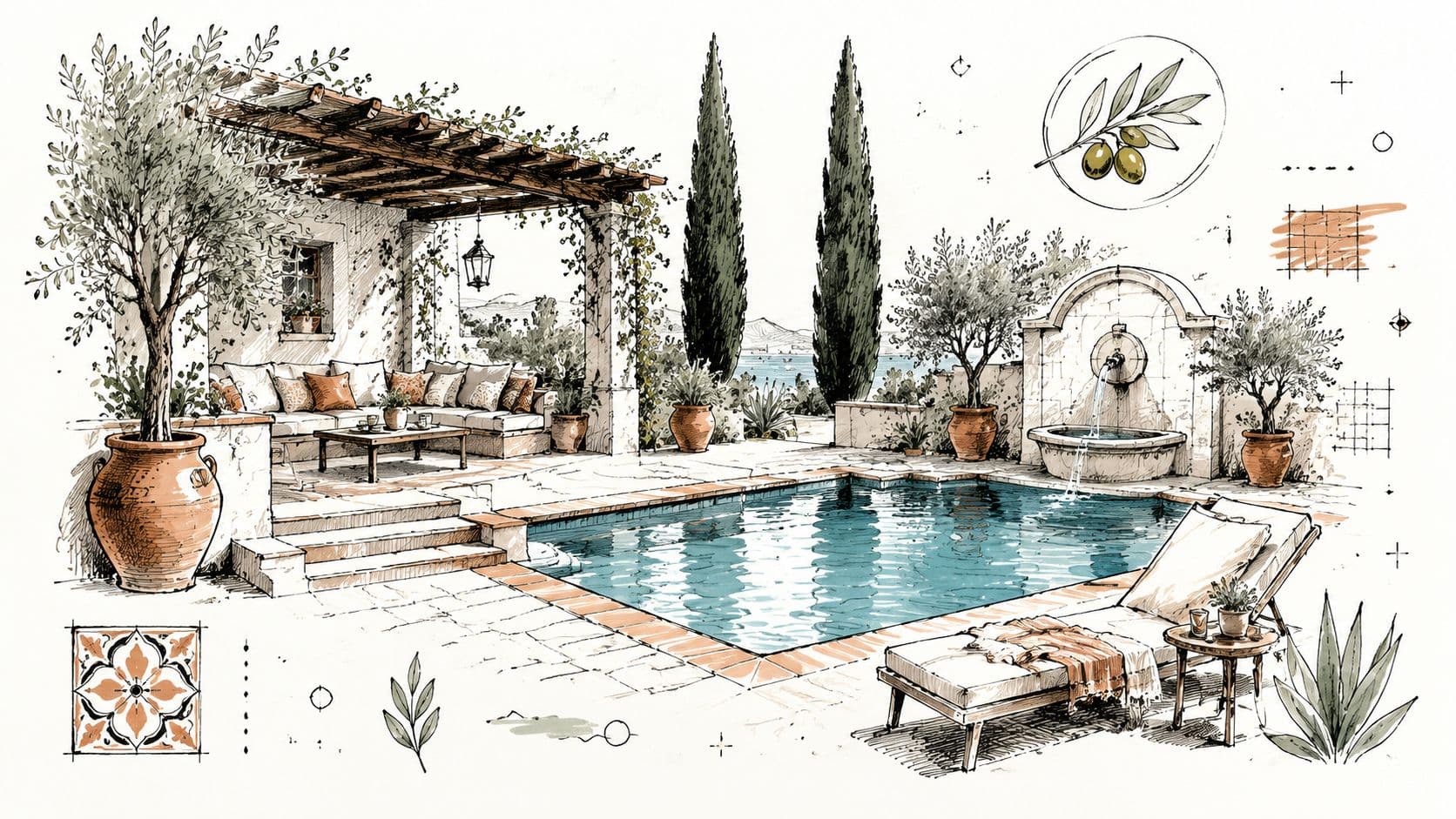
Use this approach if you want the pool area to feel relaxed and refined rather than flashy. I'd build the bones with limestone, tumbled travertine, decomposed granite paths, terracotta planters, and a pergola that throws late-day shade across lounge seating. Olive trees, rosemary, lavender, and ornamental grasses help sell the mood without turning the yard into a theme set.
Layout and materials
Keep the paving generous near the water and move the planting beds farther out. That keeps debris down and preserves the open feeling that Mediterranean spaces need. If you're trying to transform your yard Mediterranean style, focus on textures more than ornament. One old-world urn and a good stone wall do more than five decorative accessories.
Practical rule: Stone around the pool should look better wet and still feel safe under bare feet. If it gets slick or throws harsh glare, it's the wrong finish no matter how pretty it looks dry.
A narrow rill, wall fountain, or spillway can work well here because the sound adds life without overwhelming conversation. Skip plants with constant petal drop near the coping. Bougainvillea looks great in photos, but in many residential settings it becomes a cleanup job.
Planting and comfort
Mediterranean design rewards restraint. Use clipped evergreen structure near dining areas, softer grasses at the perimeter, and larger specimen trees where they can cast filtered shade across seating rather than over the pool itself.
A good real-world version of this style fits homes in Southern California, Arizona, or Florida where warm masonry, drought-tolerant planting, and bright sun already set the tone. In wetter climates, you can still borrow the palette, but the materials need more slip resistance and the plant list needs to be climate-appropriate rather than copied from a resort photo.
2. Modern Minimalist Pool Design
Minimalist design looks easy until you build it. Then you learn that clean lines leave nowhere to hide. Every crooked joint, random plant choice, or bulky chair stands out immediately.
This style suits contemporary homes, flat-roof architecture, and rectangular lots where symmetry can do real work. The layout should feel deliberate from the moment you step outside. Straight runs, aligned furniture, broad paver fields, and a tightly edited planting palette usually matter more than decorative detail.
What makes this style work
Use a short material list and repeat it. Porcelain pavers, smooth concrete, black steel edging, composite decking, and dark planters can create a strong frame for the water. Planting should soften the lines, not compete with them. That usually means architectural grasses, low evergreen mounds, or sculptural accents used sparingly.
One useful planning method is to mock up the whole arrangement digitally before construction. By 2025, 3D design software is projected to become a standard tool for pool installers, especially for immersive client walkthroughs and faster revisions. If you're comparing apps and platforms before you commit, this expert review of yard design tools is a practical place to start.
Lighting and restraint
Lighting should stay quiet. Recessed step lights, narrow beam uplights on specimen plants, and subtle wall washing do more for a minimalist yard than decorative lanterns or oversized fixtures. The water should read as part of the architecture, especially at night.
- Use non-glare finishes: Bright white paving can look crisp in a catalog but brutal in midsummer sun.
- Protect the sightlines: Don't place tall planters where they interrupt views from the house to the pool.
- Add one softening element: A floating bench, slatted screen, or grass mass keeps the space from feeling hard-edged.
The mistake I see most often is overfurnishing. Minimalist spaces need empty space. If every corner gets a chaise, side table, and planter, the design loses the clarity that made it appealing in the first place.
3. Tropical Paradise Poolside
Some poolside design ideas are about control. Tropical design is about immersion. The best versions feel layered, shaded, and slightly secluded, even when the lot isn't huge.
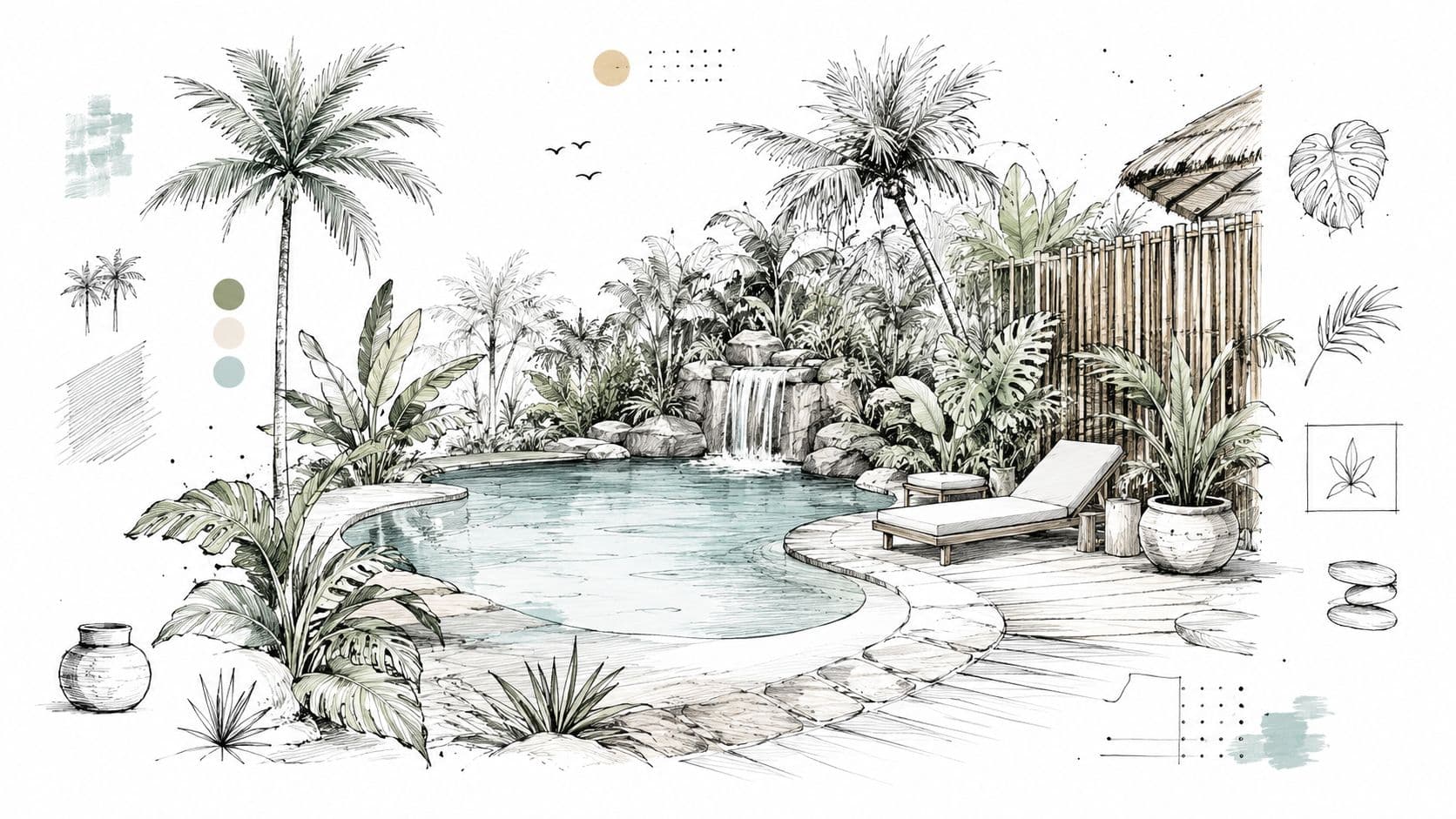
This style works especially well when the pool shape is free-form or softened with rounded corners, boulders, and curving beds. In South Florida, Hawaii, or coastal California, the climate may support a richer plant palette. In cooler regions, you can still create the feeling with hardy look-alikes, container specimens, and denser layering.
Build the layers
A tropical pool garden needs at least three layers to feel convincing. Use low foliage at the front, fuller shrubs and broadleaf plants in the middle, and taller screening or palms at the back. The point isn't just lushness. It's creating enclosure around the pool so the water feels tucked into a private setting.
Naturalistic stone, dark mulch, and wood furniture usually carry the look better than bright stamped concrete. If you add a waterfall or spillway, keep it proportional to the yard. Small suburban pools often look better with a simple sheet fall or compact rock feature than with an oversized faux grotto.
The best tropical yards still leave room to move. If planting crowds the deck edge, the space starts feeling damp and cluttered instead of lush.
For visual inspiration, this short video shows the kind of layered, resort-like mood many homeowners are after:
What to avoid
Tropical styling often goes wrong in two ways. First, homeowners buy plants based on leaf size alone and ignore maintenance, winter survival, and root behavior. Second, they push planting too close to the coping, which means more splash exposure, more debris, and more pruning.
There's also a practical issue around chlorine drift and splash. Existing advice often says to use chlorine-tolerant plants like lavender or rosemary, but the guidance still lacks clear thresholds and reliable buffer-distance data for many ornamentals. In practice, that means keeping sensitive plants out of the immediate splash zone and using tougher material closer to the water.
4. Japanese Zen Poolside Retreat
A Zen-inspired pool area isn't about adding Japanese objects. It's about reducing noise in the design. Every line, stone, plant, and view should feel intentional.
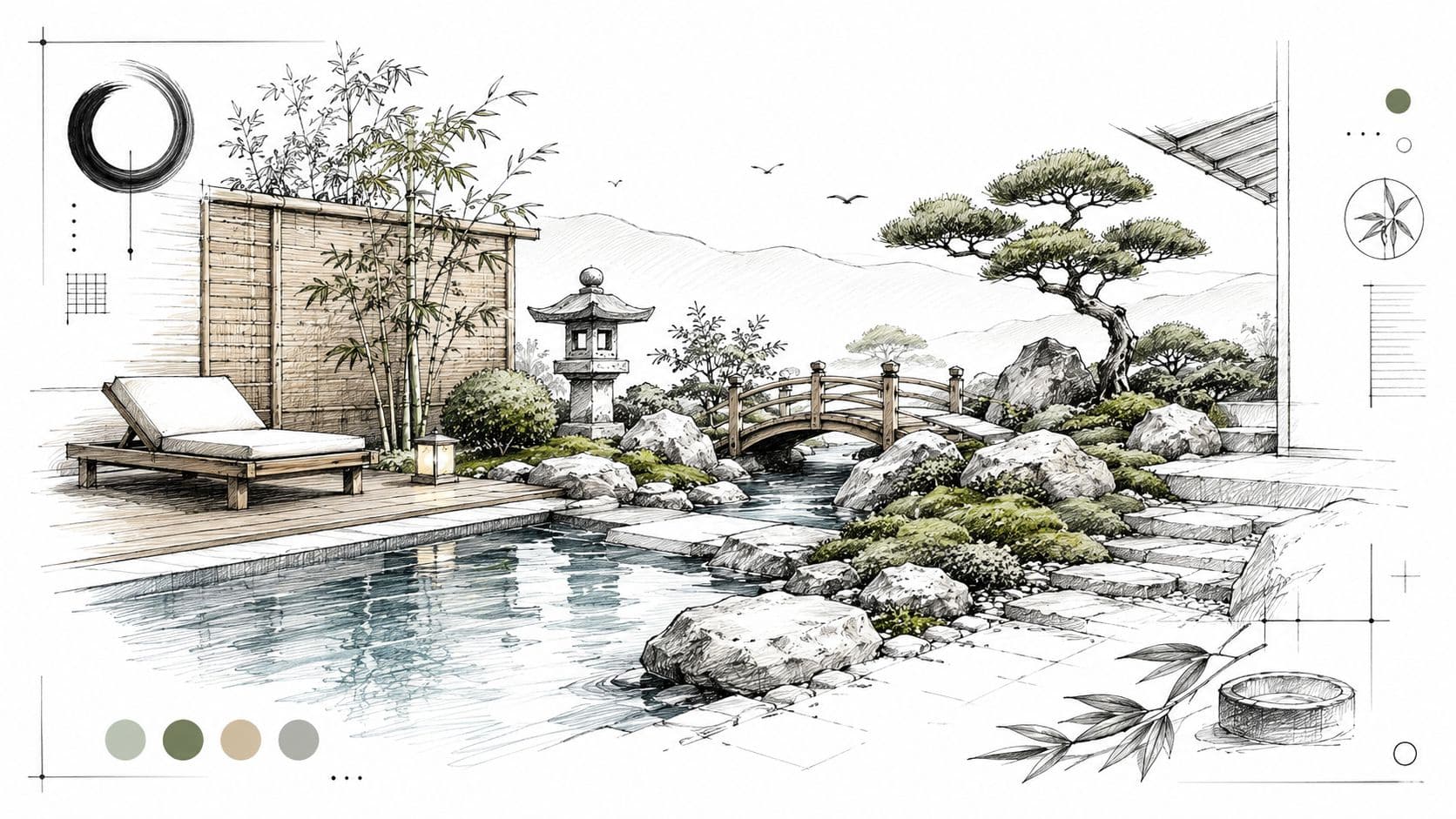
This approach works well for smaller yards because it doesn't rely on abundance. A simple rectangular pool, refined paving, one beautifully placed tree, and a quiet screen of bamboo or clipped evergreens can create more presence than a yard packed with features.
Composition first
Start with asymmetry and balance rather than symmetry and decoration. Place one anchor element, such as a sculptural pine, Japanese maple, or boulder grouping, where it can be seen from the water and from inside the house. Then let open space do part of the work.
Materials matter more than plant count. Smooth concrete, dark-stained wood, gravel, and natural stone all fit if they're used with discipline. Choose a limited palette and repeat it. The eye should move calmly through the space rather than bouncing between textures.
Materials and mood
Water sound matters here. A subtle spout, basin, or overflow edge can add a meditative quality without pushing the design into resort territory. Lighting should stay low and warm, with emphasis on silhouettes and shadows.
- Choose fewer plants: One excellent specimen beats a collection of average shrubs.
- Use odd-numbered groupings: Small clusters tend to look more natural and less forced.
- Avoid crowded décor: Lanterns, bridges, statues, and screens all at once usually cheapen the result.
I'd be especially careful with synthetic “Zen” shortcuts. Fake boulders, bright white pebbles, and too many ornamental accessories miss the point. This style works when the space feels edited, grounded, and quiet.
5. Rustic Farmhouse Pool Landscape
Farmhouse pool design succeeds when it feels honest. Reclaimed-looking wood, weathered stone, and galvanized accents can be charming. A yard stuffed with signs, wagon wheels, and faux barn details usually isn't.
This style fits country properties, newer homes with a softer architectural language, and family yards where the pool area doubles as an everyday hangout. It should feel approachable. Kids should be able to run through it, adults should want to eat dinner there, and nothing should feel too precious.
Keep it warm, not themed
Use broad stone or brushed concrete for the deck, then warm it up with timber beams, simple pergolas, stock-tank-inspired planters, and planting that feels loose but controlled. Hydrangeas, salvia, ornamental grasses, roses, and evergreen screening all work if the mix feels regionally appropriate.
A farmhouse pool area also benefits from visible gathering points. Put a dining table where it catches evening shade, and add a fire feature where wet swimmers can transition into dry social space. That sequence makes the yard feel lived in rather than staged for photos.
A rustic layout can handle wear better than many polished styles. Scuffs, patina, and slight variation often improve the look instead of ruining it.
Family use matters here
This is one of the most forgiving styles for mixed materials. Old brick can meet smooth coping. Wood can sit beside black metal. Vintage-inspired furniture can work next to modern loungers if the color palette stays consistent.
What doesn't work is neglect disguised as rustic charm. Weathered wood still needs treatment. Gravel still migrates. Vintage pieces still need to be safe and stable around wet surfaces. If the pool sees heavy traffic, prioritize easy-clean surfaces and durable upholstery over decorative nostalgia.
6. Contemporary Resort-Style Poolscape
Late afternoon is when this style proves itself. Someone is in the pool, someone else is under shade with a drink, dinner is starting near the grill, and the lighting needs to carry the space well past sunset. A resort-style poolscape has to handle all of that without feeling crowded or overdesigned.
Homeowners usually ask for this look because they want more than a swimming area. They want a yard with the same planning logic you see at a boutique hotel: clear destinations, comfortable transitions, durable finishes, and enough privacy to make the space feel removed from the street and the neighbors.
Start with layout before adding features. I usually divide this style into at least four working zones: a sun shelf or water-entry zone, a shaded lounge zone, a dining or cooking zone, and a quiet edge for evening use. That structure matters more than any single upgrade. If circulation is tight, expensive details only make the flaws easier to see.
Material choice carries the style. Large-format porcelain pavers, limestone, dense concrete, powder-coated aluminum, hardwood accents, and clean coping profiles all fit the look. The catch is heat, slip resistance, and upkeep. Dark surfaces can get punishing in full sun. Honed stone looks refined but may need more frequent cleaning. Wood adds warmth, but around a pool it needs regular care to avoid checking, fading, and mildew. If the house opens to the pool with large glass walls or oversized doors, this guide to luxurious home glass options is useful for aligning the architecture with the outdoor finish palette.
Planting should support the architecture, not compete with it. Use bold forms and controlled massing. Palms work in the right climate, but many resort-style yards look stronger with fewer species and better spacing: clipped hedges for privacy, upright grasses for movement, low structural shrubs near the deck, and specimen plants placed where they frame views instead of dropping debris into the water. In colder regions, use tropical-looking stand-ins that can handle frost rather than forcing a planting scheme that will struggle every winter.
Lighting needs a plan from the start. Good resort lighting is layered: path lights for circulation, subtle wall or step lights for safety, underwater lighting for depth, and focused accent lighting on one or two architectural or planting features. Too many fixtures flatten the space and create glare. Too few leave guests guessing where the steps and edges are.
Safety should stay visible in the design process. Wet traffic paths need texture underfoot. Fire features need enough clearance from towels, furniture, and planting. If children or frequent guests use the pool, reserve space for code-compliant barriers and self-closing gates before the hardscape is finalized. Glass fencing can fit this style well, but only if maintenance and sightline issues are addressed up front.
Budget decisions matter here because this style gets expensive fast. Money is usually better spent on deck geometry, drainage, shade structures, and lighting infrastructure than on stacking multiple water features into one project. One well-placed fire element or spillway usually does more than a collection of smaller extras.
A practical way to build it:
- Set the zones first: Mark furniture footprints and walking routes on the deck before finalizing materials or amenities.
- Choose two or three signature materials: Too many finishes make the space feel busy instead of polished.
- Keep planting away from skimmer-heavy edges: This cuts cleanup and protects the resort look from turning into daily maintenance.
- Plan for evening use early: Run conduit, switch locations, and control systems before hardscape goes in.
- Phase upgrades if needed: Start with layout, surfaces, shade, and lighting. Add secondary features after the yard already works well.
7. Native Plant Wildlife-Friendly Pool Garden
Some homeowners love the idea of native planting but worry it will make the pool feel wild or unkempt. It doesn't have to. Around a pool, native design works best when the planting becomes more natural as it moves away from the deck.
Use natives strategically
Keep the immediate pool edge clean and controlled. Then transition outward into drifts of local grasses, flowering perennials, shrubs, and screening trees that support birds and pollinators. This creates a softer experience without dropping the whole yard into meadow mode right next to the water.
The biggest advantage is fit. Native plants usually handle local sun, rainfall patterns, and soils better than imported ornamentals. That often means less intervention once they're established, especially in regions with summer heat, drought, or periodic storms.
A real-world example would be a Midwestern or Colorado property where the pool terrace stays crisp, but the surrounding beds use regionally appropriate grasses and bloom cycles to create movement and habitat. It can feel modern, not messy, when the edges are well defined.
Maintenance trade-offs
Native gardens still need editing. Seed heads, seasonal cutbacks, and self-sowing behavior all need a plan. If you want strong wildlife value without heavy cleanup near the pool, keep the most active habitat planting away from skimmer-heavy zones and main lounging areas.
- Define the bed lines clearly: Clean edging helps looser planting look intentional.
- Choose lower-litter species near water: Save fluffier seed heads and heavy drop for outer zones.
- Avoid pesticide-heavy routines: That defeats much of the ecological benefit.
This style is especially good for homeowners who want their pool area to feel connected to the broader surroundings rather than carved out of it.
8. Modern Industrial Poolside Design
Industrial poolscapes aren't for every property, but when they fit, they're memorable. Think concrete, steel, dark finishes, brick, linear furniture, and a slightly urban attitude.
This works best with modern architecture, renovated warehouse-style homes, or compact city lots where polished resort softness would feel out of place. The challenge is comfort. Raw material alone can make a yard feel severe.
Strong materials need soft counterpoints
Use poured concrete or large slab paving as the base, then add weathered steel planters, black metal screens, or dark-stained wood to create depth. Brick can work well as a retaining or accent material, especially when the house already includes it.
Planting should be deliberate and restrained. Upright grasses, clipped hedges, agave-like forms in suitable climates, and tough evergreen masses help soften the composition without diluting it. I'd avoid cottage-style blooms here unless you're intentionally creating contrast.
Make it livable
Warm lighting is what saves this style at night. Industrial materials absorb and reflect light differently than pale stone, so amber-toned fixtures, fire elements, and indirect illumination keep the space from turning cold after sunset.
Raw materials still need comfort layered into them. If the furniture is rigid, the surfaces are harsh, and there's no shade, people won't linger no matter how sharp the design looks.
One smart move is to create a sheltered seating nook with a slatted roof or privacy screen. That gives the yard a human-scaled zone within a bold material palette.
9. Transitional Poolside Landscape Blended Styles
Most real backyards don't fit one label cleanly. The house may be traditional, the pool may be contemporary, and the homeowners may like both formal structure and relaxed planting. Transitional design is how you make those preferences work together.
How to blend without making a mess
Start with one unifying element. Usually that's the material palette or the planting structure. For example, you might pair a crisp rectangular pool and modern coping with softer shrubs, classic urns, and a more traditional pergola. Or you might use formal paving with looser, more natural planting beyond the deck.
The key is hierarchy. One style should lead and the other should support. A 50-50 split often reads as indecision. I usually let the architecture and pool shape set the base language, then use furniture, planters, or planting style to bring in the secondary influence.
Best use cases
Transitional design is ideal for renovated homes, mixed neighborhoods, and families where nobody wants a space that feels too stark or too formal. It can also save you from expensive architectural mismatches. Instead of rebuilding everything to fit one style, you bridge between what already exists and what you want next.
- Choose one dominant color story: Warm neutrals or cool grays, but don't fight both.
- Repeat a few materials: Repetition creates cohesion faster than decoration does.
- Define functions clearly: Even blended aesthetics need clean circulation and usable zones.
This is often the most practical route because it lets you update the pool design without pretending the rest of the property doesn't exist.
Poolside Design: 10-Style Comparison
Use this table to compare the ten styles before you start pricing materials or calling installers. Photos can spark ideas, but your key decisions come down to layout discipline, climate fit, upkeep, safety, and how much construction you want to take on.
The cost notes below are illustrative planning ranges based on typical residential poolside upgrades, not fixed market data. Actual pricing shifts with region, site access, drainage work, material quality, and whether you are updating surfaces only or rebuilding the full surrounding area.
| Style | Build Complexity | Typical Materials and Maintenance Load | Likely Result | Best Fit | Main Advantage and Practical Tip |
|---|---|---|---|---|---|
| Mediterranean Poolside Oasis | Medium to high | Natural stone, stucco, terracotta, pergolas, drought-tolerant planting. Moderate upkeep, with periodic sealing and pruning. Illustrative budget example: higher-end finish range. | Warm, classic, resort-style character with strong visual presence | Warm or dry climates, homes with traditional architecture | Strong long-term appeal. Use slip-resistant stone and keep the plant palette restrained so the hard materials stay readable. |
| Modern Minimalist Pool Design | Medium | Large-format pavers, poured concrete, composite decking, linear lighting, limited planting. Lower routine upkeep, but detailing must be precise. Illustrative budget example: moderate range. | Clean lines, open sightlines, uncluttered appearance | Contemporary homes, smaller yards, owners who want a disciplined look | Easier to maintain visually. Plan storage early, because one visible hose reel or pile of toys can undo the effect fast. |
| Tropical Paradise Poolside | High | Large-leaf plants, privacy screening, rich soil prep, irrigation, drainage, and often accent water features. Higher upkeep. Illustrative budget example: moderate to upper range. | Dense, immersive, private pool setting with a vacation feel | Frost-free regions or owners willing to protect tender plants | Excellent screening and mood. In cooler areas, mix tropical-looking hardy plants with a few true specimens in focal spots. |
| Japanese Zen Poolside Retreat | Medium to high | Fine gravel, stone, timber, restrained planting, screens, careful lighting, and exact placement. Moderate upkeep with regular editing. Illustrative budget example: moderate to upper range. | Quiet, ordered, contemplative space that rewards careful detailing | Design-focused owners, smaller retreat-style yards | Calm without excess. Fewer materials usually work better than more, but the ones you choose need to be good. |
| Rustic Farmhouse Pool Landscape | Medium | Tumbled pavers, gravel, wood structures, metal accents, informal planting, practical furniture. Moderate upkeep, especially for wood and loose surfaces. Illustrative budget example: moderate range. | Relaxed, welcoming pool area with a casual family feel | Country properties, renovated older homes, informal entertaining | Forgiving and approachable. Use gravel carefully near the waterline, because it travels and can end up in the pool. |
| Contemporary Resort-Style Poolscape | High | Premium paving, built-in seating, shade structures, outdoor kitchen elements, layered lighting, and polished finishes. Higher upkeep and coordination. Illustrative budget example: upper range. | Hospitality-style pool area suited to entertaining and long outdoor use | Larger properties, frequent hosts, owners wanting multiple use zones | Strong function for groups. Get circulation right first, because crowded furniture layouts make expensive builds feel smaller. |
| Native Plant Wildlife-Friendly Pool Garden | Medium | Regionally adapted planting, habitat layers, permeable surfaces, mulches, and selective screening. Lower water demand, with seasonal maintenance. Illustrative budget example: moderate range. | Natural character, better habitat value, softer edges around the pool | Owners prioritizing ecology, lower irrigation demand, regional identity | Better climate fit over time. Keep bee-heavy flowering plants a sensible distance from the main lounging and entry zones. |
| Modern Industrial Poolside Design | Medium to high | Concrete, steel, dark finishes, simple geometry, bold planters, and architectural lighting. Moderate upkeep, with attention to heat and surface wear. Illustrative budget example: moderate to upper range. | Sharp, urban, graphic appearance with strong contrast | Modern homes, courtyards, clients who like bold materials | Distinctive and compact-friendly. Test surface temperature in full sun before committing to darker deck materials. |
| Transitional Poolside Landscape Blended Styles | Medium | Mixed but controlled material palette, balanced planting structure, adaptable furnishings, and restrained detailing. Upkeep varies by mix. Illustrative budget example: moderate range. | Cohesive pool area that bridges modern and traditional influences | Renovations, mixed architecture, households with different style preferences | Flexible without looking random. Pick one dominant material language so the space reads as intentional. |
| Spa and Wellness Poolside Retreat | Medium | Smooth stone or pavers, privacy screens, aromatic planting, soft lighting, shaded seating, and optional hydrotherapy elements. Moderate upkeep. Illustrative budget example: moderate to upper range. | Calm, private setting focused on recovery, quiet use, and comfort | Owners who use the pool for exercise, reset time, or evening relaxation | High daily usability. Put privacy and acoustics ahead of accessories, because noise and exposure ruin the effect quickly. |
A comparison like this helps narrow the field, but it does not replace a site plan. The best style on paper can still fail if the drainage is poor, the paving gets too hot, or the maintenance level does not match how you live your life.
Poolside Design: 10-Style Comparison
| Style | 🔄 Implementation Complexity | ⚡ Resource Requirements | 📊 Expected Outcomes | Best Use Cases | ⭐ Key Advantages & 💡 Quick Tip |
|---|---|---|---|---|---|
| Mediterranean Poolside Oasis | Medium–High: masonry, pergolas, water features | High: natural stone, terracotta, irrigation; $15K–$50K+ | Elegant, resort-like visual impact; highly photogenic | Luxury homes in warm climates | ⭐ Timeless upscale aesthetic; 💡 use drought‑resistant Mediterranean plants & non‑slip stone coatings |
| Modern Minimalist Pool Design | Medium: precise detailing and finishes | Medium: composite/concrete, integrated lighting; $8K–$25K | Clean, spacious, low‑clutter look with modern resale appeal | Contemporary homes; small–medium spaces | ⭐ Low‑maintenance and scalable; 💡 layer lighting and add select softening plants |
| Tropical Paradise Poolside | High: dense planting, water features, shaping | High: large exotic plants, irrigation; $12K–$40K | Lush, immersive vacation atmosphere with strong privacy | Warm climates, large properties seeking seclusion | ⭐ High visual richness and biodiversity; 💡 install automated irrigation and native alternatives |
| Japanese Zen Poolside Retreat | Medium–High: careful placement and craftsmanship | Medium–High: quality stone, bamboo, trained plants; $10K–$35K | Serene, meditative atmosphere; year‑round subtle interest | Small peaceful retreats, design‑focused owners | ⭐ Deeply calming and unique; 💡 adopt “less is more” and consult a specialist |
| Rustic Farmhouse Pool Landscape | Medium: mix of reclaimed materials and hardscape | Medium: reclaimed wood, stone, weatherproofing; $8K–$28K | Warm, approachable family‑friendly environment | Country properties, family homes | ⭐ Inviting, forgiving aesthetic; 💡 mix old and new materials for freshness |
| Contemporary Resort‑Style Poolscape | High: multi‑zone design, premium finishes | Very High: premium pavers, outdoor kitchens, pro design; $25K–$75K+ | Luxury, high usability, strong resale uplift | Luxury properties, heavy entertainers | ⭐ Maximizes outdoor living value; 💡 invest in quality materials and plan traffic flow |
| Native Plant Wildlife‑Friendly Pool Garden | Medium: ecological planning and phasing | Low–Medium: native plants, rain gardens; $6K–$20K | Eco‑responsible landscape that supports wildlife and lowers water use | Eco‑conscious homeowners, drought areas | ⭐ Low water/maintenance long‑term; 💡 research region‑specific natives and reduce lawn areas |
| Modern Industrial Poolside Design | Medium: structural elements and finishes | Medium: steel, concrete, specialty lighting; $9K–$30K | Bold, urban statement with durable materials | Urban properties, modern architecture | ⭐ Durable, distinctive look; 💡 soften with targeted plantings and warm lighting |
| Transitional Poolside Landscape (Blended Styles) | Medium–High: careful balancing of elements | Medium: varied materials and phased work; $10K–$35K | Personalized, broadly appealing design that avoids trends | Suburban homes, eclectic tastes | ⭐ Highly customizable and buyer‑friendly; 💡 establish a unifying palette first |
| Spa and Wellness Poolside Retreat | High: integrated spa systems and privacy elements | Very High: hot tubs, saunas, mechanical systems; $20K–$60K+ | Holistic wellness environment; high perceived luxury | Wellness‑focused luxury homes | ⭐ Promotes health and relaxation; 💡 layer quiet zones and aromatic plantings for therapy |
Visualize and Build Your Perfect Poolside
The best poolside design ideas aren't just attractive. They fit the architecture of the house, the way your family uses the yard, and the maintenance level you're willing to live with. That's why two pool areas with the same budget can end up feeling completely different. One gets planned as a real outdoor room. The other gets filled in piece by piece.
If you're deciding between styles, start with function before aesthetics. Ask where people will enter, where they'll dry off, where they'll sit in late afternoon, and what the view looks like from inside the house. Then choose the style that supports those answers. Mediterranean and farmhouse schemes usually feel warm and social. Minimalist and Zen layouts feel calmer and more controlled. Tropical and resort-style plans create immersion. Native and transitional designs often solve the hardest real-world sites because they're more flexible.
Renovation is now a major part of the pool market, and that matters for homeowners with an existing pool that feels dated or underdesigned. You don't need to start over to get a better result. Updating the deck material, shifting planting farther from the splash zone, adding shade, improving lighting, and carving the yard into distinct use areas can completely change how the space functions. For climate-specific ideas and site planning considerations in the Southwest, this Prescott pool planning guide is a useful reference point.
Visualization tools help at this stage because pool designs are hard to judge from material samples alone. A paver that looks perfect in hand may feel too bright around water. A privacy hedge may block more view than you expected. A pergola may improve comfort in one spot and darken another. Seeing concepts on your actual yard removes a lot of guesswork.
That's where OutdoorBrite fits naturally. You can upload a photo of the pool area, test styles like modern, tropical, Mediterranean, or Zen, and compare layouts, plant groupings, and material directions before you hire out the work. If you're balancing several ideas at once, OutdoorBrite Money is one relevant option for exploring concepts without committing to a full construction plan too early.
The goal isn't to copy a resort photo. It's to build a poolside space that feels right on your property, in your climate, with your habits. Once the layout, materials, and planting strategy line up, the whole backyard gets easier to use and easier to enjoy.
If you're sorting through layouts, plant palettes, or shade ideas and want to see them on your own yard first, OutdoorBrite Money can help you generate realistic poolside concepts from a photo so you can compare directions before spending on materials or installation.
See your yard reimagined
Start creating