What Planting Zone Is Charlotte NC a Complete Guide
What planting zone is Charlotte NC? Charlotte is USDA Zone 8a. Learn what that means, frost dates, microclimates, and the best plants for your garden.
Charlotte, NC is USDA Hardiness Zone 8a on the 2023 map, with average annual extreme minimum winter temperatures of 10°F to 15°F. If you've been standing in a nursery aisle this weekend trying to match plant tags to an older list from a neighbor, that updated zone number is the place to start.
Charlotte's answer matters because a zone label isn't garden trivia, it's the baseline for what can survive local winter cold. From there, the work is turning that number into plant choices, frost dates, and a yard plan that fits your exact spot.
Table of Contents
- What Planting Zone Is Charlotte NC Right Now
- How USDA Hardiness Zones Actually Work
- Why Charlotte Moved From 7b to 8a in 2023
- Charlotte Frost Dates and Growing Season Length
- Microclimates That Shift Your Effective Zone in Charlotte
- Picking Plants and Building a Charlotte Planting Calendar
- Local Resources to Confirm Your Zone and Plan With Confidence
What Planting Zone Is Charlotte NC Right Now
If you're shopping for plants in Charlotte this weekend, the current answer is USDA Hardiness Zone 8a. That means the city's official winter baseline is the 10°F to 15°F range, according to the 2023 USDA Plant Hardiness Zone Map, which is the standard reference for winter survivability across the country. Charlotte's current zone classification is the number to trust when a plant tag and an old neighborhood handout don't agree.
That one label helps you sort a lot of garden questions quickly. A perennial marked for 8a has a much better chance of returning after winter than a plant rated only for warmer conditions, while a cold-tender shrub may still need extra protection or a sheltered site. The key is that the zone tells you about minimum winter cold, not whether a plant will like your soil, your sun, or your watering habits.
Practical rule: use the zone to answer “will this plant survive winter here,” then use your site conditions to answer “will this plant actually thrive in my yard.”
Older Charlotte garden guides still refer to 7b, which is why the number on a plant label can feel like it belongs to a different city. The best way to move past that confusion is to start with the current map, then layer in frost timing and yard microclimates. For a deeper look at a plant family that often confuses Charlotte gardeners, see this guide to gardenias surviving winter.
How USDA Hardiness Zones Actually Work
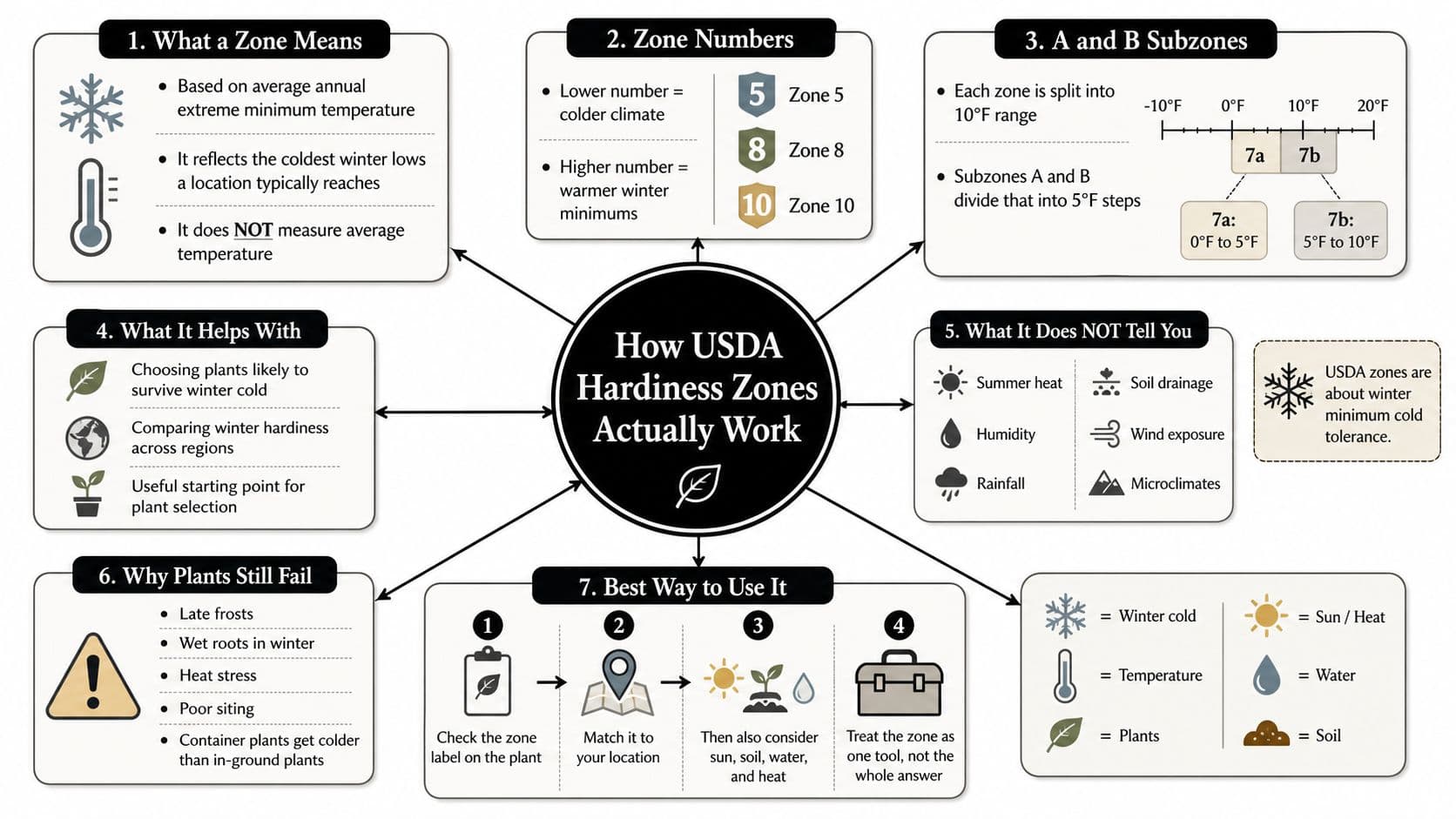
A USDA hardiness zone is basically a survival thermostat for plants. It tells you the average annual extreme minimum winter temperature for a place, and the USDA builds the map from long-term climate data rather than from a single cold snap or a mild winter. In Charlotte's case, that zone is 8a, which puts the city in the 10°F to 15°F winter minimum band.
That matters because a plant's cold tolerance is different from its heat tolerance. A shrub can look fine all summer, then fail after one hard winter if it was planted outside its hardiness range. The zone doesn't measure summer heat, rainfall, drainage, or how often a yard stays wet, so you still need to think beyond the number on the tag.
USDA zones are split into halves, the “a” and “b” designations. The halves help gardeners distinguish between nearby temperature bands, which is why a move from 7b to 8a is meaningful even though it sounds small. For a plant label, that means an 8a plant should be a safer bet in Charlotte than a plant that tops out at a warmer zone.
If you want to confirm the exact zone for a specific address, the USDA interactive map is the authoritative source. Citywide Charlotte is broadly mapped as 8a, but one property can still behave a little differently from the next.
The easiest way to use the number is simple. If a plant can't tolerate the local winter minimum, it's a gamble. If it can, you still need to check light, soil, and drainage before you buy.
Why Charlotte Moved From 7b to 8a in 2023
Charlotte's move from 7b to 8a in the 2023 USDA map is more than a chart update. It reflects a warmer winter baseline in the city's official hardiness classification, and it changes what gardeners should treat as safely hardy versus marginal. The update also means a lot of older planting advice around Charlotte needs a fresh read, because many guides still repeat the older zone.
The practical takeaway is straightforward. Plants that once sat on the edge of survivability for Charlotte now have a stronger case for inclusion, especially perennials, shrubs, and trees that were borderline under the older map. At the same time, frost-sensitive plants still aren't immune to cold, so “warmer zone” doesn't mean “no winter risk.”
One useful way to think about the shift is this. Under the old map, a gardener might have avoided a plant because the winter minimum looked too risky. Under the current map, that same plant may be worth trying, especially in a protected spot. The zone change doesn't guarantee success, but it does widen the list of realistic choices.
Charlotte gardeners should treat old zone references as a clue, not a final answer.
The 2023 map also uses a newer climate window than the older USDA map, which is why the classification better reflects recent winter patterns. For Charlotte, that's a reason to revisit old plant lists, old nursery notes, and even the labels you saved from last year's purchases. If your gardening decisions were built around the old 7b assumption, it's time to update them to 8a.
Charlotte Frost Dates and Growing Season Length
Charlotte's planting zone tells you what can survive winter. Frost dates tell you when tender plants can safely go outside, and that's the part many first-time gardeners mix up. In Charlotte, the average last spring frost falls around March 29 to April 5, and the first fall frost usually arrives around November 3 to November 5, giving the city roughly 214 to 221 frost-free days. Charlotte's frost calendar gives you the seasonal window that makes summer gardening possible.
That long frost-free stretch is why Charlotte can handle both cool-season and warm-season planting. Cool-season crops can get an early start in spring and a second run in fall, while heat-loving plants have a long summer runway after the risk of frost passes. The zone and the frost calendar work together, but they answer different questions.
What to use each date for
| Milestone | Average Date Window | What It Means |
|---|---|---|
| Last spring frost | March 29 to April 5 | Wait to plant tender annuals and warm-season vegetables outdoors |
| First fall frost | November 3 to November 5 | Plan for harvest, protection, or bringing tender plants in before cold returns |
If you're comparing Charlotte to other regions, a climate guide for another state can still help you think through timing, even if the dates aren't transferable. For example, this resource on when to plant trees in Arizona shows how local climate changes the planting calendar from place to place.
A single yard can still run a little ahead or behind the city average. Warm walls, paved areas, and sheltered corners often let gardeners push planting sooner, while low spots can stay colder longer. For a nearby city reference point, you can also find your Sacramento growing zone and compare how different climates force different calendars.
If you want a simple rule for the weekend, use the frost dates for tender plants and the zone number for winter survival. That keeps you from planting too early and from rejecting perfectly good plants that can handle Charlotte's winter minimums.
Microclimates That Shift Your Effective Zone in Charlotte
Charlotte's citywide 8a label is useful, but it doesn't describe every yard. A sunny front bed near brick can behave warmer than a shaded side yard, and a low, damp pocket near a drainage line can stay colder than the rest of the property. The plant zone is the starting point, not the finish line.
The main site factors to watch
Urban heat matters first. Pavement, masonry, and closely packed buildings hold warmth and release it slowly, so inner-city spaces often stay milder overnight than open lots. On the other hand, a yard with more exposure to wind or a clear shot of cold air can lose that advantage quickly.
Elevation and slope change the picture too. Higher pockets and open western exposures can feel a bit cooler, while low areas can trap cold air and collect frost. That's why two gardens a mile apart can have different results with the same plant.
Soil and sun also change how a plant experiences winter. Well-drained soil sheds cold wetness faster than soggy ground, and a south-facing spot usually gets more winter sun than a shaded bed. Those little differences affect root health and cold stress, even when the map says both yards are in the same zone.
A protected corner can let you try a plant that would struggle in the open, but only if the rest of the site still matches that plant's needs.
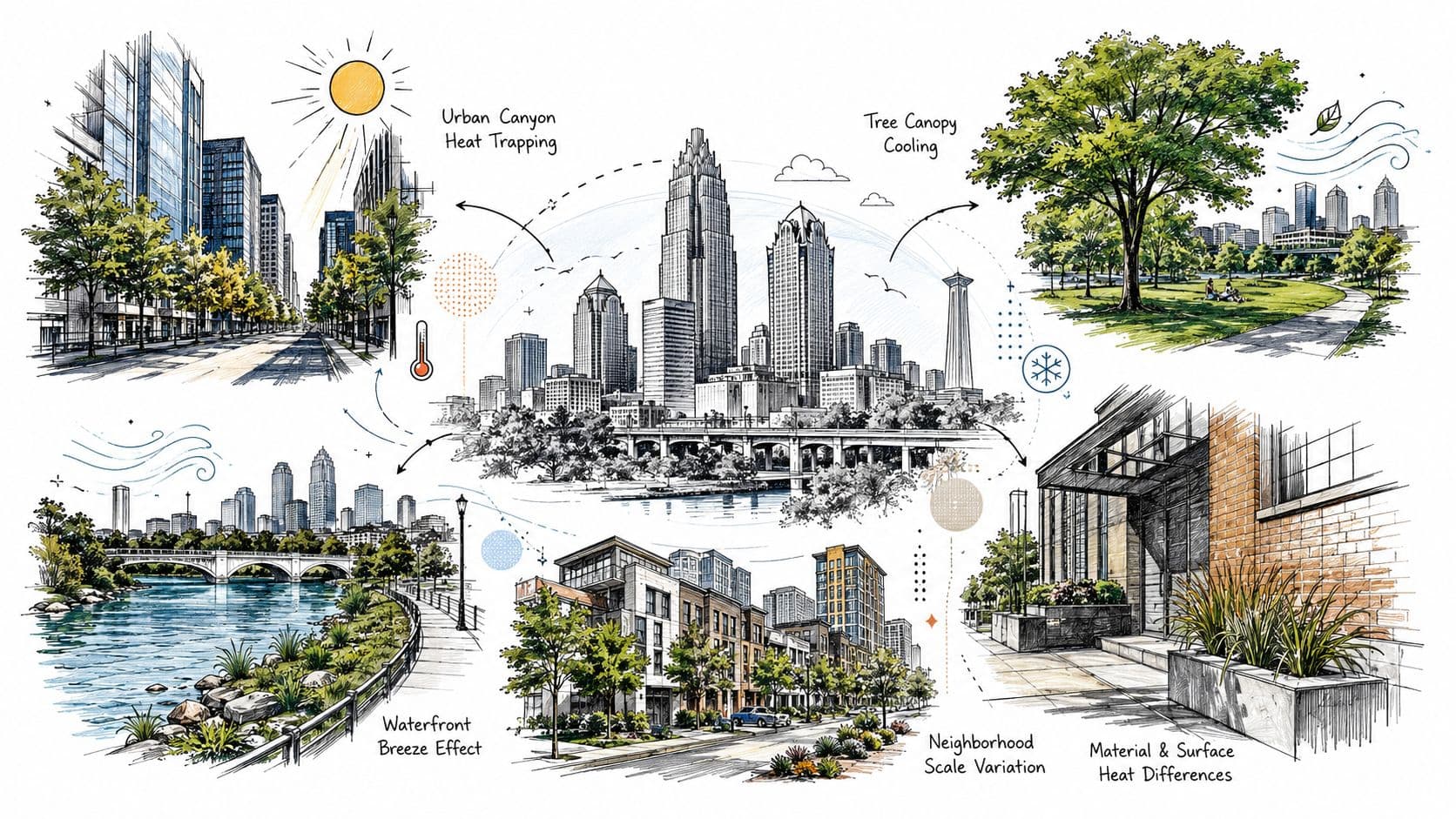
Before you buy, walk your yard at two different times of day and notice where frost lingers, where snow or ice disappears first, and which beds stay soggy after rain. That habit helps you translate a citywide zone into a real planting plan. In Charlotte, the map says 8a, but your own yard may feel a little cooler or warmer depending on those details.
Picking Plants and Building a Charlotte Planting Calendar
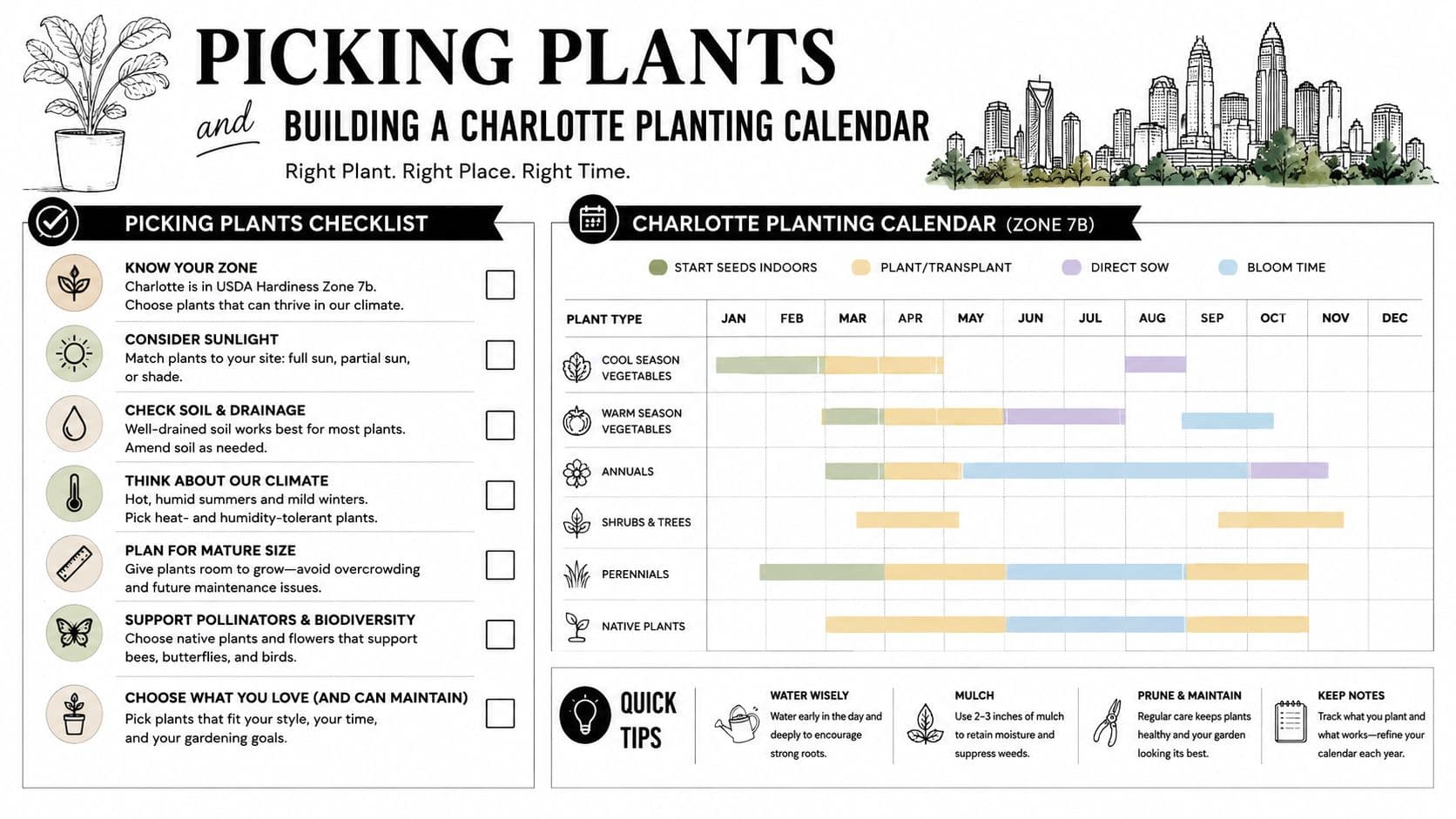
The easiest Charlotte plan is to start with plants that match 8a, then match planting time to the frost window. That means picking perennials, shrubs, and trees that won't resent winter, while saving tender annuals and warm-season vegetables for after the last frost. If you want a fast way to organize your notes, this is the same stage where many homeowners use the best garden design software to sketch beds before buying anything.
What tends to fit Charlotte well
- Perennials: Choose options labeled for 8a or colder if you want them to return after winter.
- Shrubs: Favor hardy types that can handle Charlotte's winter minimum, then place weaker ones in sheltered spots.
- Trees: Match the tag to the zone first, then check mature size and root space before planting.
- Edibles: Use frost timing to separate cool-season crops from warm-season crops, since the calendar matters as much as the zone.
- Tender annuals: Wait until after the last frost window to set these out, or keep them protected if you plant early.
A simple calendar helps more than a complicated one. In early spring, cool-season crops and hardy plants can go in while the soil is workable. After the last frost window, shift to tomatoes, peppers, annual flowers, and other frost-sensitive choices. As fall approaches, turn back toward cool-season crops and get protection ready for anything borderline.
For cleanups or removals that create a fresh planting bed, some regional guides can still be useful even if the climate is different. A practical example is this resource on tree removal for North Atlanta landscapes, which can help you think through site prep and replacement planning.
The best Charlotte planting calendar doesn't chase a perfect date. It uses the zone for survivability, the frost window for timing, and the yard itself for final judgment. That combination keeps you from planting too early, and it keeps you from giving up on plants that are a good fit.
Local Resources to Confirm Your Zone and Plan With Confidence
The first place to check is the USDA interactive Plant Hardiness Zone Map, because it's the official source for zone confirmation by address. If you want Charlotte advice that fits local soils, local pests, and regional weather patterns, the North Carolina Cooperative Extension is the next stop. For individual plant decisions, reputable plant databases can help you compare cold tolerance, sun needs, and mature size before you buy.
If you're still unsure whether a plant belongs in your yard, use a planning tool before you dig. Visualizing the bed first makes it easier to spot spacing mistakes, awkward shade patterns, and spots that need a tougher plant than you originally picked. That kind of preview is especially useful when you're comparing a few different design ideas for the same space.
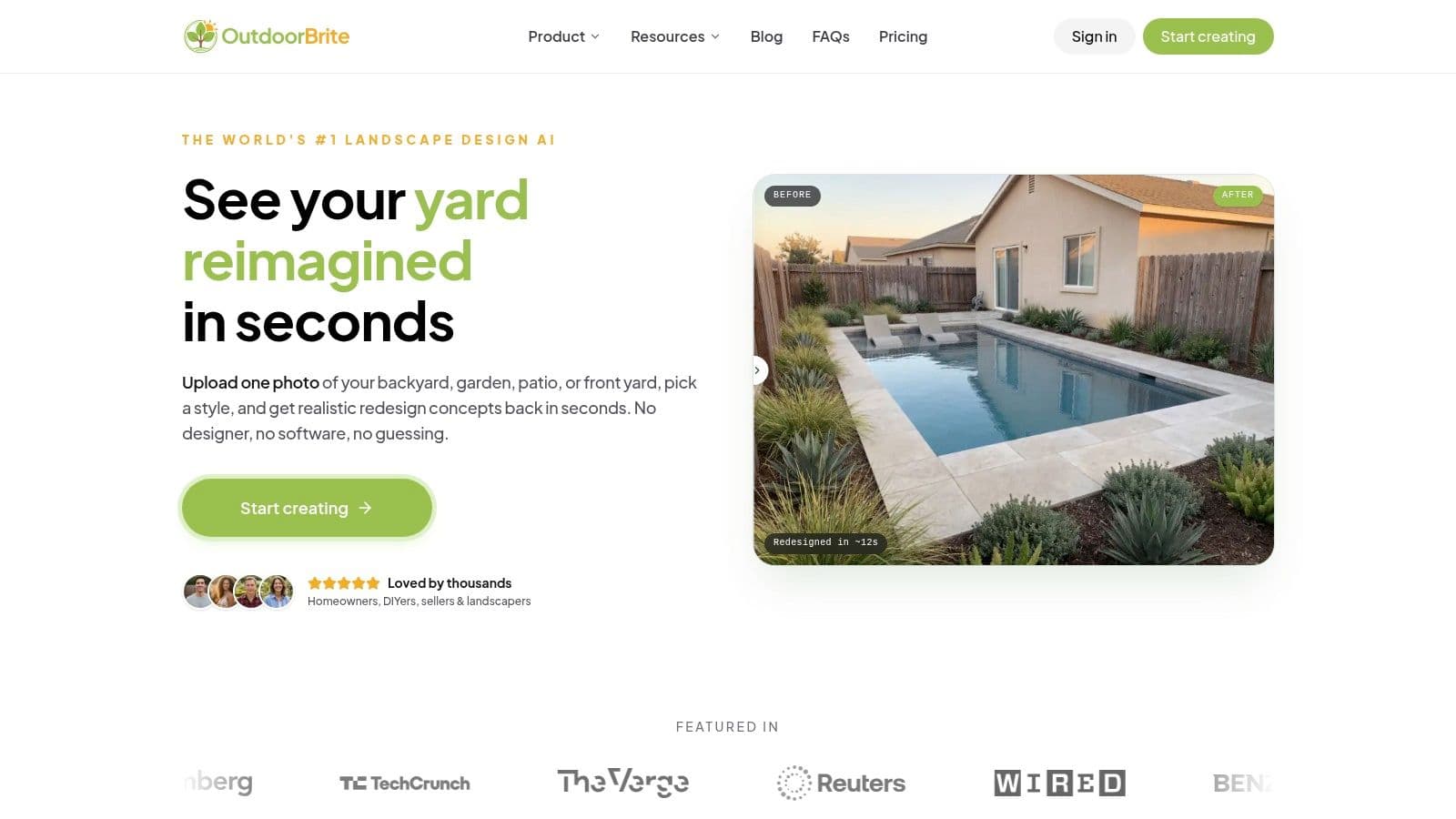
A smart Charlotte checklist is simple. Confirm your exact zone, check your frost dates, look at your yard's sun and drainage, then choose plants that fit all four. If you want help turning those pieces into a visual plan you can use at home, visit OutdoorBrite Money and test your ideas before you commit. It's a practical way to move from plant tags and map numbers to a garden plan you can trust.
See your yard reimagined
Start creating