Cost of Installing Patio Pavers: The Real Breakdown
Understand the true cost of installing patio pavers in 2026. Compare materials, labor vs DIY, and hidden site-prep expenses to budget smarter.
Most homeowners pay about $8 to $25 per square foot to install a standard patio, while premium natural stone can reach around $50 per square foot. For a typical project, that puts the cost of installing patio pavers anywhere from a manageable improvement budget to a major outdoor construction expense.
You may be looking at a backyard that seems straightforward: a level patch of lawn, a set of patio chairs, and enough room for a table. Then the first contractor quote arrives, and the number feels disconnected from the paver prices you found online. The difference usually isn't a mistake. Online prices often describe materials or an ideal site, while a real proposal includes excavation, base construction, grading, delivery, cutting, compaction, labor, and cleanup.
The useful question isn't only, “What do patio pavers cost?” It's, “What conditions will make my installation cheaper or more difficult?” That distinction helps you compare bids fairly and decide where to spend, where to simplify, and where cutting costs will create problems later.
Table of Contents
- Why Your Patio Quote Varies So Much
- Material Costs by Paver Type
- Labor vs DIY Installation Costs
- Hidden Site Conditions That Increase Price
- Sample Project Budgets for a 400 Sq Ft Patio
- Smart Ways to Reduce Installation Costs
Why Your Patio Quote Varies So Much
A backyard can look ready for a patio: open lawn, reasonable access, and enough room for outdoor furniture. Then a contractor checks the slope, probes the soil, measures the route from the driveway, and sends a quote far above the paver prices found online. That gap usually reflects site work, not an inflated material markup.
Interlocking pavers may cost about $3 to $6 per square foot for materials alone, while professional installation can add about $4 to $11 per square foot, or $50 to $80 per hour, according to HomeAdvisor's brick paver patio cost guide. A broad installed benchmark is $8 to $25 per square foot, with premium natural stone projects reaching around $50 per square foot.
What an installed bid actually includes
A contractor's proposal may cover all of the following:
- Layout and measurement: The crew sets finished elevations, borders, drainage slopes, and material quantities.
- Excavation: Soil is removed to make room for the structural base, bedding layer, and pavers. Rocky soil, buried concrete, or roots can add time and disposal costs.
- Base preparation: Gravel or crushed stone is installed and compacted so the patio can support weight without uneven settling.
- Bedding and placement: The installer levels the bedding material, places the pavers, makes cuts, and keeps joints consistent.
- Edge restraint and joint stabilization: These details hold the paved field in place and limit shifting, weed growth, and joint loss.
- Delivery and cleanup: Heavy pallets must reach the work area, while excavated soil or demolished hardscape may require loading and removal.
A materials-only estimate looks attractive because it excludes the work that keeps the finished surface flat. The site-condition premium often comes from limited backyard access, difficult excavation, poor drainage, a steep grade, or extra hauling. Each condition can require more labor, equipment, base material, or disposal, and several together can substantially raise the quote.
Layout affects labor as well. A simple rectangle needs fewer cuts than a curved patio with several borders, but the ground beneath the design often has more influence than the pattern above it.
Practical rule: Compare bids by scope, not by the largest number on the first page. Confirm that each proposal identifies excavation, base material, compaction, edging, joint sand, delivery, disposal, equipment, crew mobilization, and final grading. A lower price that omits those items may become the more expensive option once site problems appear.
Material Costs by Paver Type
Material selection changes the appearance, handling requirements, and installed price of a patio. Standard concrete pavers usually offer the broadest range of shapes and colors at the most accessible price point. Clay and natural stone bring distinctive texture and color, but their higher material cost can be accompanied by more demanding cutting, layout, or installation work.
Recent cost ranges place standard concrete installations around $10 to $25 per square foot, while premium clay or stone installations reach about $20 to $40 per square foot, as summarized by Lawn Love's paver patio cost guide. Those figures describe installed projects, not just the pavers stacked on a pallet.
Concrete pavers
Concrete interlocking pavers are the practical baseline for many patios. Manufacturers produce them in modular shapes, and damaged units can generally be removed and replaced without demolishing the entire surface. That repairability matters in areas where the ground moves or where stains, tree roots, or future utility work could affect part of the patio.
The trade-off is visual. Concrete can imitate stone, but the color and texture may not have the variation of a natural product. A standard layout with a restrained border often delivers a cleaner budget than a design with several colors, intricate patterns, and extensive cutting.
Clay pavers
Clay pavers provide a warmer, more traditional appearance. Their color comes from the firing process rather than a surface finish, which appeals to homeowners who want a material with natural variation and character. They can be a strong choice for historic homes, brick architecture, or designs where the patio should feel connected to the building.
Clay can cost more because the material sits in a higher pricing tier and the layout may demand closer attention to color blending and alignment. It isn't automatically the right choice for every yard. If the main goal is a durable entertaining surface with flexible repair options, concrete may provide more practical value.
Natural stone
Natural stone creates the most individual surface because each piece can vary in color, grain, and texture. Premium stone can push the installed project toward the top of the overall market range, especially when the design includes irregular pieces, detailed cuts, or a demanding base.
Stone also requires a homeowner to decide what “value” means. If visual character is the main priority and the patio is intended as a long-term architectural feature, the premium may be justified. If the patio will sit beneath furniture and serve mainly as a level place for dining, standard concrete may satisfy the use without consuming as much of the budget.
| Material Type | Avg. Cost Per Sq Ft (Installed) |
|---|---|
| Standard concrete pavers | $10 to $25 |
| Premium clay pavers | $20 to $40 |
| Premium natural stone | $20 to $40 |
The material itself is only one part of those installed ranges. Base construction, site preparation, layout, cutting, edge restraint, and joint finishing can influence the final price as much as the product selected.
A useful selection process starts with the house and the site, not a catalog image. Look at existing brick, siding, stonework, steps, and planting beds. A less expensive paver in a compatible color can look more intentional than a premium material that clashes with the rest of the property.
Labor vs DIY Installation Costs
A homeowner may see a compact patio and assume the pavers are the main job. On site, the labor often goes into measuring elevations, preparing the base, moving aggregate, spreading bedding material, running a compactor, cutting units, correcting errors, and clearing the work area. DIY removes the contractor's labor charge, but it does not remove that work.
Professional installation also pays for judgment. Experienced crews identify low spots, set drainage away from the house, establish consistent elevations, and compact the base so the finished surface stays stable. A lower labor bill has little value if poor preparation leaves the patio uneven or causes sections to settle.

Where DIY savings disappear
The pavers are usually the visible part, not the difficult part. If excavation is uneven, the aggregate is not compacted thoroughly, or the bedding layer varies in thickness, the surface can settle in sections and lose its alignment.
Other costs can reduce the expected savings:
- Equipment: Renting a plate compactor, cutting saw, wheelbarrow, levels, and hauling tools adds cost and requires pickup, setup, and return time.
- Material handling: Gravel, sand, and pavers are heavy. Carrying them from the delivery point to the backyard can consume the time saved on labor.
- Waste and rework: Incorrect cuts, damaged units, and poor measurements increase material use.
- Opportunity cost: A project that occupies several weekends may cost more in practical terms than a clearly scoped professional installation.
- Repair exposure: If the patio settles, sections may need to be lifted, the base rebuilt, and the pavers reset.
The surface is what you see, but the base is what you live with.
DIY is a reasonable choice for a modest, rectangular area on uncomplicated ground, especially when you already understand grading and compaction. A professional is usually the safer option when the patio connects to the house, sits on a slope, or includes drainage concerns, curves, steps, retaining walls, or other structural features. Those conditions increase the site-condition premium because mistakes affect more than appearance.
Before choosing, sketch the layout and calculate material quantities. A simple design with fewer cuts and short carrying distances can reduce both labor time and waste. For budget-focused layout guidance, review these DIY patio ideas with costs and layout.
The practical test is accuracy. Choose DIY only if you can complete the excavation, base preparation, grading, and compaction well enough to protect the money spent on the pavers.
Hidden Site Conditions That Increase Price
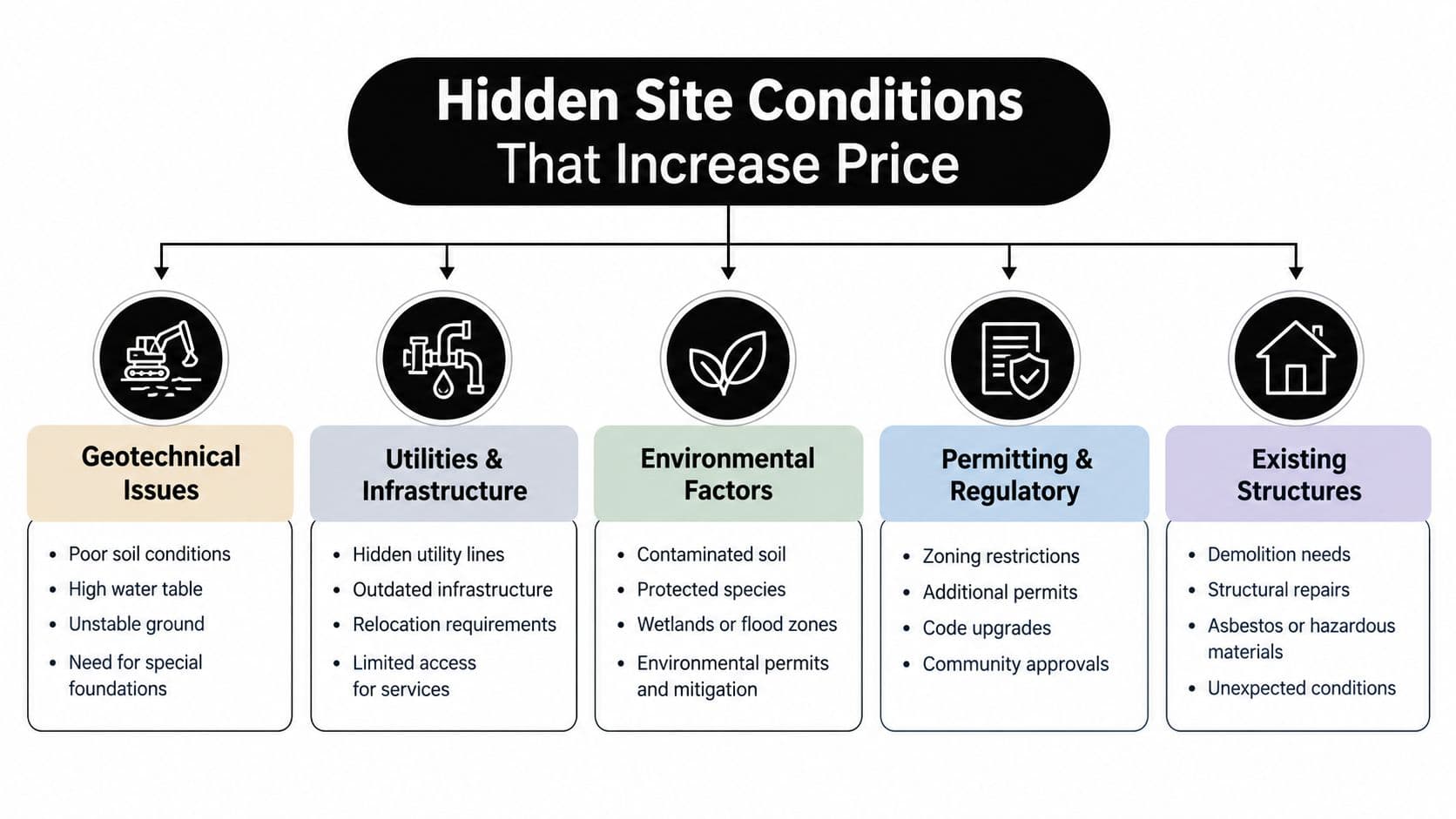
A flat, empty lawn is the model most online calculators assume. Real properties contain tree roots, compacted soil, old concrete, drainage paths, narrow gates, retaining edges, and changes in elevation. Those conditions create the site-condition premium, and it can have more influence on a bid than the difference between two paver colors.
Recent estimates place installed projects at about $8 to $25 per square foot, while difficult sites can add another $5 to $15 per square foot. In major metropolitan areas, large-scale projects may land closer to $18 to $45 per square foot, according to Thumbtack's installed paver patio cost information. These aren't automatic surcharges. They're signals that the contractor expects more excavation, handling, drainage work, or specialized construction.
The conditions that change the bid
Excavation and soil: Soft, saturated, rocky, or heavily compacted ground may require additional removal and replacement. A patio also needs enough depth for the structural assembly, so a shallow scrape isn't a substitute for proper excavation.
Existing hardscape: Removing a concrete slab, old pavers, footings, or buried edging adds demolition, hauling, and disposal. The contractor may also need to separate usable material from debris before the new base can be installed.
Drainage: Water that flows toward the house, collects beside the patio, or washes into a planting bed needs a planned route. A simple finished slope may solve a manageable problem, while a more complicated site can require drains, additional grading, or changes to the patio elevation. This grading and drainage plan overview can help you understand the decisions before requesting bids.
Access: A crew that can bring equipment close to the work area spends less time carrying material. Narrow gates, steps, fences, and long paths through the yard increase manual handling and can limit the equipment used.
Grade changes and boundaries: Slopes may require steps, retaining structures, additional fill, or a split-level layout. The patio can also need edge restraints where it meets lawn, garden beds, a driveway, or a foundation.
If you're comparing outdoor paving materials beyond a typical patio, a resource on durable marble for Indian parking offers useful context on how material choice and intended load affect a hardscape decision. The same principle applies here. Select the surface only after considering how the site will support it.
Ask every contractor to identify site assumptions in writing. A bid based on “remove existing surface as needed” leaves too much room for disagreement. A clearer proposal states what the contractor expects to find, what disposal includes, and how unforeseen soil or drainage problems will be handled.
Sample Project Budgets for a 400 Sq Ft Patio
A 400-square-foot patio can produce very different bids even when the footprint stays the same. The difference often comes from the site-condition premium, including extra preparation, slower material handling, and more detailed layout work. The examples below are planning scenarios, not fixed quotes.
| Budget Tier | Material Choice | Site Condition | Estimated Total Cost |
|---|---|---|---|
| Lower range | Standard concrete pavers | Simple layout with straightforward preparation | About $3,750 |
| Middle range | Standard interlocking pavers | Professional installation with ordinary base work | About $6,000 |
| Upper range | Premium stone | More demanding preparation and complex layout | About $8,500 |
The lower-range example assumes a contractor can work efficiently on a simple shape without major demolition or corrective site work. The lower material price helps, but it is only part of the explanation. A workable site reduces excavation time, carrying, cutting, elevation adjustments, and other labor that can push a quote upward.
The middle example reflects a professionally installed patio with the work beneath the surface completed properly. It allows for a quality base, thorough compaction, edge restraint, bedding material, joint stabilization, and a clean final layout. The design can remain straightforward while the installation still follows a full process rather than relying on shortcuts.
Why the upper range rises quickly
The upper example pairs a premium surface with more demanding preparation. Natural stone takes more time to select, position, and fit than uniform manufactured units. Difficult working conditions can add handling and correction time as well. A high bid is not automatically excessive, but it should show exactly what creates the premium.
Review the proposal in two parts: the patio construction and optional additions. A fire feature, seat wall, lighting, or planting work may be desirable, but those items should not hide the cost of the paved surface itself. For planning items outside the visible construction, the soft construction costs guide provides useful background.
Check the proposed quantity before comparing the square-foot rate. OutdoorBrite's paver stone calculator can help estimate pavers and supporting materials for the planned area. Use its result as a planning check, then ask why the contractor's quantity differs. Borders, cuts, waste, and base requirements can all change the order.
A bid should also explain how concealed problems will be handled. If unsuitable soil or unexpected demolition appears, the contractor should document the condition, price the change, and obtain approval before expanding the work. That process protects both sides and makes competing bids easier to compare.
Smart Ways to Reduce Installation Costs
The safest savings come from reducing complexity, not from weakening the foundation. A simpler patio shape, a standard product, and a well-prepared site can lower the invoice without creating a surface that shifts after the first difficult season.
Use this checklist before requesting final bids:
-
Choose a straightforward footprint. Rectangles and clean angles usually require less cutting and layout time than elaborate curves. Add visual interest with a border or restrained color change instead of a highly fragmented pattern.
-
Select a standard paver line. A widely available concrete paver is easier to source and replace than a specialty material. Ask the contractor which products are stocked locally and which require special ordering.
-
Prepare only what you can prepare correctly. Clearing furniture, trimming vegetation, removing loose surface debris, and providing a clear access route can help the crew work efficiently. Don't excavate or alter grades unless you understand the finished elevations.
-
Address drainage before the pavers arrive. Moving the patio, adjusting its slope, or planning a drainage route on paper is cheaper than dismantling a finished surface. Ask the contractor to show where water will go during heavy rain.
-
Get itemized proposals. Require separate descriptions for demolition, excavation, base material, pavers, edging, joint sand, delivery, disposal, and optional features. This makes a low bid easier to compare with a more complete one.
-
Protect the base budget. Standard interlocking pavers installed over a sand base can total about $22 to $30 per square foot for material and installation, according to Homewyse's interlocking paver cost calculator. That range illustrates why the supporting assembly deserves funding, even when the visible paver price looks modest.
Save on pattern, product upgrades, and optional features before you save on excavation or compaction.
Request at least two detailed site assessments, and walk each contractor through the same design. Ask where the quote assumes easy access, what soil conditions are included, and which items could become change orders. Once you know those assumptions, the cost of installing patio pavers becomes a planning decision rather than a surprise number.
OutdoorBrite lets you upload a photo of your yard and test patio layouts, styles, fire pits, planting beds, and other elements before you buy materials or hire a crew. Visit OutdoorBrite to compare concepts on your actual space and bring a clearer design direction to your patio estimate.
See your yard reimagined
Start creating