7 Fire Pit Ideas Square for Every Outdoor Style
Explore 7 fire pit ideas square for modern, rustic, built-in, and portable spaces, plus material, safety, placement, and design-matching tips.
You like the crisp geometry of a square fire pit, but the decision is harder than choosing a shape. Should it be a movable propane system, a built-in feature with permanent seating, or a full outdoor fireplace? The right answer depends on your yard's footprint, your preferred outdoor style, how people gather, the fuel you'll use, how much maintenance you'll accept, and the rules that apply where you live.
These fire pit ideas square homeowners are considering range from clean-lined steel features to stone masonry, integrated benches, modular systems, complete patio installations, and fireplace-level structures. Each one solves a different planning problem. A square layout can align neatly with pavers and architecture, but it also makes poor spacing and awkward circulation easier to spot.
Before buying materials, photograph your yard and test the concept in the actual space. OutdoorBrite lets you compare fire pit styles, seating arrangements, and materials on a photo of your property, so you can catch expensive layout mistakes early. If you're still comparing fuel and format options, you can also browse UK fire pits for additional product inspiration.
Table of Contents
- 1. Modern Minimalist Square Fire Pit
- 2. Natural Stone Square Fire Pit With Stacked Walls
- 3. Concrete and Steel Square Fire Pit Bench
- 4. Raised Square Fire Pit With Seating Wall
- 5. Modular Composite Square Fire Pit System
- 6. Built-in Square Fire Pit With Surrounding Patio
- 7. Square Wood-Burning Fire Pit Fireplace With Chimney
- Top 7 Square Fire Pit Design Comparison
- Turn Your Favorite Square Fire Pit Idea Into a Safe Plan
1. Modern Minimalist Square Fire Pit
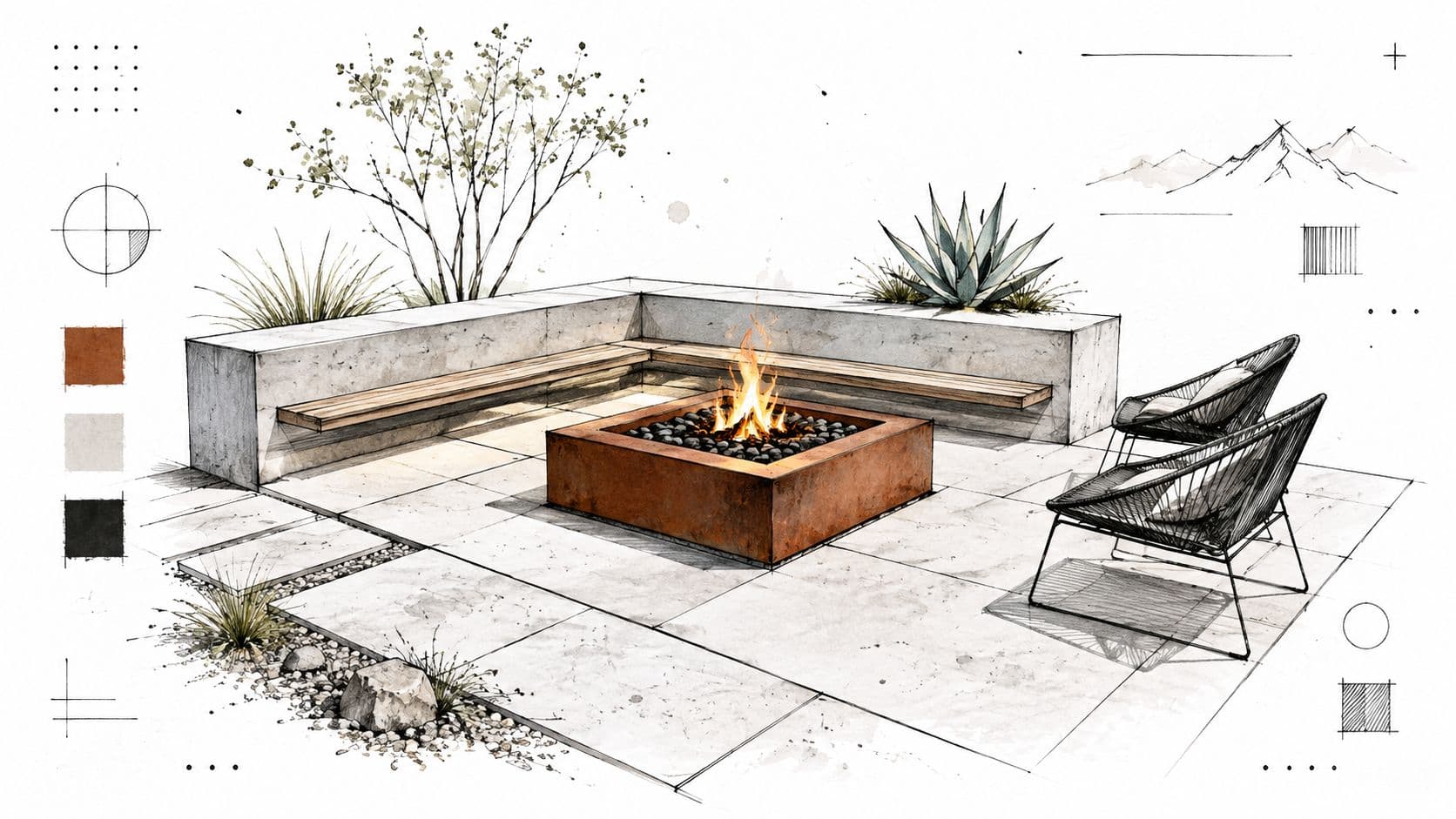
A modern minimalist square fire pit suits a patio with clear visual rules. Smooth concrete, dark steel, large-format pavers, and restrained planting give the square a defined role without overcrowding the space. Check the view from each approach. The strongest installations read as part of the patio, not as a loose bowl set on an empty slab.
Choose steel for a movable or semi-permanent feature, and consider concrete or composite materials for built-in hardscape. Corten steel develops a warm rust-toned patina, but it still needs a stable non-combustible base and effective drainage. Propane keeps the burner area visually tidy. Wood creates more atmosphere, while adding ash, sparks, smoke, and fuel storage to routine maintenance.
Make the geometry usable
Use the square to organize circulation. Align its sides with paver joints, steps, or exterior walls, then check that chairs can pull out without blocking the walking route behind them. The market's cited technical ranges include about 34 inches of interior length for wood-burning square pits and 20 to 24 inches for propane versions, according to Grand View Research's North America fire pits market analysis. Use those figures as planning references, not universal specifications.
Set the pit away from structures, fences, overhanging branches, and other combustible materials. Follow local rules and maintain a clear area around the feature. Permeable pavers can manage runoff, while a fitted cover or coordinated spark screen protects the finish between uses. A clean design still needs practical access for cleaning, fuel connections, and inspection.
2. Natural Stone Square Fire Pit With Stacked Walls
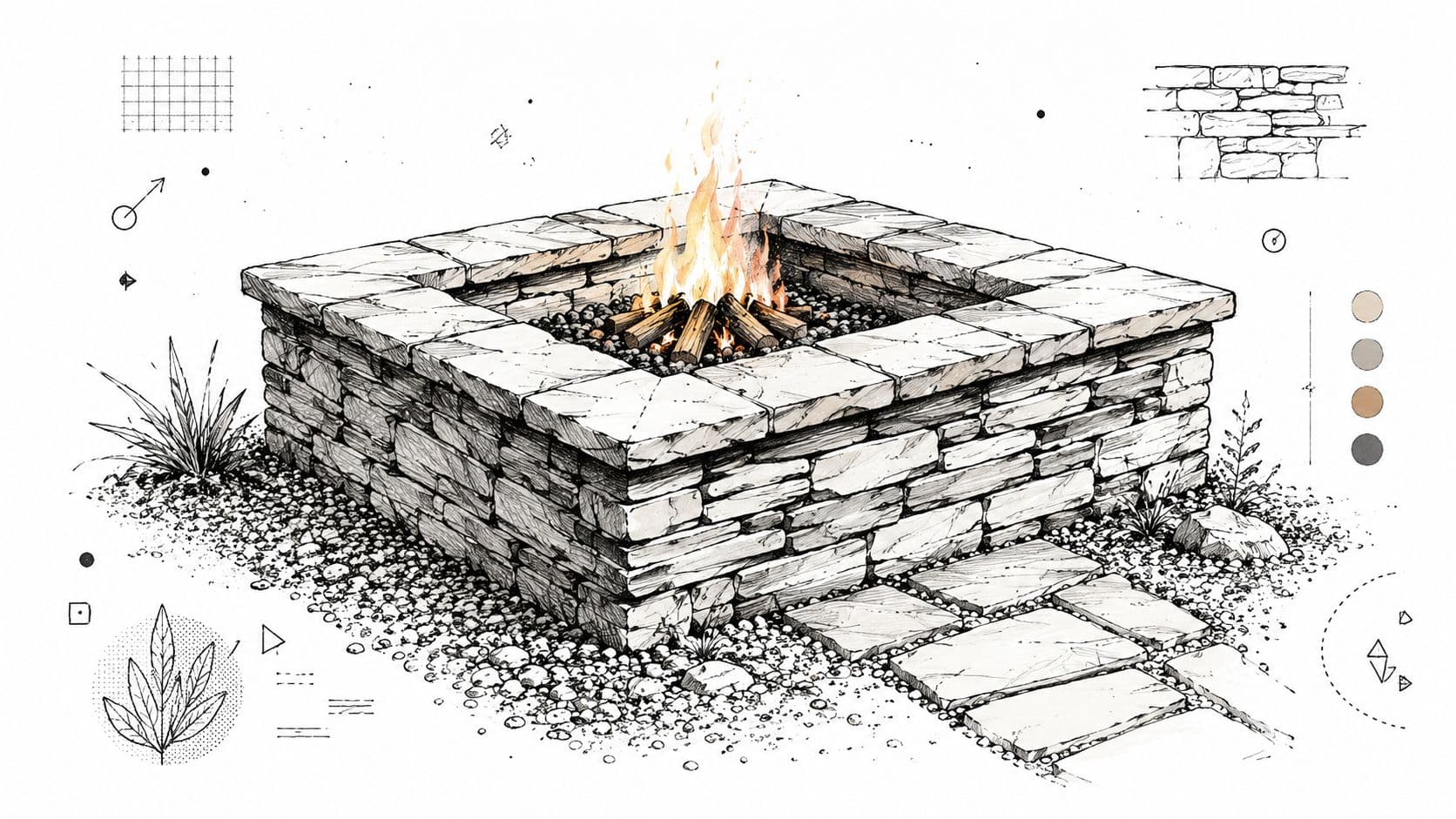
Natural stone gives a square fire pit weight and permanence without forcing it into a formal style. A stacked wall built from granite, limestone, flagstone, or locally sourced stone can connect the fire feature to an existing path, retaining wall, or terrace. The square outline supplies order, while varied stone faces keep the installation from looking manufactured.
This approach suits a mountain property, a cottage retreat, or a Southwestern yard where earthy materials already dominate. It's also a construction method where shortcuts show quickly. Masonry needs a stable base, accurate corners, heat-rated inner components, and drainage that prevents water from sitting inside or behind the structure. A beautiful outer wall won't compensate for a liner or burner system that isn't rated for the selected fuel.
Build around the climate
Local stone can make color and texture feel more natural, and it may be better suited to the region's weather. Wet climates call for careful drainage and protective detailing. Freeze-thaw conditions place additional stress on porous masonry, joints, and caps, so material selection matters more than matching a photograph from another climate.
A stacked stone wall can frame a gravel or paved gathering zone, but loose combustible mulch shouldn't be treated as a substitute for a properly planned clear area. Calgary's municipal guidance, for example, requires fire pits to sit on brick, stone, or another fire-proof container and specifies a mesh spark guard with openings no greater than 1.24 cm for wood-burning fires, as summarized in the verified safety guidance. Check your own municipality before construction because requirements vary.
Masonry rule: Build the drainage and heat-rated inner structure first, then treat the stone veneer as the visible finish.
A professional mason is worthwhile for a permanent stone pit, especially where the design includes walls, steps, or a patio grade change. If your yard also needs structural work, you can compare retaining wall materials before selecting the stone palette. OutdoorBrite can help you test warm, pale, or dark stone in the actual yard before ordering material.
3. Concrete and Steel Square Fire Pit Bench
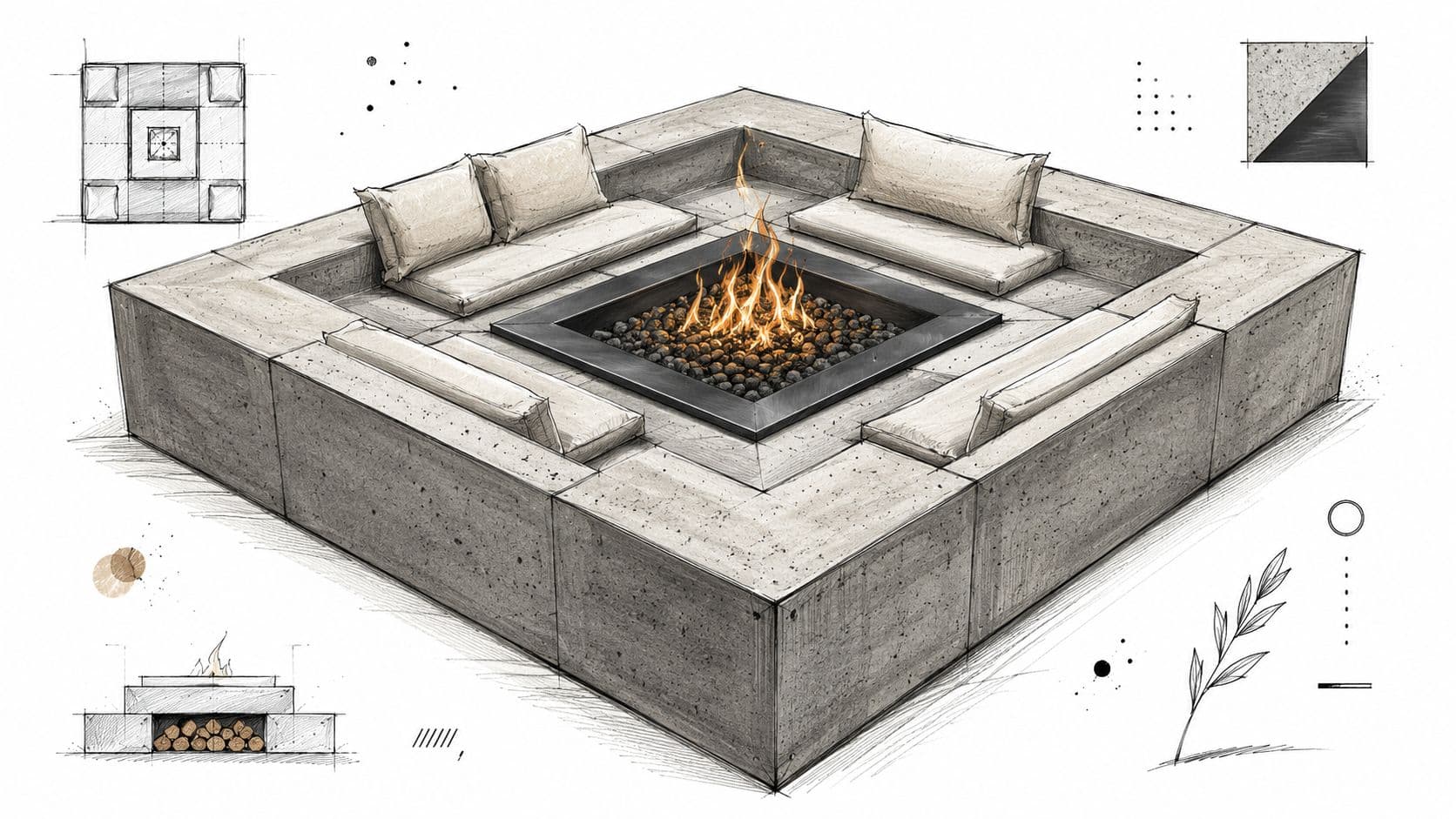
A square fire pit bench makes the fire feature part of the furniture plan. Concrete benches on several sides define the gathering area, while a steel bowl or burner insert adds a lighter, contrasting center. The format suits an urban patio where the fire feature, seating, and circulation must share a limited footprint.
Built-in seating saves space while guests gather around the fire, but it reduces flexibility for dining, children's activities, or movable lounge chairs. Concrete also needs protection from standing water and regular inspection. Sealing can limit staining, yet cracks, joint movement, and surface discoloration still need attention.
Design for sitting and standing
Make the bench comfortable without making it the only place to sit. Removable weather-resistant cushions add comfort and allow the surface to serve another purpose when the fire is off. Keep a clear route around the outside, and allow space for guests who stand rather than sit on the wall. The square layout organizes four sides efficiently, but deep benches and narrow walkways can turn the corners into collision points.
Set the bench on a level base and resolve drainage before pouring concrete. A propane or natural gas insert can reduce routine cleanup, while wood requires ash removal and closer attention to sparks. Specify the firebox, burner, liner, and surrounding finishes as one compatible system. Ordinary concrete or decorative steel should not be assumed to tolerate direct flame or concentrated heat.
Keep the clear area outside the bench rather than counting the seating structure as part of it. A removable spark screen is useful for wood fires, and the nearest seat should be checked against smoke paths and prevailing wind. Local fire rules and the appliance manufacturer's instructions determine the final arrangement, so confirm clearances before construction.
This design fits a contemporary backyard renovation or rooftop terrace where a unified architectural element matters more than portability. Preview the bench, cushions, fire opening, and circulation in OutdoorBrite before committing to forms that cannot be moved.
4. Raised Square Fire Pit With Seating Wall
A raised square fire pit changes the relationship between the fire and the people around it. Instead of asking someone to bend down to tend a low bowl, the raised firebox brings the flame closer to eye level and creates a stronger architectural presence. A lower seating wall around it can produce a stepped composition that feels deliberate in a courtyard, terrace, or aging-in-place outdoor space.
Accessibility is the main reason to consider this format, but accessibility isn't achieved by elevation alone. People need stable walking surfaces, unobstructed approaches, comfortable seating, and enough room to transfer or turn without catching a foot on the wall. The raised structure should also be easy to inspect and maintain from a safe position.
Balance height with heat
A fire pit that sits too high can dominate a small patio and expose seated guests to uncomfortable radiant heat. A lower seating wall, supportive cushions, and a carefully selected burner can moderate that effect. Fire brick or another heat-rated inner material should separate the flame from ordinary decorative block or composite finishes.
The plan notes for this design use seating walls in the 16 to 20 inch range and place benches several feet back from the firebox. Because exact distances depend on the appliance, fuel, wind, and local rules, confirm the final arrangement with the manufacturer and local authority rather than treating a typical layout as a code requirement.
A raised pit should make tending the fire easier, not make the surrounding path harder to navigate.
A continuous wall creates a strong social enclosure, while segmented benches preserve more visual and physical access. Add a spark screen or grate cover when the fuel and appliance allow it. OutdoorBrite is useful here because a raised square feature can look modest in a plan but much larger once placed beside real doors, windows, and furniture. Test sightlines from the house and from each approach before construction.
5. Modular Composite Square Fire Pit System
A modular composite system is the practical choice for homeowners who want a square fire feature without committing to masonry. Interlocking sections can create a contemporary surround, and the system may be assembled, adjusted, or relocated more easily than a poured concrete or stone installation. That flexibility suits a rental property, a changing family yard, or a DIY project completed in stages.
The word composite doesn't automatically mean fire-safe. Some products are designed for tabletop use or decorative surrounds rather than direct exposure to an open wood fire. Read the manufacturer's installation and fuel specifications, and confirm whether the kit includes a metal firebox or burner insert. If it doesn't, the insert must be sourced separately and sized as a compatible assembly.
Treat the base as part of the system
A level, non-combustible base does more for long-term performance than a clever stacking pattern. Poor grading can trap water beneath the sections, while an uneven base can stress joints and make the finished square appear twisted. Use a fire-resistant pad where the manufacturer requires one, and don't place composite components where heat can transfer into combustible decking.
UV-stabilized materials can help limit fading, but all outdoor finishes need inspection after exposure to sun, rain, and temperature changes. A fitted cover reduces weather exposure, though it won't replace cleaning or checking the insert, burner, connections, and fasteners.
Before assembly: Verify the fuel rating, inspect the insert specification, confirm the base is level, and map the clearance zone on the ground.
This format works when flexibility matters more than a custom architectural appearance. You can compare colors, surround widths, and placement in OutdoorBrite, then choose a system that leaves room for future changes. Don't buy the largest configuration because it looks impressive in a product photo. The best modular square pit leaves usable circulation around it.
6. Built-in Square Fire Pit With Surrounding Patio
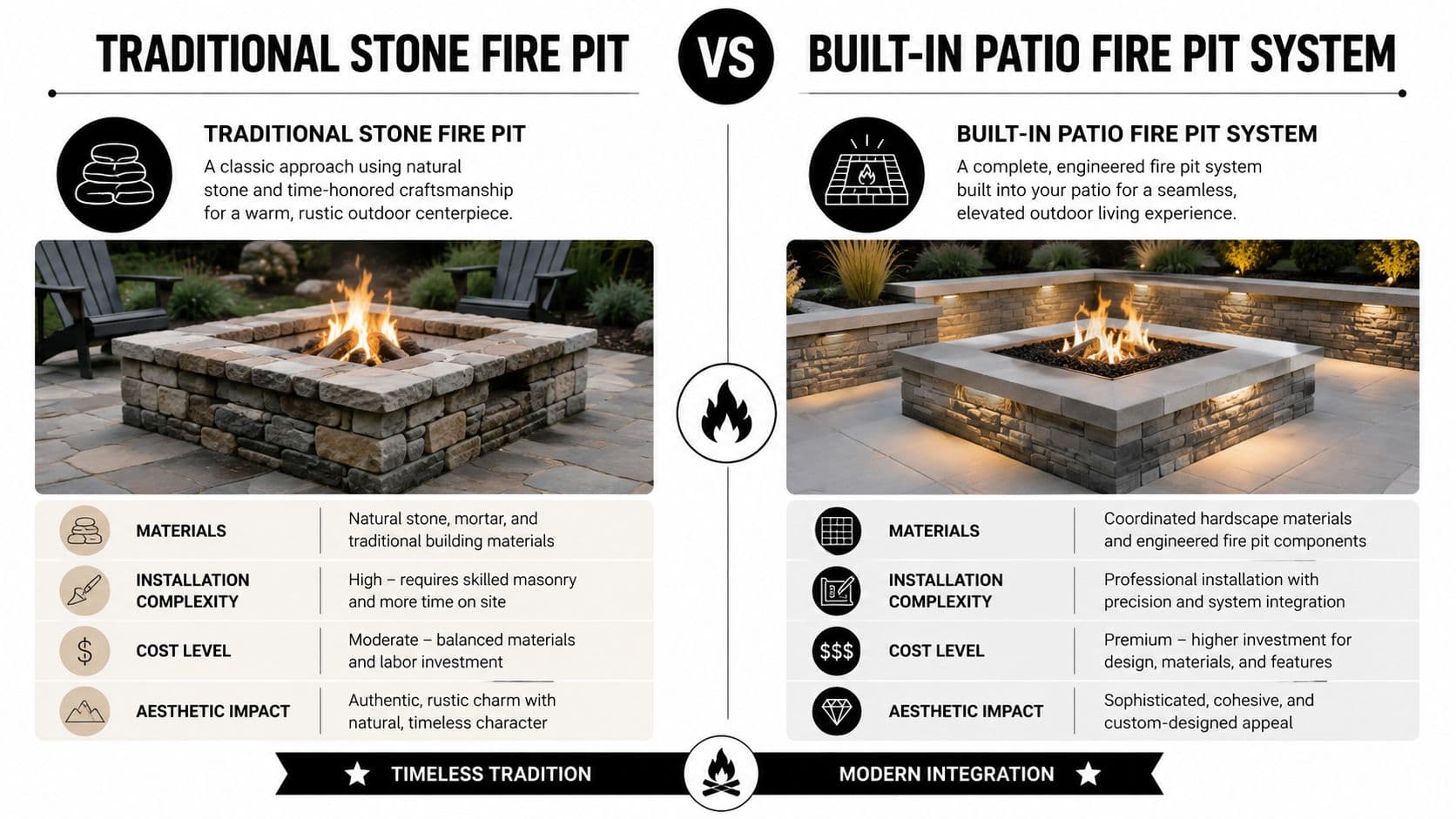
A built-in square fire pit should be planned with the patio, not dropped into a finished lawn. Pavers, borders, planting beds, lighting, and furniture need a shared layout. Grid-pattern pavers suit the geometry because their joints can direct attention toward the fire and give the surface a more orderly appearance.
This option creates a complete outdoor room without the permanence of a full fireplace. It can separate fire-side seating from dining, connect directly to the house, and remain visible from interior windows. The trade-off is coordination. Grading, drainage, gas service, electrical work, edge restraints, and hardscape installation must be resolved before the final surface goes down.
Plan circulation before materials
Map how guests enter, sit, stand, and leave. A chair angled toward the fire may provide good views while blocking the route to the dining area. Keep one seating group oriented toward the flames and another arranged for conversation. Leave clear space between the fire feature, patio edge, and planting beds so circulation does not depend on moving furniture.
Safety checks set the usable footprint. Keep the pit away from combustible materials, branches, fences, and overhead structures, and follow the appliance manufacturer's clearance requirements. A square fire feature also needs room for its surround, chairs, and walking paths, so measure the full patio envelope rather than the pit alone.
Water management affects both appearance and service life. Use pervious pavers or a properly designed subdrain system where runoff is a concern. Choose plants that will not shed dry material into the fire area, and position lighting where it improves paths without creating glare across the seating zone.
Before fixing the final pattern, find paver patio ideas for your home. For the broader layout, review how to design a patio. A built-in system suits homeowners who want the fire pit to anchor the entire patio. It demands more planning than a freestanding unit, but the result can improve movement, seating, and visual fit when each zone is drawn together.
7. Square Wood-Burning Fire Pit Fireplace With Chimney
A square outdoor fireplace is the permanent end of the spectrum. It has a defined firebox, chimney, and often a mantel or masonry surround, so it reads as architecture rather than patio furniture. The chimney draws smoke upward, and the vertical form can define an outdoor room beside a kitchen, dining terrace, or formal garden.
The appeal is strong, but this isn't a casual DIY fire pit. A fireplace needs structural planning, a correctly designed firebox and chimney, suitable fire brick or metal components, and compliance with local building and zoning requirements. A wood-burning system also creates an ongoing maintenance commitment. Ash, soot, weather exposure, chimney inspection, and professional cleaning all belong in the ownership plan.
Make permanence earn its footprint
Choose the fireplace when the feature has a clear role in the property's architecture. A Mediterranean home may support stucco and warm stone, while a modern house may call for a simple steel or concrete surround. The square form creates symmetry, but excessive ornament can make the structure compete with the house instead of extending it.
Keep the surrounding patio open enough for guests to gather without standing in the chimney's working area. Confirm clearances from structures, branches, fences, and other combustibles with the builder and local authority. Add a cooking grill insert only if the firebox and accessories are designed for that use. Don't assume a decorative mantel or shelf is safe just because it's made from stone.
An integrated electrical outlet may support lighting or future features, but electrical work needs its own weatherproof and code-compliant specification. For a broader entertaining plan, consult the OutdoorBrite outdoor kitchen guide before fixing the fireplace location. The most successful installations frame the fireplace with planting and seating while keeping inspection access practical.
Top 7 Square Fire Pit Design Comparison
| Design | Implementation Complexity 🔄 | Resource Requirements 💡 | Expected Outcomes ⭐📊 | Ideal Use Cases | Key Advantages ⚡ |
|---|---|---|---|---|---|
| Modern Minimalist Square Fire Pit | Moderate, metal/concrete fabrication, finishing required 🔄 | Steel / corten / concrete, protective finish; mid–high material cost 💡 | Clean modern look, moderate heat, high visual/real estate appeal ⭐📊 | Small patios, contemporary yards, rooftop lounges | Space-efficient, easy maintenance, photogenic ⚡ |
| Natural Stone Square Fire Pit with Stacked Walls | High, skilled masonry, proper foundation and drainage 🔄 | Natural stone (flagstone, granite), mortar or dry-stack; higher labor cost 💡 | Excellent heat retention, durable, strong visual weight ⭐📊 | Rustic cottages, mountain lodges, resort settings | Authentic appearance, long-lasting, bench-capable ⚡ |
| Concrete and Steel Square Fire Pit Bench | High, structural concrete, reinforcement, pro installation 🔄 | Poured concrete, steel rebar/insert, formwork; premium cost and labor 💡 | Integrated seating, high durability, strong thermal mass ⭐📊 | Compact yards, urban rooftops, modern resorts | Maximizes seating, multifunctional furniture-piece, durable ⚡ |
| Raised Square Fire Pit with Seating Wall | Moderate–High, tiered construction, drainage and foundation work 🔄 | Concrete blocks / fire brick / composite, bench materials; moderate–high cost 💡 | Elevated firebow improves heat distribution and accessibility ⭐📊 | Aging-in-place designs, family patios, resort courtyards | Ergonomic tending, better warmth to seated guests, architectural interest ⚡ |
| Modular Composite Square Fire Pit System | Low, tool-free or minimal-tool assembly, DIY-friendly 🔄 | Composite modules (WPC, recycled plastic), lightweight; lower upfront cost 💡 | Low maintenance, customizable layout, moderate heat performance ⭐📊 | DIY projects, rental properties, budget-conscious homeowners | Quick install, reconfigurable, weather-resistant and affordable ⚡ |
| Built-in Square Fire Pit with Surrounding Patio | Very high, full hardscape integration, multi-trade coordination 🔄 | Pavers/hardscape, drainage, lighting, seating, high professional fees 💡 | Cohesive outdoor room, improved property value, polished finish ⭐📊 | Luxury homes, show homes, comprehensive outdoor renovations | Unified design, maximizes entertaining area, long-term value ⚡ |
| Square Wood-Burning Fire Pit Fireplace with Chimney | Very high, masonry, structural work, code compliance and permits 🔄 | Fire brick, chimney, foundation, flue materials; high cost and ongoing maintenance 💡 | Superior heat output, efficient smoke management, architectural focal point ⭐📊 | Formal estates, outdoor kitchens, high-end resorts | High heat and cooking capability, strong curb appeal, dramatic focal point ⚡ |
Turn Your Favorite Square Fire Pit Idea Into a Safe Plan
The best square fire pit isn't automatically the largest, most permanent, or most expensive-looking option. Choose a modular or movable system when flexibility and simpler installation matter most. Choose natural stone or a concrete bench when you want a lasting gathering anchor. A raised pit can improve access and make tending the fire easier, while a complete patio installation solves circulation, drainage, furniture placement, and visual connection as one project. The fireplace option belongs to a property where architectural permanence, professional construction, and ongoing chimney care make sense.
Start with the yard, not the product catalog. Photograph the space from the house, the main entrance, and the intended seating area. Measure the available footprint, note combustible walls and branches, identify slopes or drainage problems, and mark the routes people already use. Then decide whether the fire will be wood-burning, propane, or natural gas, because fuel affects smoke, storage, controls, maintenance, and the type of insert or firebox required.
Next, verify local fire rules, building codes, burn restrictions, and manufacturer clearances. The broader U.S. analysis recorded 56,340 burn injuries linked to fire pits, fireplaces, and related equipment from 2012 to 2024, averaging about 12 injuries per day, while the overall rate remained roughly 1.3 per 100,000 people according to the Journal of Burn Care & Research analysis. Those figures reinforce a practical point: a fire feature needs an operating plan, not just an attractive layout.
Map chair positions, elbow room, walkways, ash or tank storage, and access for cleaning. Select heat-rated materials, provide drainage, and keep spark containment in the specification where applicable. Finally, preview the concept in OutdoorBrite before purchasing pavers, ordering a fire pit, or hiring a contractor. A visual check on your own property can reveal whether the square supports the way your household entertains.
If a fire ever causes damage, professional help may be necessary, and Good Boy Plumbing fire restoration is one resource to keep in mind. Safe placement and careful operation should come first, but responsible planning also means knowing how you'll respond if an accident occurs.
OutdoorBrite lets you place fire pit concepts, seating, materials, and other yard elements on a photo of your actual yard. Visit OutdoorBrite to compare square layouts before you commit to materials or construction, and use the preferred concept as a clearer starting point for your DIY plan or contractor conversation.
See your yard reimagined
Start creating