Garden Ideas Low Maintenance: 8 Styles for 2026
Practical garden ideas low maintenance homeowners can actually keep up with—8 styles, plant picks, and layout tips for a beautiful, low-effort yard.
The biggest garden failure isn't an unattractive plant combination. It's a maintenance schedule the owner can't sustain. The difference can be substantial: an EPA-reviewed comparison of xeriscaped and turfgrass-dominated landscapes found that homeowners with predominantly xeriscaped yards reported an average annual reduction of 26.4 labor hours and $206 in direct maintenance costs.
That isn't a promise that replacing your lawn will produce identical savings. It's a reason to judge a garden by what you'll do after installation, not just how it looks when the mulch is fresh.
A garden that works around your schedule might contain flowering perennials, gravel, evergreen shrubs, or considerably less lawn. The right choice depends on whether you can manage regular short visits, a concentrated seasonal cleanup, or occasional pruning.
Choose the chores first. If you dislike shearing, don't plant a formal hedge. If you're away during summer, don't build the design around thirsty containers.
These low-maintenance garden ideas cover plant-driven, hardscape-driven, and layout-driven approaches. Each includes a practical example, its advantages and compromises, and the seasonal workload you'll need to accept. Establishment care counts, too. A garden isn't easy if keeping it alive through its opening season requires attention you can't provide.
Table of Contents
- 1. Xeriscape Garden
- 2. Native Plant Garden
- 3. Japanese Dry Garden (Karesansui)
- 4. Prairie-Style Ornamental Grass Garden
- 5. Groundcover Lawn Alternative
- 6. Evergreen Structural Shrub Garden
- 7. Mediterranean Garden
- 8. Mulched Perennial Border with Self-Seeding Plants
- 8 Low-Maintenance Garden Styles at a Glance
- Pick One Style, Test It on Your Own Yard, Then Plant Once
1. Xeriscape Garden
Xeriscaping reduces unnecessary watering, not necessarily the amount of planting. A well-designed xeriscape can be green and layered, with drought-adapted shrubs, grasses, and flowers rather than an exposed spread of gravel.
Water management matters beyond the hose work. The U.S. Environmental Protection Agency estimates that as much as 50% of outdoor irrigation water can be lost through wind, evaporation, runoff, and inefficient systems.
For a sunny front yard in a suitable dry climate, consider sage, locally appropriate yucca, and clumping grasses around a generous path. Keep spiky plants away from doors and pedestrian routes, and select species for local winter temperatures as carefully as summer heat.
The Annual Maintenance Footprint
During spring, remove weeds before they seed, inspect drip emitters, and trim winter-damaged growth when appropriate for the plant. Through summer, check soil moisture before watering rather than running irrigation automatically regardless of conditions.
In autumn, clear debris from irrigation components and replace failed plants during the locally suitable planting window. Mature maintenance should center on occasional corrective pruning, weed patrols, and irrigation checks, not constant feeding and trimming.
- Group by water needs. Keep plants needing supplemental moisture on a separate irrigation zone from plants that prefer dry soil.
- Choose mulch deliberately. Organic mulch suits many planted beds; gravel suits some dryland plants but makes leaf removal harder.
- Leave growing room. Space shrubs for mature width so you won't need to shear them away from paths.
The main advantage is reduced dependence on routine watering. The compromise is front-loaded planning: poor drainage, unsuitable plants, or frequent shallow irrigation can undermine the whole approach.
Use these water-saving landscaping strategies to plan the planting and irrigation together. Don't buy drought-tolerant plants first and work out their watering zones afterward.
2. Native Plant Garden
Start with the habitat, not a shopping list labeled native. A woodland plant native to your region can still struggle on an exposed, dry bank.
The U.S. Forest Service's native gardening guidance identifies regionally adapted native plants as generally low-maintenance and often less vulnerable to local pests. It also explains how many native plants' deep roots support water storage, runoff reduction, and erosion control.
For a sunny Midwestern frontage, a locally suitable combination might include little bluestem, coneflower, and aromatic aster. Repeat those plants in broad groups rather than collecting unrelated specimens.
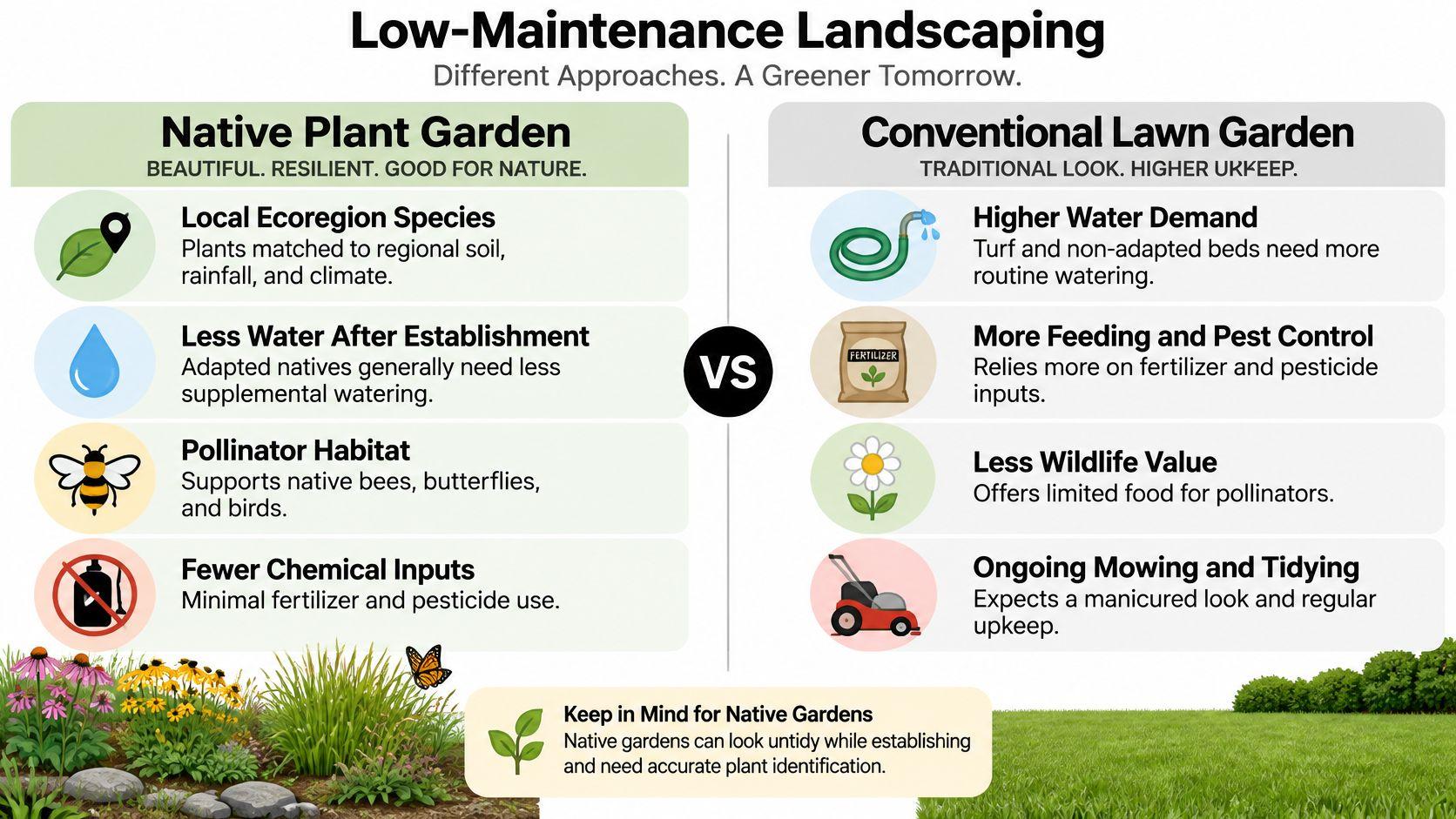
The comparison below illustrates how a planted alternative can differ from conventional lawn.
Work With the Seasons
Expect regular moisture checks and weeding while the planting establishes. Don't stop watering just because the plants are native; assess root development, rainfall, and soil moisture.
In spring, selectively remove old stems when appropriate for the plants and local wildlife. During summer, pull invasive weeds and remove unwanted seedlings while they're easy to distinguish and lift.
Autumn work can be minimal if you retain sound stems and seedheads. Keep entrances, pavement edges, and drainage routes clear so the planting looks maintained without cutting everything down.
The benefit is a garden matched to local conditions. The trade-off is learning what belongs. Label plants during installation and photograph their emerging foliage so you don't mistake desirable seedlings for weeds.
A defined edge, a clear path, and repeated planting groups make a native garden look intentional. They also give you access for maintenance without trampling through the bed.
3. Japanese Dry Garden (Karesansui)
A Japanese dry garden replaces much of the living planting with gravel, stones, and carefully controlled space. It suits a small courtyard where you want a composed view rather than a lawn or a flower-filled border.
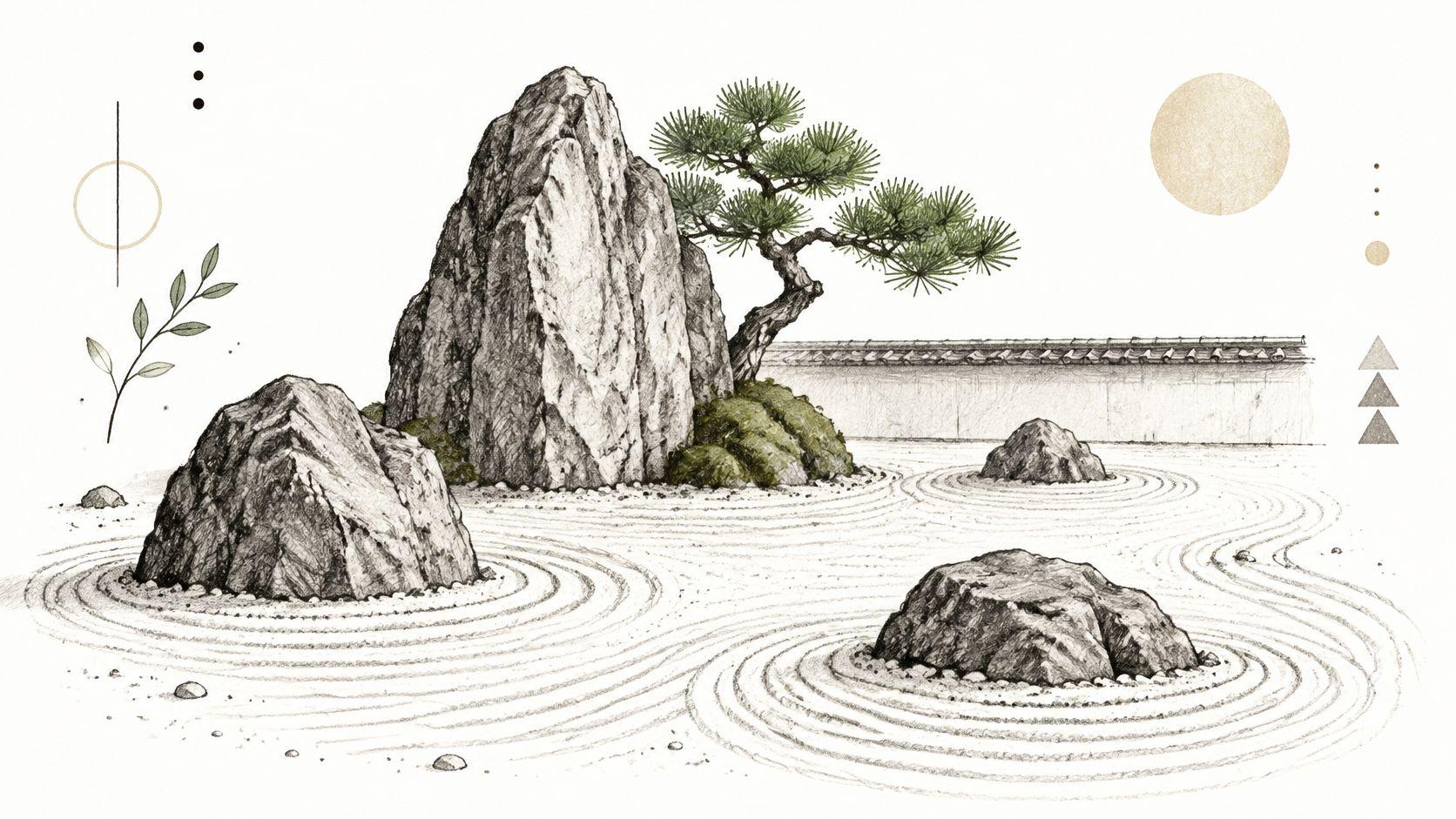
This example shows the balance between open gravel and substantial stones.
Minimal planting doesn't mean minimal tidying. Beneath a shedding tree, pale gravel can need more attention than a planted bed because every leaf and twig remains visible.
Decide Whether Raking Is Pleasure or Work
For a sheltered courtyard, use a restrained stone palette, secure edging, and accessible gravel areas. Set substantial rocks firmly before spreading the finish layer, and choose gravel that responds well to your rake.
During the growing season, remove seedlings before roots become established. Rake whenever footprints, animals, or weather disturb the pattern, and collect leaves promptly in autumn rather than letting them break down among the stones.
A permeable separation layer may help keep gravel apart from underlying soil, but it won't stop weeds germinating in debris above it. Moss and clipped specimens also add their own watering or pruning requirements.
A dry garden is low-maintenance when you enjoy precise tidying. It's a poor choice if you want to ignore the space between seasonal cleanups.
This demonstration offers another view of the arrangement and raking process.
Plan your tools and access alongside the design using these simple Zen garden upkeep routines. If you're unsure whether repetitive raking appeals, creating a serene desk garden offers a small-scale way to try the activity before committing a courtyard.
4. Prairie-Style Ornamental Grass Garden
Choose this style if you'd rather tackle a concentrated cleanup than mow throughout the growing season. Clumping grasses and sturdy flowering perennials create movement, seasonal color, and winter structure without requiring a clipped finish.
For a sunny side garden, combine locally appropriate little bluestem with coneflowers and asters. Keep taller plants away from narrow paths, and use lower-growing plants along the edge so stems don't continually fall across the route.
Prairie planting also offers an opportunity to provide flowers rather than merely stop mowing. A 2025 modeling study published through the U.S. Forest Service found that reducing traditional lawn care by 50% produced only modest pollinator gains, while increasing native landscaping to roughly 60% of community landscaping produced substantially larger gains, including for native bees.
Budget for Cleanup and Early Weeding
The main seasonal job is removing old growth before it interferes with fresh shoots. Time that work around your climate, plant growth, and habitat priorities rather than treating a calendar date as universal.
- During establishment, weed between plants and mulch exposed soil without burying crowns.
- Through summer, remove invasive weeds and check for plants leaning into paths.
- During dormancy, retain sound stems where practical, then cut back selectively before active growth makes access difficult.
Use clump-forming grasses in small gardens. Aggressive runners and enthusiastic seeders can turn an easy-looking planting into repeated digging and thinning.
The advantage is a long display without constant deadheading. The compromise is seasonal untidiness: dormant stems are part of the design, not a failure to finish autumn chores.
If brown winter foliage will bother you, frame the planting with a crisp path and evergreen accents. Don't install a naturalistic garden while expecting it to behave like clipped bedding.
5. Groundcover Lawn Alternative
A worn shortcut across the yard isn't a good place to test delicate groundcover. Put paving where people repeatedly walk, then plant the quieter spaces around it.
In a sunny, free-draining courtyard, creeping thyme can soften the gaps beside stepping stones. In shade, a locally suitable sedge may be a better starting point than trying to force sun-loving turf or herbs to grow.
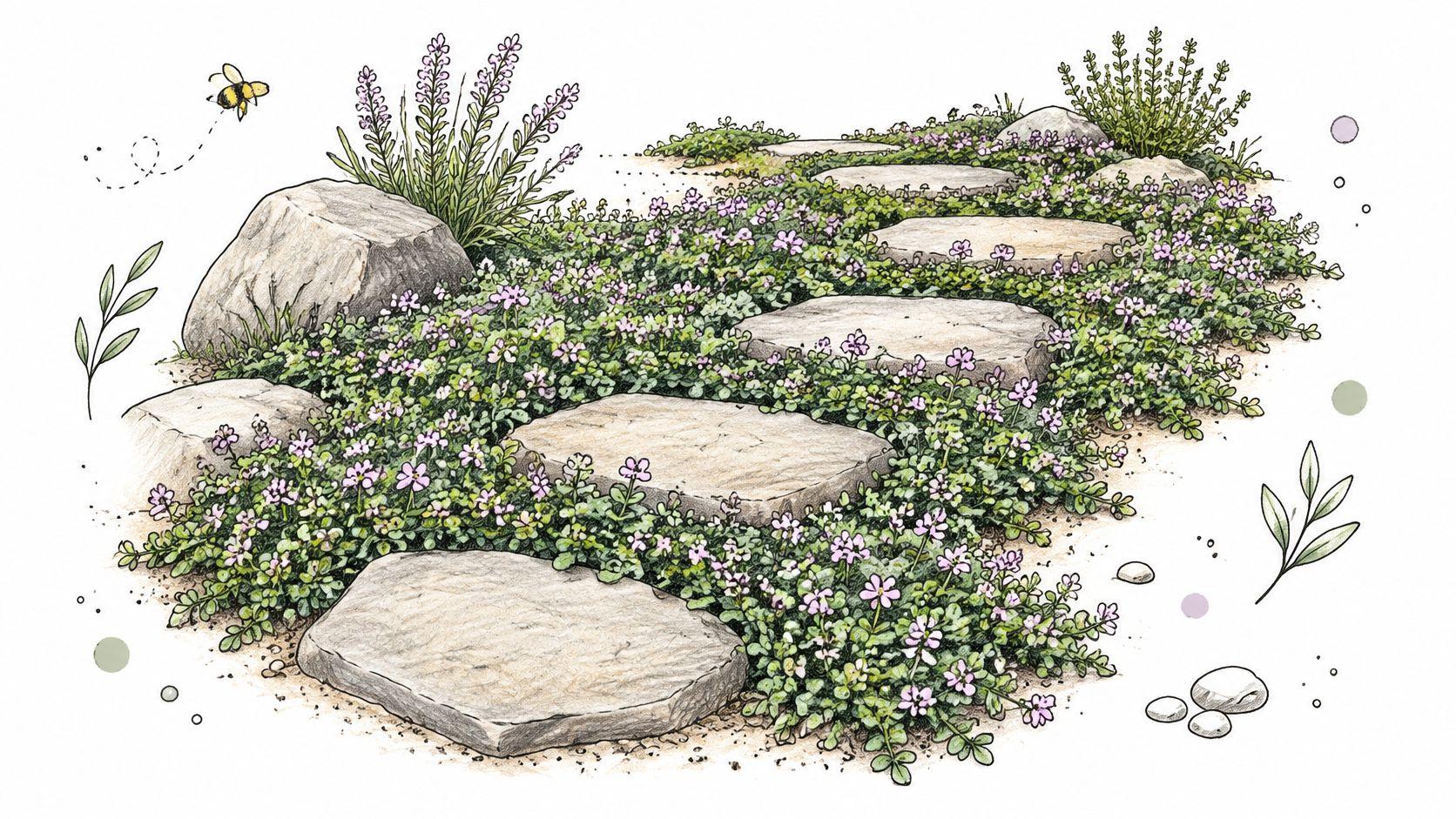
This path illustrates the useful combination of durable footing and low planting.
Less Mowing, More Careful Establishment
Remove persistent weeds before planting. Lay out plugs according to their eventual spread, and keep the spaces between them weeded while the plants knit together.
Spring work includes removing winter damage and checking for bare patches. During active growth, trim plants away from paving and inspect dry areas rather than assuming a continuous carpet needs uniform watering.
In autumn, lift heavy accumulations of leaves before they smother low foliage. Some groundcovers benefit from occasional clipping; others look worse when treated like lawn, so choose your maintenance method by species.
- For regular foot traffic, provide stepping stones or a proper path.
- For children's play or dogs, retain a suitable durable surface rather than expecting ornamental groundcover to perform like turf.
- For spreading plants, check local invasiveness guidance before buying.
Compare clover and hardscape lawn ideas against the actual use of your yard. Clover, thyme, and sedges aren't interchangeable because they're low-growing.
If you're selling a home in autumn, finish path edges and remove visible weeds before adding more plants. A clear, usable route communicates care more effectively than an unfinished lawn conversion.
6. Evergreen Structural Shrub Garden
The lowest-work shrub garden is built from plants that fit at maturity, so the yearly job is inspection and light correction rather than constant reshaping. Choose locally suitable dwarf conifers and compact evergreen shrubs, repeat a few instead of mixing many, and let natural form carry the structure.
For a front entrance, set them beside a broad path where foliage can fill without swallowing the route. Keep taller plants clear of windows, meters, ventilation points, taps, alarms, and any surface you need to inspect. A formal hedge can look sharp, but it adds clipping, edge cleanup, and arid inner growth; rounded shrubs usually ask less across the year.
Prune for the Plant, Not a Generic Schedule
Spring is the main check: winter burn, dead tips, crossing stems, pest signs, and whether last season's growth is crowding a walkway. Remove damage cleanly, then shape only where the species and flowering habit allow it.
Summer work is narrower. Water young shrubs by soil moisture, weed the mulch ring, and stop one fast branch before it becomes next year's cutback. In autumn, clear fallen material where it mats against stems and reopen access points before wet weather makes paths slick.
Buy the mature size. A small nursery pot does not make a large-growing shrub suitable beneath a low window.
The trade-off is patience: structure arrives slowly, and a single repeated shrub can turn one pest problem into a whole-border issue. Check local disease pressure, drainage, browsing, and household safety before choosing backbone plants such as boxwood or yew.
Where shrubs meet a terrace or raised seating, leave room to reach both planting and structure. With glass edges, products such as Binks Balustrades outdoor glass options show how panels and posts sit; plan cleaning and inspection access before branches harden around them.
7. Mediterranean Garden
Lavender beside warm stone looks effortless only when the site suits it. Sun and drainage matter more than matching the photograph.
For a sunny courtyard with suitable winters, combine lavender, rosemary, and locally appropriate ornamental grasses around gravel or paving. An olive tree may fit some climates, but choosing it where it needs repeated winter rescue defeats the low-maintenance brief.
In a colder garden, borrow the restrained palette and stonework while substituting hardy plants. You don't need to reproduce every Mediterranean species to create the atmosphere.
The Work Is Mostly Targeted Pruning
After flowering, lightly trim lavender and rosemary as appropriate to their growth habit. Avoid treating old, bare woody stems like a hedge that will reliably regrow from any cut.
During summer, inspect new plants and water according to soil moisture. Established plants may need less intervention, but prolonged drought, root restrictions, and containers change the calculation.
Winter work is often about protecting drainage and checking exposed containers rather than adding water. If the soil stays saturated, solve the site problem or choose different plants instead of repeatedly replacing failing herbs.
- Build for drainage. On heavy soil, consider a properly designed raised planting area rather than adding grit to isolated planting holes.
- Limit containers. Pots add watering, feeding, and winter-handling jobs.
- Keep the palette restrained. Repeated hardy plants are easier to manage than a collection with different protection needs.
The reward is fragrance, texture, and a relaxed outdoor-living setting. The compromise is climate sensitivity: a Mediterranean garden can be economical with attention in the right place and surprisingly demanding in the wrong one.
A permanent, well-matched planting is usually easier than a terrace full of herbs you must move, shelter, and nurse.
8. Mulched Perennial Border with Self-Seeding Plants
A self-renewing border still needs an editor. Letting desirable plants seed is useful; letting every seedling stay is not.
For a cottage-style bed beside a fence, combine dependable, locally suitable perennials with selected self-seeders such as columbine where conditions suit it. Repeat the permanent plants so the border retains a clear shape even when seedlings appear unpredictably.
Choose plants for sturdy growth and a long useful season. A border filled with species that require staking, constant deadheading, or frequent division won't become easy because you mulch it.
Keep the Renewal, Control the Spread
In spring, identify emerging plants before hoeing and remove unwanted seedlings while their roots are small. Lift useful extras for another suitable space rather than allowing them to crowd established clumps.
Through summer, check path edges and selectively remove seedheads from plants spreading too freely. Leave desirable seedheads where they won't create a future weeding problem.
In autumn or the locally appropriate dormant period, remove collapsed or diseased growth and retain sound structure where practical. Refresh organic mulch when it has broken down enough to expose substantial bare soil, keeping it away from crowns.
- Use mulch selectively. Shredded bark or leaf mold can protect open soil, but a thick blanket also limits the self-seeding you're trying to encourage.
- Divide by condition. Split plants when they become congested, decline centrally, or outgrow their allotted space.
- Know the seedlings. Keep labels and reference photographs so you can distinguish wanted plants from weeds.
The benefit is a border that can fill gaps without annual bedding replacement. The compromise is judgment: you'll make small decisions throughout the growing season.
This style suits someone who enjoys short, observant gardening sessions. It doesn't suit someone who wants to leave the border untouched until a major seasonal cleanup.
8 Low-Maintenance Garden Styles at a Glance
Read the Annual Upkeep column first. It lists the jobs each style asks of you across the year, which is the fairest way to compare gardens that look equally calm in a photo.
| Style | Water Needs | Annual Upkeep | Best For | Sun Requirement |
|---|---|---|---|---|
| Xeriscape Garden | Low once established | Minimal watering, mowing, and fertilizing | Water-conscious landscapes in dry climates | Full sun to partial shade |
| Native Plant Garden | Low after establishment | Light maintenance; water regularly during the first growing season | Supporting local wildlife with regionally adapted plants | Full sun to shade, matched to the species |
| Japanese Dry Garden (Karesansui) | Very low | Regular gravel raking and occasional weed control | Calm, low-planting courtyards and small spaces | Full sun to partial shade |
| Prairie-Style Ornamental Grass Garden | Low once established | One cutback a year, in late winter or early spring | Sunny, open sites and lawn alternatives | Full sun |
| Groundcover Lawn Alternative | Often lower than turf once rooted | Little or no mowing; weed during establishment | Reducing mowing where grass struggles | Partial shade to full sun |
| Evergreen Structural Shrub Garden | Low to moderate | Occasional pruning and shaping | Tidy, year-round structure and foundation plantings | Full sun to shade, matched to the shrub |
| Mediterranean Garden | Low once established | Light pruning and occasional gravel raking | Sunny, well-drained sites and drought-tolerant planting | Full sun |
| Mulched Perennial Border with Self-Seeding Plants | Low once established | Annual cutback, occasional thinning, and division | Borders that fill in with minimal replanting | Full sun to partial shade |
The split is concentrated versus steady work. Prairie and shrub plantings bank the year's labor into one or two sessions, while raked gravel and establishing groundcovers spread shorter jobs across the seasons.
Pick One Style, Test It on Your Own Yard, Then Plant Once
Choose the garden whose ordinary maintenance you can sustain, not the one with the most appealing installation photograph. A dry garden suits someone who enjoys raking and precise cleanup; a prairie planting suits someone comfortable with dormant stems and a seasonal cutback.
Shrubs offer dependable structure if you respect their mature size. Groundcovers can remove mowing from unused areas, but they won't replace a durable play surface or eliminate establishment weeding.
Before buying plants, check sun exposure across the proposed bed, observe where water collects, and confirm your hardiness zone. Then assess soil texture, drainage, available irrigation, and the routes you'll need for bins, tools, pets, and everyday access.
Put the Work on Your Calendar
Write down what you'll do in spring, summer, autumn, and winter. Include watering checks, weed removal, pruning, leaf collection, and any irrigation maintenance, not just the enjoyable planting jobs.
Keep installation, establishment, and mature upkeep separate. An article on incorporating native plants in the Lawrence Times explains that new native or drought-adapted plants may need supplemental watering during their first year and may not become well-rooted until the second or third year.
If you travel frequently, arrange establishment watering before installation. Choose an appropriate planting season, use accessible irrigation where needed, and postpone work if nobody can monitor the new plants.
- Draw the finished layout. Include mature plant widths, clear paths, mulch areas, and watering zones.
- Check the plant list locally. Confirm climate suitability, invasiveness, toxicity concerns, and realistic mature size with a knowledgeable nursery.
- Set a manageable scope. Complete a coherent bed rather than stripping the entire yard before you can maintain the replacement.
Our OutdoorBrite AI garden design tool lets you preview a chosen style on a photo of your own yard, with realistic replanted concepts and bed layouts you can take to a nursery. Plus includes a plant list for every design and plants picked for your region, giving you a practical starting point to check against your site's conditions.
Commit to the layout before filling a cart with plants. Establishment-year effort is the price of years of lower upkeep, and planning that effort is part of good garden design.
Upload a photo to OutdoorBrite and compare low-maintenance planting styles on your own yard before buying plants or paving. Use the natural concepts to refine bed shapes, reduce unnecessary lawn, and choose a layout whose seasonal chores fit your schedule.
See your yard reimagined
Start creating