How to Deadhead Balloon Flowers for More Blooms
Learn how to deadhead balloon flowers the right way. Step-by-step guidance on timing, tools, technique, and follow-up care to extend the bloom season.
You notice it on a warm summer walk: the balloon flowers are finally putting on their best display, but a few violet blooms have faded at the edges and turned papery. The inflated buds nearby are still firm, and the temptation is to grab the shears and cut the whole stem back.
Don't. Deadheading balloon flowers is a precise flower-by-flower job, not a heavy pruning session. Remove the faded bloom, preserve the stem carrying unopened buds, and return to the clump regularly while it's flowering. That light touch is useful whether you're tending a small border or gathering ideas for 10 August cut flowers for a seasonal arrangement.
A short weekly inspection is usually more valuable than one dramatic cleanup. If you're planning a broader planting refresh, AI-assisted yard design from OutdoorBrite can also help you think through where a clump of balloon flowers will fit before you move plants around.
Table of Contents
- A Walk Through the Garden in Mid-July
- Why Deadheading Balloon Flowers Works
- When and Where to Make the Cut
- Tools and a Five-Minute Weekly Routine
- Two Cuts That Cost You Blooms
- Follow-Up Care and Late-Season Decisions
- A Simple End-of-Season Checklist
A Walk Through the Garden in Mid-July
In mid-July, a balloon flower clump rarely fades all at once. One star-shaped bloom may still look fresh, another may be opening, and a third may have lost its color and begun to shrivel. The characteristic balloon-like buds make the plant especially easy to read, but they also make careless cutting more tempting because several stages of development sit close together on the same stem.
Start with the oldest flower. If its petals look dull, papery, browned, or visibly wilted, it has finished contributing much to the display. Trace that bloom down to its short individual stalk, then remove only the spent flower. Leave the swelling buds and the green flowering stem alone.
Practical rule: If you can see unopened buds below the faded bloom, your cut should be small enough to preserve them.
Balloon flowers generally bloom from June through August, so the useful habit is repeated inspection during that window rather than a single severe pruning session. Cultivation guidance for balloon flowers recommends deadheading throughout the bloom period to encourage additional buds, while distinguishing that work from structural pruning before flower buds form.
The task takes only a few minutes for an established clump. Walk past the plant, remove the oldest faded flowers, collect the clippings, and move on. You're not trying to reshape the entire plant or expose bare stems. You're keeping the display moving by making small decisions at the right point in the flower's life.
That distinction matters in a mixed border. A plant left entirely alone can still grow and flower, but selective deadheading gives a tidy bed a more cared-for appearance and supports a longer ornamental show. The payoff is modest but visible, especially when fresh blooms and inflated buds are developing together.
Why Deadheading Balloon Flowers Works
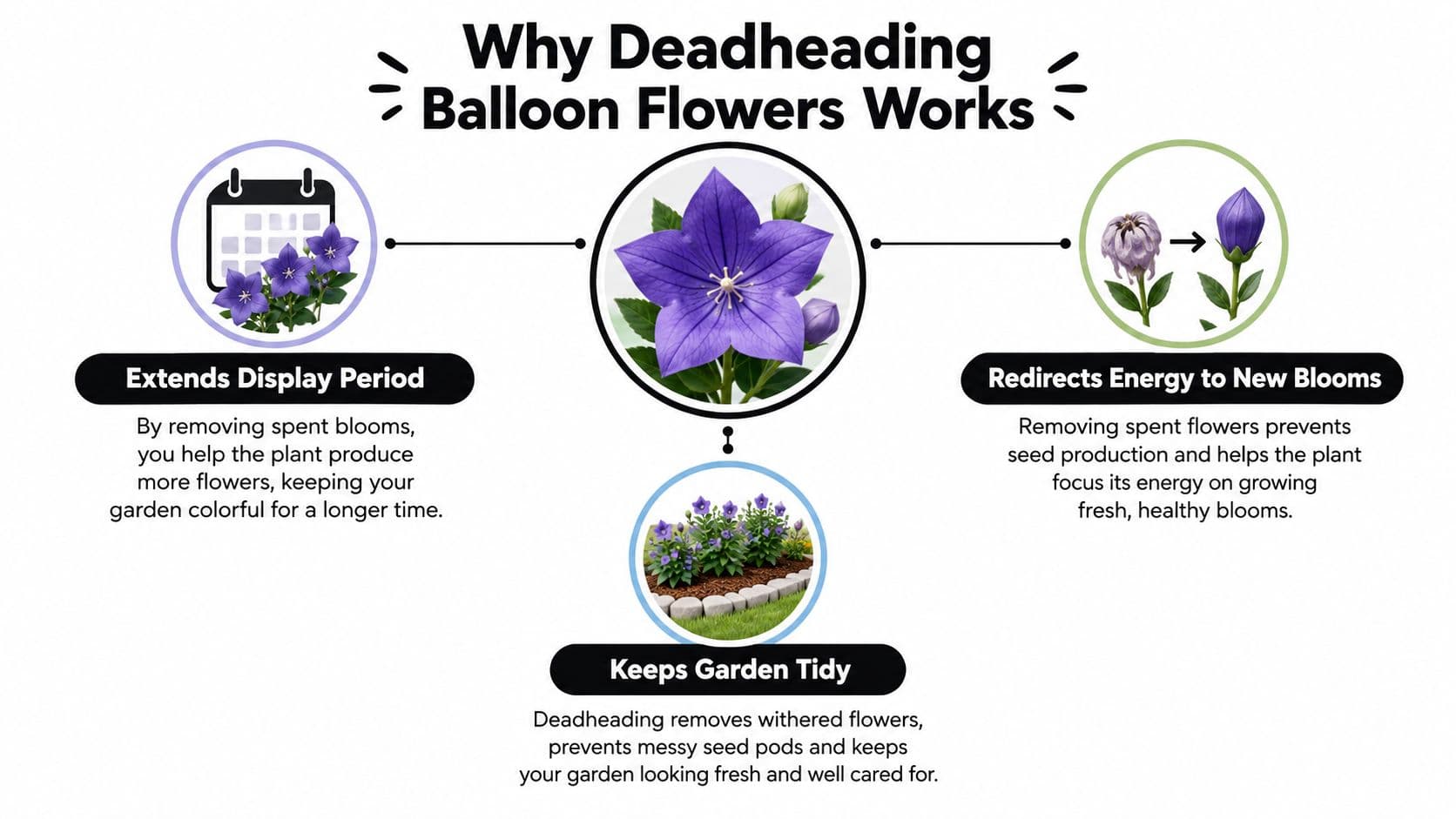
A balloon flower can carry a faded bloom, inflated buds, and newly opening flowers on the same stem. Removing the finished flower preserves that visual progression and keeps the plant's energy directed toward flowers that are still developing, rather than toward a seed capsule. The effect is measured, not dramatic. Deadheading supports the show already in progress; it does not transform the plant or force an unhealthy clump to recover.
Extension guidance identifies deadheading as a way to prolong the bloom period of Platycodon grandiflorus, not as a requirement for keeping the perennial alive. The distinction matters in practice. Skip the snips and the plant can still grow and flower. Deadheading is display management, useful when you want fresh blooms and developing buds to remain visible together.
What the effort buys you
The practical gains are modest but clear:
- A longer-looking display: Removing finished flowers keeps the plant looking active while developing buds take their place.
- A cleaner clump: Brown, collapsed corollas disappear before they compete with fresh flowers.
- More control over reproduction: Removing flowers before seed capsules mature favors ornamental flowering over seed collection or natural reseeding.
The trade-off is attention. On a large planting, checking every flower can become fussy, while the plant does not need that level of care to survive. A weekly pass is usually the sensible middle ground. Remove the oldest, most distracting blooms and leave less noticeable ones if time is limited. That flower-by-flower choice delivers much of the visual benefit without turning routine care into a long pruning session.
Deadheading suits a polished border, a plant near a path, or anyone who enjoys observing the clump closely. A low-maintenance garden may justify leaving it alone. The right choice depends on whether continued display and tidiness matter more than saving a few minutes each week.
Seed saving changes the decision; the follow-up care section below covers how to divide the clump's flowers between both goals.
When and Where to Make the Cut
The correct cut starts with the flower, not the main stem. Find the bloom whose petals have faded or begun to shrivel, then follow its short connecting stalk downward with your eyes or fingers. The target is the small stalk immediately below that individual flower, not the larger flowering stem carrying the remaining buds.
Use clean, sharp scissors or fine bypass snips. Make a clean cut just above the next healthy leaf or lateral bud when that junction is easy to identify. If the flower is still tender and accessible, you can pinch it away just below the calyx, the small green structure beneath the petals.
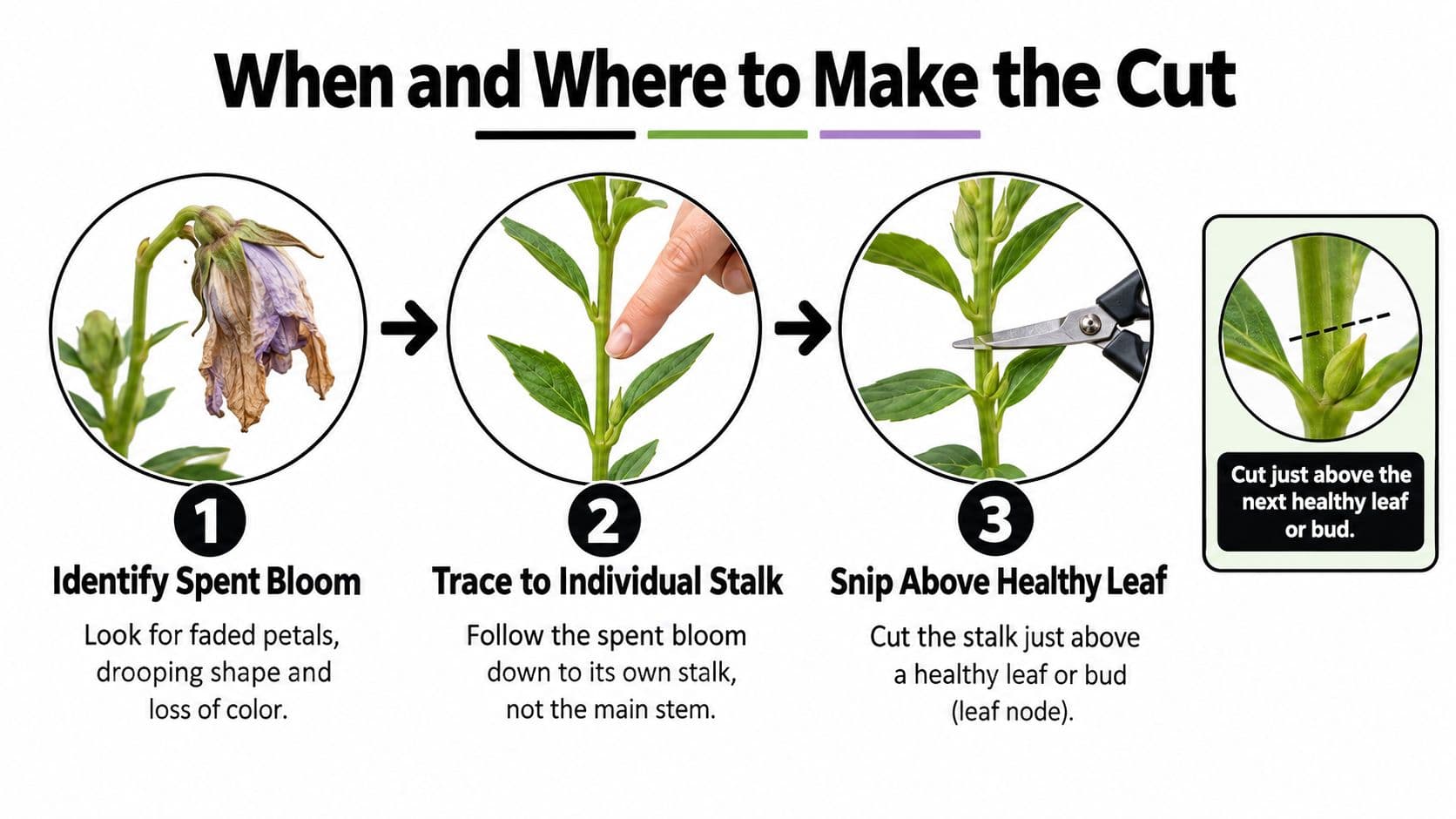
Read the stem before cutting
A balloon flower stem may contain three different stages at once:
- A faded bloom at the top.
- An unopened, inflated bud lower down.
- Developing flowers attached to the same green stem.
Remove the first item and preserve the others. Cutting below the whole stem can remove flower sites that were close to opening. The best cut is therefore the smallest one that removes the finished flower cleanly.
Balloon flowers generally flower from June through August, and guidance recommends deadheading throughout that period to encourage additional buds. Inspect the plants repeatedly while they're active. A weekly rhythm is more reliable than waiting until the clump contains a mass of dried petals and seed capsules.
Watch the point where the bloom meets the stem. Once a seed capsule has begun to develop, the ideal timing has passed for that particular flower. You can still remove the capsule for appearance, but the plant has already started shifting resources toward reproduction.
This operation isn't the same as cutting back a floppy plant. Structural pruning is performed before flower buds form, while deadheading removes individual finished flowers during bloom. If the broader garden includes shrubs or woody plants, a separate resource on crepe myrtle care for Marietta can help keep those pruning decisions distinct from perennial flower maintenance.
See the cut in motion before you work through the clump:
Tools and a Five-Minute Weekly Routine
You don't need a complicated kit. Keep sharp bypass snips or fine pruning scissors, a small container for clippings, and a cloth or rubbing alcohol for tool cleaning within reach. On soft, accessible growth, your fingertips may be enough, but snips give you a cleaner result when the flower stalk is thin or crowded.
The routine is simple:
- Start with the oldest flowers: Look for faded petals, shriveling corollas, and brown edges.
- Trace before cutting: Follow each finished flower to its own short stalk.
- Preserve active growth: Leave unopened balloon-like buds and the main flowering stem intact.
- Collect the debris: Drop removed flowers into a bucket rather than leaving them around the crown.
- Clean between problem plants: Disinfect tools between visibly diseased plants.
A short garden walk works better than postponing the task. Check the clump as you water, weed, or inspect nearby plants. The weekly guidance for routine deadheading is to use clean, sharp scissors or pinch off the spent flower immediately below its calyx while leaving the rest of the flowering stem intact, as described in this balloon flower deadheading guide.
The most efficient sequence is to scan first, cut second. Don't pick up the shears and start chopping at the top of the plant. Identify the finished flowers, note where the developing buds are, then make only the necessary cuts. For broader maintenance planning, OutdoorBrite's plant care advice can sit alongside your watering reminders, but deadheading itself should remain a light, targeted task.
Two Cuts That Cost You Blooms
If you have already removed a complete flowering stem, resist the urge to shorten the rest so the clump looks even. Stop cutting, give the remaining stems time to develop, and accept a slightly uneven shape. Intact buds are more valuable than uniform height, and the missing stem will not produce another round of flowers.
The first error is making a recovery cut after the fact. As covered above, deadheading targets the individual flower stalk, not the supporting stem. Once a stem has been removed at its base, leave neighboring growth alone. Repeated trimming only removes more potential flowers without restoring the one already lost.
The second error is leaving faded blooms until seed pods mature when continued flowering is the priority. Removing a flower after it has begun setting seed can tidy the plant, but it will not recover the earlier chance for another bloom. A weekly inspection catches spent flowers while the surrounding buds are still developing.
Two errors worth catching early
Cutting for appearance often creates a bare patch or an uneven loss of buds. A clump does not need to look perfectly symmetrical after every pass. Follow the productive stems individually, and remove only flowers that have finished.
Pruning for shape at the wrong time causes a different problem. Tall or floppy plants can receive a structural cut before buds form, but that is separate from removing spent flowers during bloom. Use shaping only when the plant's size or form needs correction, not as a substitute for precise deadheading.
The useful test: Did you remove one finished flower, or did you shorten a stem that still carries buds? If buds remain, leave that stem standing.
Balloon flowers recover better from a missed cosmetic detail than from unnecessary cuts. Let the remaining stems develop, then return during the next inspection and work flower by flower.
Follow-Up Care and Late-Season Decisions
As the flowering season moves toward its close, decide whether the clump is serving you as an ornamental display, a seed source, or both. If you want more flowers, continue removing faded blooms before seed capsules develop. If you want seed or natural reseeding, leave selected flowers in place and wait for the star-shaped pods to mature and dry.
You don't need to choose the same approach for every stem. Mark a few strong, well-positioned flowers for seed and deadhead the rest. That gives the plant a defined reproductive opportunity without allowing every fading bloom to turn into a capsule.
Watering should support the plant without keeping the crown constantly wet. Pay attention during hot or dry weather, and avoid disturbing the established root system while grooming. Balloon flowers grow from persistent rootstock, so light surface maintenance is preferable to digging around the base.
Let the plant finish deliberately
Late-season deadheading is most useful when the flowers still contribute to the garden's appearance and you're still encouraging ornamental bloom. Once you've decided to collect seed, put the snips away from those chosen pods. Removing them too early defeats the purpose.
Keep fallen material out of the clump, especially if it looks diseased. A clean bed is easier to inspect, and broader maintenance principles such as post care for turf and trees can help you coordinate perennial care with the rest of the property.
Mulch can help maintain a steadier root-zone environment, but keep it away from the stems and avoid creating a damp collar around the crown. If you're comparing materials for surrounding beds, use this guide to compare mulch types for gardens before refreshing the planting.
A Simple End-of-Season Checklist
The routine is easy to remember once you reduce it to the decisions that matter:
- Inspect regularly: Walk the clump about weekly while it's flowering.
- Find the finished bloom: Look for faded, shriveled, or papery petals.
- Cut selectively: Remove the individual flower at its short stalk.
- Protect developing buds: Leave the main flowering stem and unopened balloon-like buds intact.
- Use clean tools: Keep snips sharp and clean, especially when moving between plants.
- Choose your outcome: Deadhead for continued ornamental flowering, or leave selected flowers for dry seed pods.
- Stop forcing the display: Once seed collection is the priority, let those flowers finish naturally.
Deadheading is worth the effort in a front border, cottage planting, or any garden where you want the clump to look presentable through late summer. It's less important in a relaxed naturalistic bed where seed production and low maintenance matter more than a spotless display. Balloon flowers are forgiving, but your cuts should still be deliberate.
OutdoorBrite helps you test planting layouts and redesign ideas on a photo of your actual yard before you buy plants or rearrange beds. Visit OutdoorBrite to explore realistic garden concepts and plan a space where balloon flowers have room to shine.
See your yard reimagined
Start creating