Low Maintenance Desert Landscaping: A Practical Guide
Discover low maintenance desert landscaping strategies that save water and time. Learn plant selection, irrigation tips, and design ideas
Most advice about low maintenance desert landscaping starts with the wrong promise: replace the lawn with gravel, add a few cacti, and forget the yard. That approach can reduce watering, but it often creates a hot, brittle space that still needs irrigation repairs, weed control, pruning, and material maintenance. A successful desert yard isn't maintenance-free. It's designed so the remaining work is predictable, limited, and suited to the climate.
Xeriscaping has been a formal water-conservation concept since the early 1980s, and research from arid regions has repeatedly connected turf replacement with substantial residential water savings. A Southern Nevada Water Authority study reported 30% average annual savings overall, equivalent to about 96,000 gallons per home per year after turf was replaced with xeriscape, with area-normalized savings of 55.8 gallons per square foot of turf converted annually (Southern Nevada Water Authority conversion study). The practical lesson is clear: water efficiency comes from a coordinated design system, not from decorative rocks alone.
Table of Contents
- Why Low Maintenance Desert Landscaping Is Not Zero Maintenance
- Core Xeriscape Principles for Desert Yards
- Choosing the Right Drought Tolerant Plants
- Irrigation and Soil Strategies That Actually Save Water
- Hardscape Choices and Microclimate Design
- Seasonal Maintenance Calendar for Desert Landscapes
- Cost and Benefit Tradeoffs of Xeriscape Conversion
Why Low Maintenance Desert Landscaping Is Not Zero Maintenance
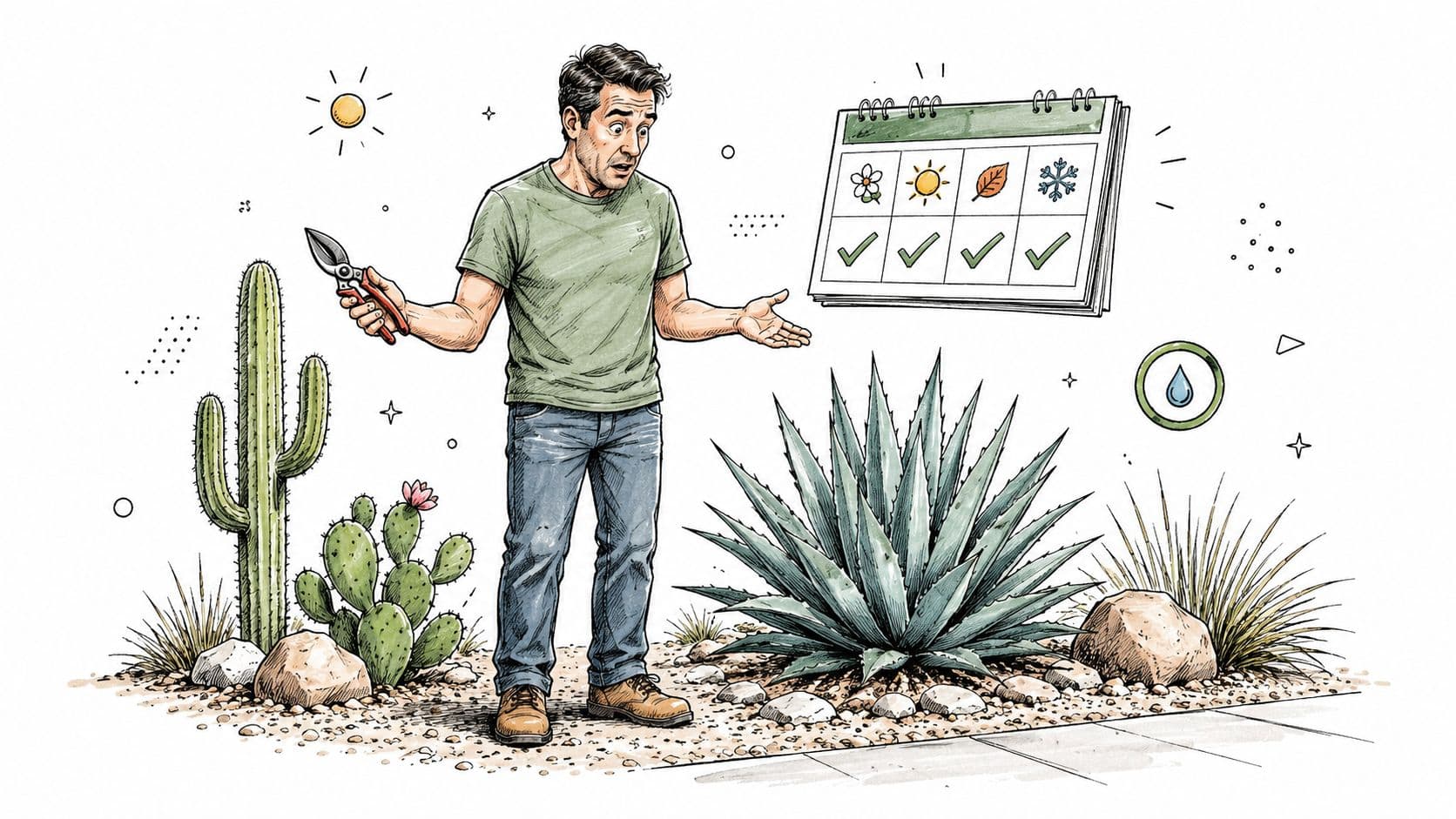
A desert landscape doesn't become easy the day the contractor removes the grass. The first establishment period demands close observation because new plants have small root systems, exposed soil loses moisture quickly, and irrigation emitters can shift or clog before roots spread into the surrounding soil. The mature yard usually requires less attention, but it still needs someone to inspect, adjust, prune, and replace components.
The establishment period sets the outcome
During the first year, don't judge a plant's drought tolerance by how quickly it survives a nursery transplant. A drought-adapted plant still needs help developing roots in its new location. Watering should be adjusted as the plant establishes, rather than left on a fixed schedule designed for the installation week.
Walk the yard after irrigation runs. Look for dry root zones, runoff crossing paths, settling around emitters, and plants that remain wet long after neighboring species have dried. Those observations tell you more than a timer display.
The work that never disappears
A mature xeriscape still has a maintenance list:
- Irrigation inspection: Check emitters, tubing, filters, valves, and timer settings. Desert heat and mineral deposits can expose weak points quickly.
- Seasonal pruning: Remove damaged, crossing, or dead growth, but don't shear every plant into a dense ball. Many desert plants look healthiest with their natural form.
- Mulch management: Organic mulch breaks down and needs replenishment. Gravel and rock mulch can migrate, collect debris, and expose bare soil.
- Weed control: Windblown seeds can germinate wherever irrigation reaches soil, including in gravel beds.
- Plant monitoring: A declining plant may signal poor drainage, an incorrect hydrozone, or an emitter problem rather than a need for more fertilizer.
Practical rule: Low maintenance means fewer recurring tasks and fewer emergency corrections. It doesn't mean abandoning the irrigation system.
The distinction matters financially and aesthetically. Homeowners who expect zero maintenance often overwater struggling plants, replace suitable species unnecessarily, or add more rock when the problem is poor zoning. A realistic plan protects the investment and keeps the yard looking intentional after the installation crew leaves.
Core Xeriscape Principles for Desert Yards
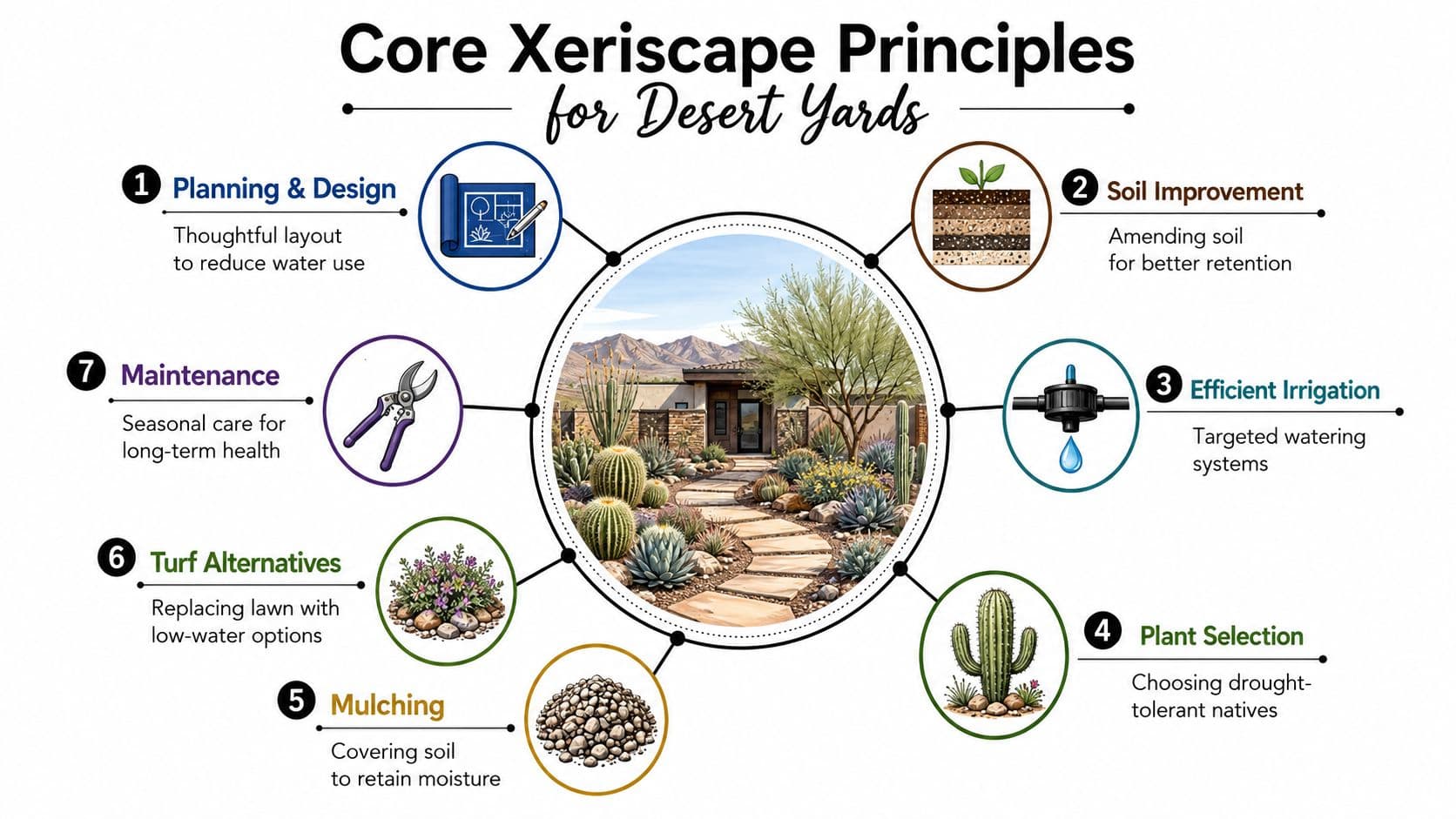
Xeriscape isn't a single visual style. It can produce a colorful pollinator garden, a shaded outdoor room, a structured modern frontage, or a spare cactus collection. The common thread is that planning, soil, water, plants, mulch, turf alternatives, and maintenance work together.
Start with the yard, not the plant catalog
A typical suburban lot might have a sunny front lawn, a shaded strip beside the house, compacted soil near the driveway, and a patio that becomes uncomfortable in the afternoon. Treating all of those areas as one planting bed guarantees conflicting needs.
Use the seven principles as a design sequence:
- Planning and design: Map sun, shade, drainage, views, access routes, utility lines, and places where people sit or walk.
- Soil improvement: Test drainage and improve the root zone where needed. Water-efficient plants still fail in soil that stays saturated or sheds water from compacted surfaces.
- Efficient irrigation: Deliver water to roots instead of spraying paths, walls, and paving.
- Plant selection: Choose species adapted to the region, exposure, mature size, and available soil.
- Mulching: Cover exposed soil to reduce evaporation, moderate temperature swings, and limit weed germination.
- Turf alternatives: Remove lawn that doesn't serve a real function, while preserving useful play or gathering areas.
- Maintenance: Build access for pruning, irrigation repairs, debris removal, and future plant growth.
A front yard conversion illustrates why no single principle carries the project. Removing turf reduces demand, but poor grading can send irrigation into the street. Dense planting can hide emitters. Rock placed against a hot wall can stress plants that would have thrived in a shaded bed. The system succeeds when each decision supports the next.
For broader ideas about arranging planting, paths, and entry features so the property's appearance benefits, the American Goose curb appeal guide offers useful design context. For a plain-language explanation of the framework, see the OutdoorBrite xeriscaping guide.
Make the framework fit your taste
Xeriscape doesn't require a yard full of bare gravel. Layered shrubs, ornamental grasses, flowering perennials, shade trees, boulders, and permeable paths can create a lush appearance while using less water than turf-heavy design. The important choice is not whether the yard looks sparse or abundant. It's whether every plant and surface has a defensible place in the site's water, heat, and maintenance plan.
Choosing the Right Drought Tolerant Plants
Plant selection determines whether a desert yard settles into a stable routine or becomes a cycle of replacement. Start with the site rather than a favorite specimen. A plant that handles reflected heat beside a masonry wall may struggle in open, windy ground, while a species that tolerates poor soil may perform badly in a compacted planting strip with slow drainage.
Regional natives and well-adapted drought-tolerant plants generally offer the strongest starting point. The EPA guidance on water-smart landscapes notes that appropriately selected plants can need little to no supplemental irrigation beyond normal rainfall once established, and adaptation can improve resistance to local pests and diseases. That can reduce follow-up inputs such as fertilizer, pesticides, and replacement planting.
Compare categories before filling the bed
| Plant Category | Water Need After Establishment | Establishment Time | Maintenance Level | Best Use Case |
|---|---|---|---|---|
| Native perennials | Low when matched to site | Gradual root development | Low to moderate, mainly seasonal cleanup | Color, pollinator habitat, and layered planting |
| Adapted succulents | Low, with careful drainage | Moderate, depending on size and exposure | Low, though damaged or crowded growth needs attention | Architectural accents and dry focal areas |
| Desert trees | Low to moderate, with deeper irrigation during establishment | Longer than small plants | Moderate, because structure and clearance matter | Shade, screening, and cooler outdoor rooms |
| Ornamental grasses | Low to moderate, depending on species and placement | Moderate | Moderate, with seasonal cutting or combing | Movement, texture, and erosion control on suitable slopes |
The table describes categories, not permission to plant randomly. Read the mature dimensions on the tag, then leave room for the plant's natural spread. Overcrowding creates a maintenance problem: branches collide, airflow declines, irrigation becomes difficult to inspect, and pruning turns into repeated size correction.
Planting test: If a plant needs constant shearing to fit the space, the design chose the wrong plant or the wrong spacing.
Use the OutdoorBrite's drought tolerant plant guide to build a shortlist, then confirm regional suitability with a local nursery, extension service, or water authority. Plant tags should answer more than whether a species is labeled drought tolerant. Check sun exposure, drainage preference, mature size, seasonal behavior, thorns, litter, and proximity to walkways.
Lush doesn't have to mean thirsty
Recent desert planting preferences increasingly favor regional, drought-tolerant, disease-resistant plants over purely decorative rock-and-cactus layouts. That direction makes practical sense. A yard can feel alive through foliage contrast, flowering cycles, shade, and varied height without recreating a lawn.
Trees deserve special scrutiny. A large canopy can improve comfort, but its mature size, root behavior, litter, and irrigation needs must fit the property. Place trees where they can provide useful shade without blocking sightlines, interfering with roofs, or forcing constant pruning around walls and utilities.
Irrigation and Soil Strategies That Actually Save Water
Installing drip tubing isn't enough to create an efficient irrigation system. The tubing may be correctly installed, yet the yard can still waste water if high-demand plants share a valve with desert shrubs, emitters sit away from root zones, or timers run on a fixed schedule through changing weather.
Research cited in a Colorado review found at least a 50% reduction in water use in one xeriscape literature review, while a Southern Nevada study reported about 41% less outdoor water use after homes converted at least 500 square feet of turf to xeriscaping (landscape water-conservation literature review). Those outcomes reflect coordinated practices, not plant labels alone.
Build zones around plant demand
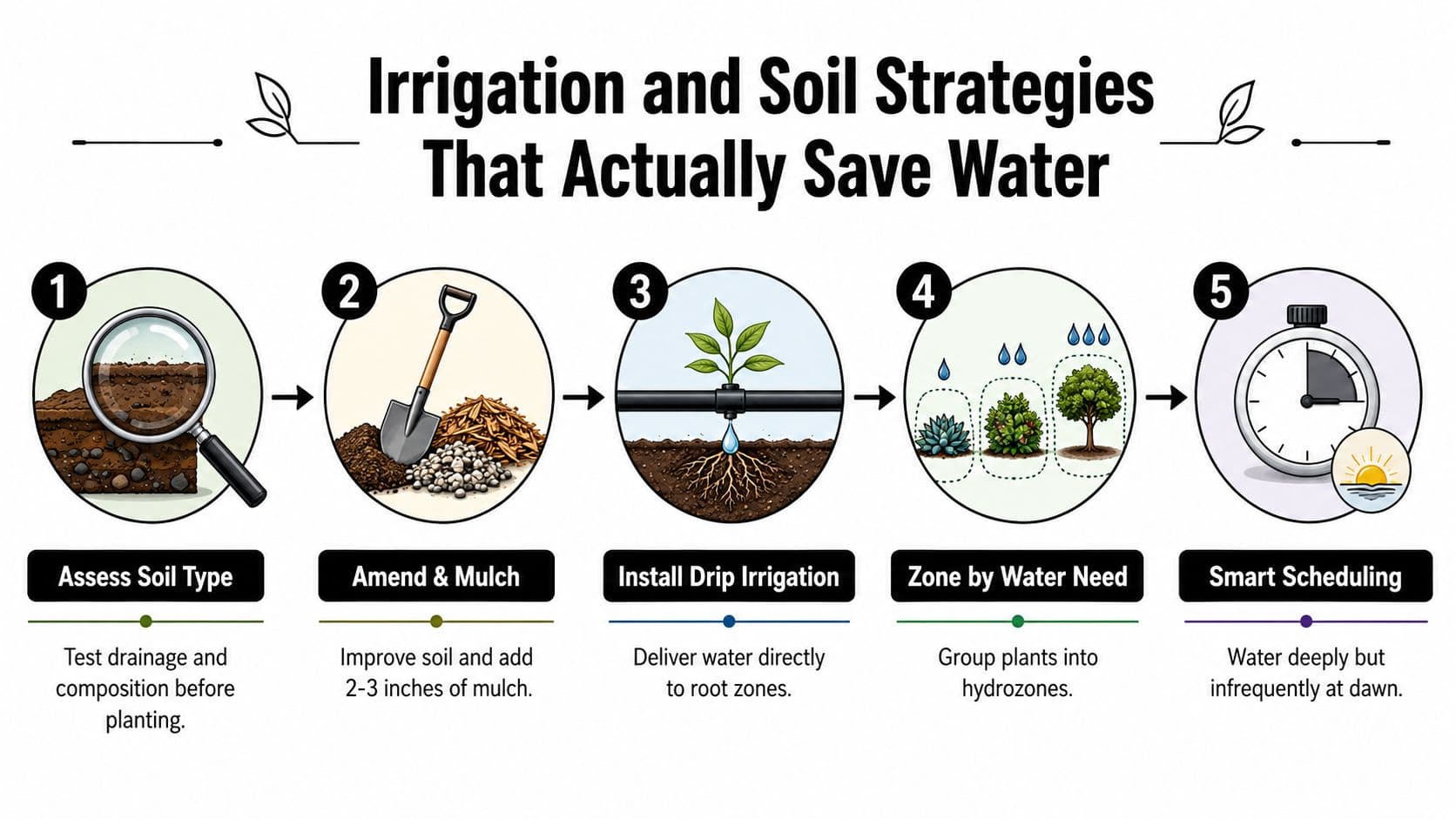
Hydrozoning groups plants with similar water needs. A shrub bed shouldn't share a valve with a small high-water planting near a patio, and a tree's deep root zone shouldn't be watered as if it were a shallow annual bed.
Use this order:
- Assess the soil: Check whether water infiltrates evenly or ponds in compacted pockets.
- Improve the root zone: Amend only where the selected plants need it. Excess organic material in a native desert setting can create a mismatch rather than a solution.
- Place emitters deliberately: Position emitters near the active root zone, then add or move them as plants grow.
- Separate valves by demand: Keep oasis planting, trees, shrubs, and very dry areas from competing on one schedule.
- Adjust by season: Use evapotranspiration information and plant condition to change run times rather than relying on last season's settings.
EPA guidance emphasizes hydrozoning, seasonal evapotranspiration scheduling, and soil improvement as integrated practices. Mulch also matters. Organic mulch suits many planting beds and gradually contributes material as it decomposes, while gravel or decomposed granite provides a durable surface where organic mulch would blow away or conflict with the intended appearance.
Deep, infrequent irrigation encourages a stronger root profile than frequent shallow wetting, but the correct interval depends on soil, plant maturity, exposure, and season. Inspect the soil and plants before changing the timer. More water isn't a substitute for a blocked emitter or poor drainage.
A contractor or homeowner can use the watering guide from OutdoorBrite as a planning reference. A short video can also help visualize installation and maintenance decisions:
Hardscape Choices and Microclimate Design
Hardscape reduces irrigated area, but a yard covered entirely in rock isn't automatically comfortable or efficient. Dark or exposed surfaces absorb and radiate heat, paths can reflect heat toward windows and plants, and the absence of canopy removes shade that would otherwise make patios and rooms more usable.
Research on desert-city conversions found grass-to-desert changes could reduce water use by roughly 19% to 21%, with water savings valued at $2.65 to $3.31 per thousand gallons, while another study noted that energy use could rise by as much as 3% after conversion (desert landscape conversion research). The trade-off is easy to miss if the only success measure is the irrigation bill.
Design an oasis zone near living areas
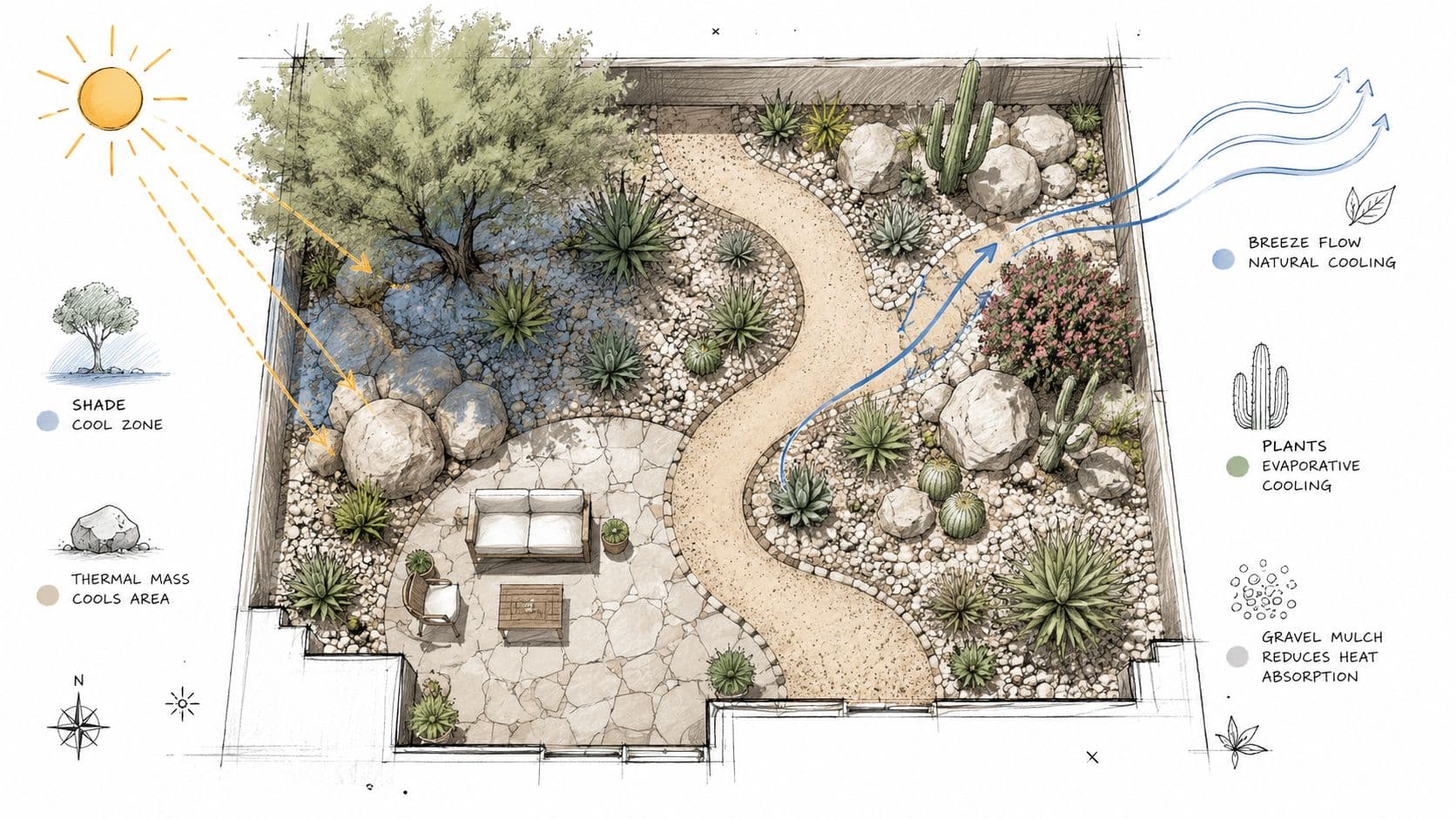
Put the most valuable shade where people spend time. A tree and carefully selected shrubs near a patio can create a cooler, more comfortable outdoor room, while the outer edges of the property transition to lower-water planting, gravel, boulders, or permeable paths.
This mixed approach is often more practical than choosing between a lawn and a barren rock field. The same research found that lightly irrigated oasis-style designs can conserve water while improving air temperatures. Shade trees also protect nearby paving and walls from direct exposure, although they require enough space for mature growth and access for pruning.
Choose surfaces for use, not just appearance
Decomposed granite, gravel, concrete, pavers, and natural stone each behave differently under sun, foot traffic, wind, and irrigation overspray. Loose materials can migrate into drains and planting beds. Concrete offers a stable walking surface but can create glare and heat. Pavers allow localized repair, while permeable layouts can help direct rainfall into planting areas when grading is handled correctly.
Avoid placing decorative rock where it will make routine work harder. Leave clear access to valves, filters, tree trunks, and pruning areas. A low-maintenance yard is easier to care for when the irrigation system and plants remain visible rather than buried beneath a continuous layer of material.
Design for comfort first: The lowest-water surface isn't always the lowest-effort choice if it overheats the patio or stresses the plants beside it.
Seasonal Maintenance Calendar for Desert Landscapes
A desert yard becomes manageable when maintenance follows plant biology and weather rather than a vague promise of occasional cleanup. The calendar below separates establishment work from mature-yard care. Local frost, monsoon patterns, wind, and heat vary, so use plant condition and soil moisture to refine the timing.
First year
New installations deserve the closest attention. Check emitters after planting, after major wind, and whenever a plant shows stress. Confirm that water reaches the root zone without pooling against a trunk or washing mulch into a path.
Use the first year to learn the yard's drainage and exposure. Keep notes on which beds dry quickly, which areas stay damp, and how plants respond after irrigation adjustments. Gradually reduce support as roots expand, but don't make abrupt changes based only on a calendar date.
Mature landscape schedule
- Winter: Inspect irrigation components, repair leaks, remove damaged growth, and assess branches that may interfere with paths or structures. Avoid pruning every plant just to make the yard look uniform.
- Spring: Check emitters as growth begins, refresh depleted mulch, remove weeds before they seed, and prune only plants that benefit from seasonal shaping or deadwood removal.
- Summer: Inspect irrigation more frequently during extreme heat, watch for clogged emitters and heat stress, and water according to plant need rather than applying one blanket schedule.
- Autumn: Reprogram timers for cooler conditions, clear fallen debris from drains and emitters, and evaluate whether any plant has outgrown its hydrozone or exposure.
An independent maintenance guide recommends inspecting irrigation every 4 to 6 weeks and refreshing mulch annually (year-round xeriscaped yard maintenance guide). Those intervals are useful starting points, especially for a new installation, but a mature system may need attention sooner after construction, extreme weather, or water-quality problems.
Prune with restraint
Desert plants often need less shaping than homeowners expect. Remove dead, diseased, or hazardous growth first. Overpruning can expose stems to intense sun, destroy the plant's natural silhouette, and create a cycle in which the plant must be corrected again the following season.
Keep maintenance access in the original design. A narrow bed packed with mature shrubs may look efficient on paper, but it turns every valve check and pruning task into a physical obstacle course.
Cost and Benefit Tradeoffs of Xeriscape Conversion
The cost of a xeriscape conversion depends on what replaces the lawn. Plant material, grading, soil preparation, irrigation changes, mulch, gravel, paving, drainage work, design, and labor all affect the final scope. A simple planting-bed conversion can be very different from a full yard reconstruction with patios, retaining walls, lighting, and mature trees.
Water savings are real, but the payback isn't identical for every property. The Southern Nevada Water Authority reported 30% average annual savings overall, or about 96,000 gallons per home per year, after turf replacement in its conversion study (Southern Nevada Water Authority conversion study). Earlier studies from the 1990s generally placed residential xeriscape savings between 25% and 42%, while a long-term Las Vegas study found xeriscaped single-family homes used 76% less water than turfgrass lawns over five years (long-term xeriscape water-use study).
Match the project size to your actual goal
A full conversion makes sense when the lawn has no practical use, irrigation is inefficient, and the household wants a decisive change. A partial conversion can be smarter when shade, play space, pets, or budget make total removal undesirable. Start with the least functional turf, especially narrow strips and awkward corners where spray irrigation often overshoots.
Phasing also reduces risk. Complete the design and irrigation logic first, then install the highest-priority zones. Avoid buying plants before you know the mature layout, because replacing overcrowded or poorly matched plants erases much of the initial savings.
Count benefits beyond the water bill
A well-designed yard can reduce mowing, fertilizer, and pesticide demands while improving shade and curb appeal. The benefit disappears, however, if decorative rock replaces every plant and makes the property hotter, or if a complicated irrigation system becomes impossible to inspect.
Before hiring a contractor, create a visual plan that shows plant masses, shade trees, hardscape, access routes, and transitions between water zones. OutdoorBrite lets homeowners upload a yard photo and generate redesign concepts using drought-tolerant plants, gravel, and hardscape, which can help compare a full, partial, or phased conversion before purchasing materials. Use the concept as a discussion tool, then verify plant suitability, drainage, irrigation, and mature dimensions with a qualified local professional.
OutdoorBrite can help you test low-water planting layouts and hardscape ideas on a photo of your actual yard before you commit to materials or installation. Visit OutdoorBrite to compare xeriscape concepts, refine the elements, and move toward a desert landscape that saves water without creating unnecessary maintenance.
See your yard reimagined
Start creating