10 Plants in English Gardens for Classic Style
Discover 10 plants in English gardens, from roses and delphiniums to boxwood and foxgloves, with planting tips, companions, and design ideas.
The most surprising fact about plants in English gardens is that the classic style is not primarily native. The National Trust reports that more than 75% of the plants in its gardens are non-native, while the UK plant palette has expanded from about 1,500 plants to more than 420,000 cultivated plants over centuries of plant hunting, breeding, and exchange, as documented in the RHS State of Gardening methodology report. English garden style is therefore a layered horticultural tradition, not a fixed list of indigenous species.
Build the look from the ground up. Evergreen structure anchors the space, shrubs and perennials create body, climbers add height, and bulbs or self-seeding plants bring seasonal movement. The ten selections below are organised by design role, from focal blooms and vertical accents to climbers, evergreen framework, and reliable fillers.
The right combination still depends on sunlight, soil moisture, drainage, mature scale, and available space. A relaxed cottage border needs different spacing and pruning from a clipped formal garden. Use the seasonal calendar near the end to plan purchases and maintenance, then adapt the combinations to a small border, medium garden, or larger layout. If you're unsure how the planting will sit in your actual yard, OutdoorBrite can help you visualise cottage or formal arrangements on a photo before you buy plants.
Table of Contents
- 1. English Roses Rosa Species
- 2. Lavender Lavandula Species
- 3. Delphiniums Delphinium Elatum Hybrids
- 4. Clematis Clematis Varieties
- 5. Hollyhocks Alcea Rosea
- 6. Box Boxwood Buxus Sempervirens
- 7. Catmint Nepeta × Faassenii
- 8. Hydrangea Hydrangea Macrophylla and Panicle Types
- 9. Foxgloves Digitalis Purpurea
- 10. Peonies Paeonia × Lactiflora Hybrids
- 10 English Garden Plants Comparison
- Turn Ten Plants Into a Garden That Feels Intentional
1. English Roses Rosa Species
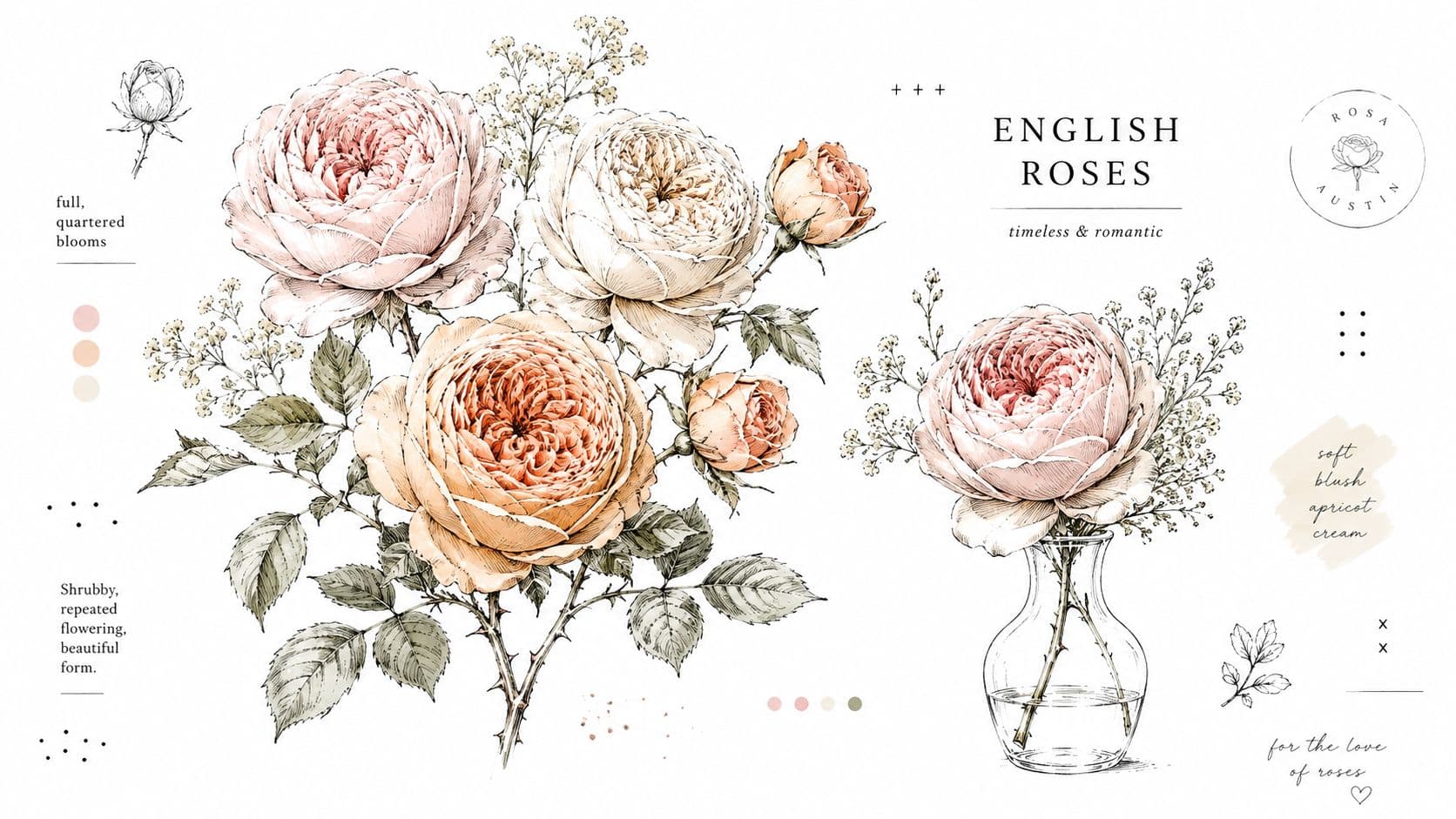
English roses provide the clearest focal point for a traditional border. Their full blooms, fragrance, and softly branching habits give a garden the romance people associate with country estates and cottage paths, while modern breeding has improved repeat flowering and garden performance compared with many older rose forms.
David Austin's ‘Lady of Shalott' works well where you want warm apricot colour with a substantial shrub outline. ‘Constance' creates a softer, old-fashioned effect. In a formal setting, use roses as repeated specimens along a path or within a geometric bed. In a cottage border, group them with loose companions so the planting feels abundant rather than displayed as isolated bushes.
Make roses read as a composition
A single rose can look accidental. Clusters of three to five plants create a stronger visual mass, particularly beside a wall, entrance, or lawn edge. Allow roughly 3 to 4 feet between plants so mature growth has room for air circulation and pruning access. The exact distance should follow the cultivar's mature spread rather than a rigid formula.
Lavender and catmint make dependable partners because their cool foliage and purple-blue flowers offset rose colour without competing for the same visual role. Delphiniums can rise behind the shrubs, while low edging plants soften bare stems. For more ideas on combining rose shrubs with other performers, explore these top flowering shrubs for curb appeal.
Practical rule: Put the rose where you want the eye to stop, then use lower plants to conceal gaps and guide the eye toward it.
Prune roses in spring, removing weak or damaged growth and shaping the plant to encourage vigorous new shoots. Deadhead throughout the flowering season if you want a tidier appearance and further blooms. Roses reward attention, but they're a poor choice for a neglected border or a cramped bed where foliage will crowd paths and neighbouring plants.
2. Lavender Lavandula Species
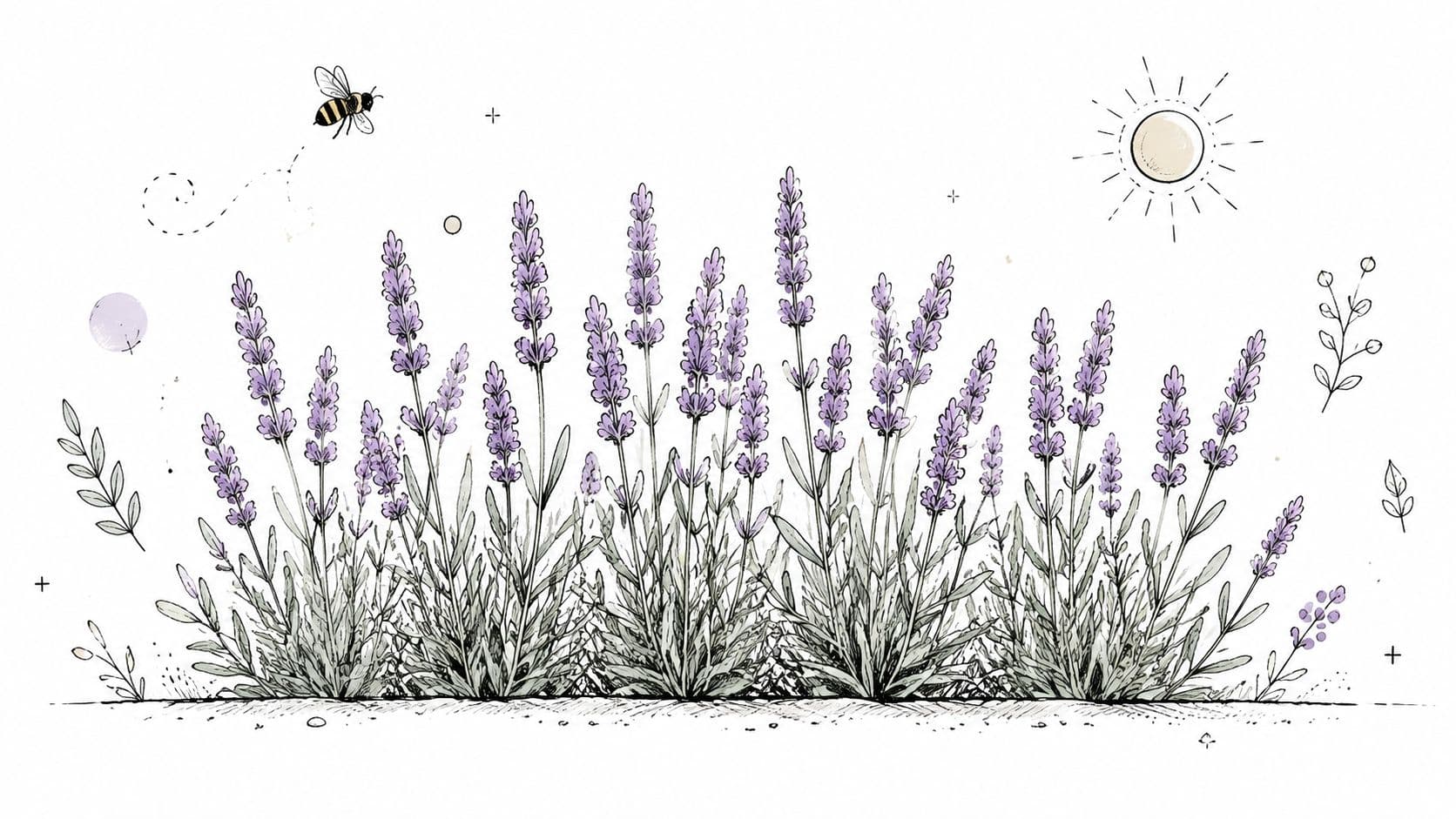
Lavender is both a visual bridge and a practical edging plant. Its grey-green foliage settles the strong colours of roses and delphiniums, while upright flower stems add rhythm along paths, steps, vegetable gardens, and sunny borders. It also contributes fragrance without needing the rich, moisture-retentive conditions that suit many cottage perennials.
For a formal effect, choose compact forms such as ‘Hidcote', known for deep purple flowers, or ‘Munstead', valued for its tidy lavender-blue appearance. Plant in drifts of five to seven rather than scattering single plants through a border. Repetition makes lavender look deliberate and gives a path or bed a stronger edge.
Give lavender the conditions it actually wants
Lavender needs sun and sharply drained soil. It struggles in heavy, wet ground, particularly where winter moisture sits around the roots. Improve drainage before planting rather than trying to compensate later with constant watering or rescue treatments. A raised bed, gravelly soil, or a position beside a warm wall can work better than a rich but waterlogged border.
Use lavender with roses for a recognisable English cottage combination, or combine it with alliums and delphiniums where you want stronger vertical contrast. It also suits a restrained Mediterranean planting scheme, which is increasingly relevant as gardeners seek plants that tolerate hotter, drier periods while coping with changing seasonal weather. The garden plans for full sun can help you test massed planting ideas before committing to a border layout.
Deadhead after flowering and prune lightly enough to retain a compact mound. Avoid cutting into completely old, bare wood because lavender may not regenerate from it. In a small garden, use a short row as edging. In a larger space, repeat the same drift beside multiple paths or beds so the design holds together.
3. Delphiniums Delphinium Elatum Hybrids
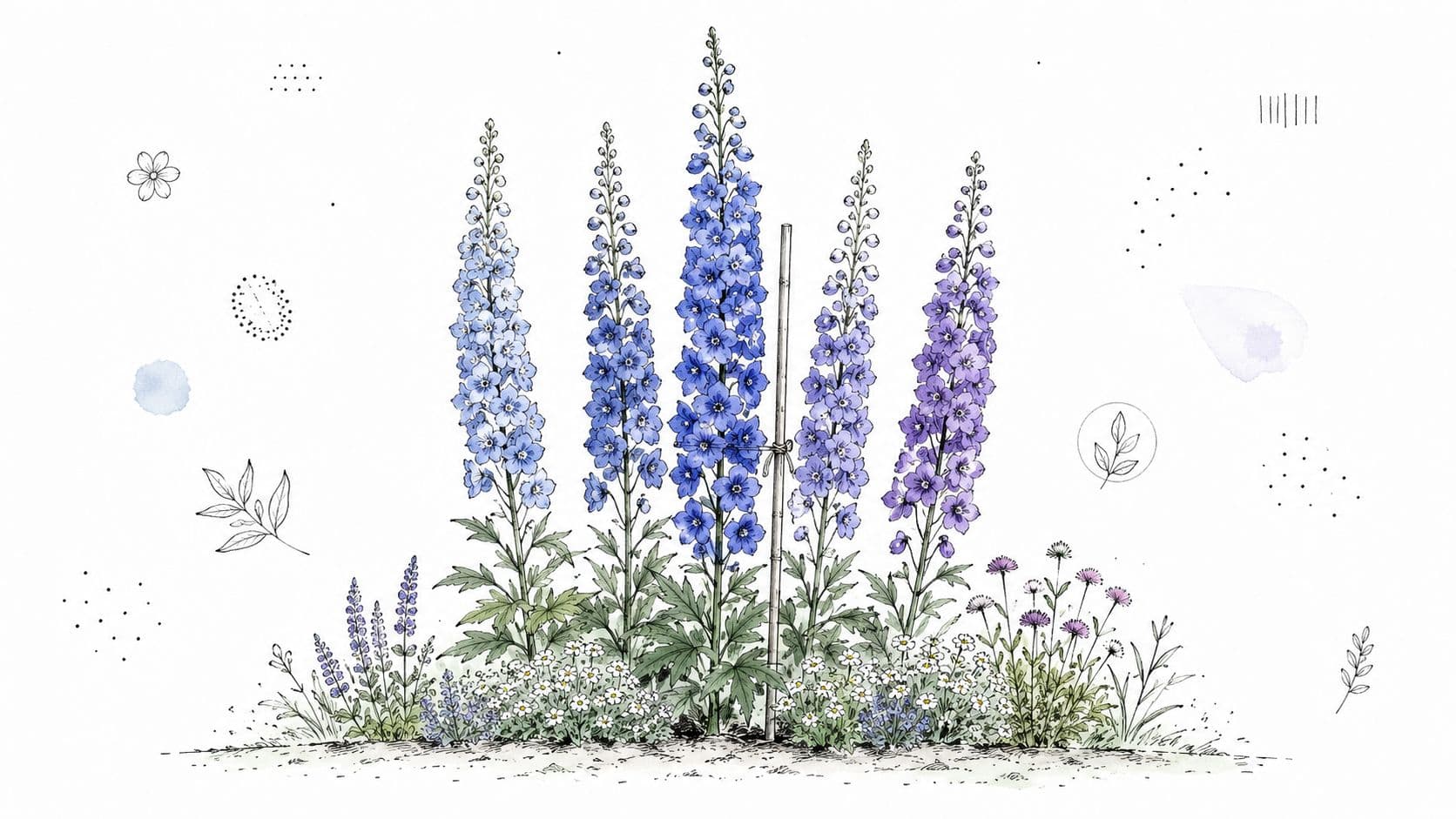
Delphiniums are vertical accents with exceptional visual authority. Their tall flower spikes bring the eye upward and give a traditional herbaceous border the layered profile it needs. Blue, purple, pink, and white forms can reinforce a restrained colour scheme, or you can use them as intense points of contrast among softer foliage.
Plant them toward the back of a border, but don't hide them against an equally tall hedge or wall. Their spikes need a contrasting background to remain legible. A group of three to five plants creates more impact than a solitary stem and makes occasional gaps less noticeable if one plant fails.
Support the height before it arrives
Delphiniums perform best in fertile, well-drained soil enriched with compost. They're hungry plants, and poor soil produces weak stems and disappointing flower spikes. Install supports early, before the plants reach full height. Waiting until a storm has flattened them usually means tying stems awkwardly and accepting a distorted display.
Pair delphiniums with roses, lavender, and catmint. The rose supplies rounded bulk, lavender creates a low edge, and catmint fills the transition between the tall spikes and the soil. In a smaller garden, use a narrow group behind a compact rose. In a large border, repeat the colour in several groups rather than creating one oversized block.
Cut off spent flower spikes to encourage secondary flowering where conditions allow. Divide established plants periodically to restore vigour, but avoid treating division as a substitute for good soil, moisture, and light. Delphiniums can be spectacular, yet they demand more feeding, staking, and attention than catmint or lavender. Choose them when height is central to the design, not just because a plant list needs a blue flower.
4. Clematis Clematis Varieties
Clematis turns a fence, pergola, arch, or wall into living architecture. It's one of the most useful plants in English gardens when ground space is limited because it adds flower and foliage vertically rather than consuming another section of border. Large-flowered types offer dramatic blooms, while viticella varieties tend to create a looser, more natural covering.
‘Nelly Moser' suits a cottage fence where large flowers can be enjoyed at close range. ‘Jackmanii' provides strong purple colour, and ‘Henryi' offers white flowers for a lighter scheme. Montana clematis can cover a wall or structure with spring interest, but its vigour needs to match the strength and available space of the support.
Match pruning to the plant
Clematis pruning groups are not interchangeable. Group 1 flowers on older growth, Group 2 combines older and new wood, and Group 3 flowers on new growth and usually accepts the hardest pruning. Check the plant label before cutting. If you prune by appearance alone, you may remove the stems carrying the next display.
Plant the root ball deeper than its container level so the plant has a better chance of producing replacement stems if clematis wilt affects the top growth. Keep the roots cool with nearby low plants, mulch, or a stone, while allowing the flowering stems to climb into sunlight. The root zone should not become waterlogged.
Train stems over sturdy horizontal wires or a trellis rather than letting them form a tangled bundle. Clematis and roses look beautiful together on a pergola, but both are vigorous and can compete for support, light, and maintenance access. In a narrow garden, choose one climber and give it a clear route. For a practical support option, this DIY trellis planter combines a planting container with a vertical framework.
A short planting demonstration can help you judge how much height a climber will add before you install a permanent support.
5. Hollyhocks Alcea Rosea
Hollyhocks create the unmistakable vertical punctuation of a cottage garden. Their tall stems suit the narrow strip beside a cottage wall, doorway, fence, or path, where a plant can rise without taking much ground space. The flowers bring nostalgic colour, but the silhouette is just as important as the blooms.
Sow seed in summer for flowering the following year, then allow some plants to set seed if you want volunteers to establish naturally. This self-sowing habit can produce the relaxed abundance associated with cottage gardens, but it can also place plants in inconvenient positions. Remove unwanted seedlings while they're small, and retain only those that strengthen the composition.
Use walls as a design partner
Hollyhocks look strongest in drifts along a wall or path rather than as isolated specimens. A brick or painted surface gives the stems a visual background and can provide some shelter from wind. Tall varieties may need staking in exposed gardens, particularly where the planting is not protected by a hedge or building.
Good drainage reduces the conditions that encourage rust, a common reason hollyhocks become unattractive before the season ends. Avoid overcrowding and remove badly affected foliage rather than allowing a disease-prone patch to dominate a narrow border. Disease-resistant selections such as ‘Nigra' and ‘Peach' can be useful where rust has repeatedly spoiled the display.
Combine burgundy or peach flowers with lavender at the front, roses at mid-level, and delphiniums farther back. In a small garden, use a short run of hollyhocks against one boundary instead of planting them throughout the space. Their biennial habit means they're not a dependable permanent framework, so pair them with evergreen or long-lived plants that maintain the bed when hollyhocks are between flowering stages.
6. Box Boxwood Buxus Sempervirens
Box provides the evergreen framework that keeps an English garden composed outside the main flowering season. Its dense foliage can form low edging, clipped hedges, parterres, knot patterns, and topiary. In formal gardens, box defines the geometry. In cottage gardens, a restrained box edge can stop generous planting from looking untidy.
Use it to outline a path, separate gravel from a border, or frame a central feature. It works particularly well with roses, peonies, lavender, and clipped shapes because the foliage supplies a quiet background rather than another competing flower. Historic English estates use box in formal hedging and topiary, while Levens Hall is known for its longstanding topiary tradition.
Treat box as structure, not decoration
Plant box in spring or autumn in well-drained soil. For a dense hedge, space plants according to the desired finished scale and the cultivar's growth habit. A tighter spacing gives quicker visual closure but increases the number of plants and the competition for moisture. A wider spacing costs less initially but leaves gaps for longer.
Clip in late spring or early summer, after the first flush of new growth has hardened. Don't shear blindly into diseased material, and clean tools between affected plants. Box blight and pest problems can turn a promising formal edge into a maintenance burden, especially in damp, poorly ventilated positions. Monitor foliage regularly and replace failing sections rather than allowing a single problem to spread through an entire parterre.
Where box health is unreliable, consider alternative evergreen edging suited to the site, but don't expect every substitute to clip or recover in the same way. Formal planting depends on consistent outlines. Before buying, use OutdoorBrite's formal garden style to test whether a clipped edge suits the proportions of your actual bed, path, or front garden.
7. Catmint Nepeta × Faassenii
Catmint is the reliable filler that makes a border look generous without demanding the same level of attention as roses or delphiniums. Its soft grey-green foliage and purple-blue flowers spread into a loose mound, linking taller plants to the edge of the path. It provides colour, movement, and textural softness while handling sunny, relatively dry positions once established.
‘Walker's Low' is useful where you want a restrained plant, while ‘Six Hills Giant' makes a broader statement in a larger border. Check the expected spread before planting. A plant that looks modest in a nursery pot can quickly lean into a path if several are placed too close together.
Cut it back for a second act
Deadhead catmint after the first flush. Shearing the spent stems encourages a neater mound and can produce fresh foliage and further flowers. Cut it back hard in spring to remove winter-tired growth, then divide established clumps when they become congested or lose their shape.
Plant in drifts of five to seven for a strong ribbon of colour. Catmint is especially effective beside roses, where it hides lower stems and softens the transition to gravel or lawn. Lavender and salvias extend the cool-toned palette, while taller delphiniums create a clear height contrast.
Catmint is a better answer than another showy perennial when the border needs continuity, not another focal point.
It suits small gardens because it can edge a path and support several nearby plants without becoming a dominant shrub. In larger gardens, repeat it through multiple borders to unify separate rooms. It's also a practical choice for gardeners responding to hotter, drier growing conditions, although no plant is drought-proof in its first season or in poor soil. Water new plants until roots establish, then reduce intervention as the foliage shows steady growth.
8. Hydrangea Hydrangea Macrophylla and Panicle Types
Hydrangeas give a cottage garden substantial shrub structure where roses may be too exposed or lavender too dry. Mopheads and lacecaps provide broad flower heads, while the foliage fills the middle layer of a border. They're particularly valuable in part shade, a common condition beside walls, fences, mature trees, and north-facing boundaries.
Lacecaps often look more integrated into a mixed border because their flatter flower structure leaves room for surrounding foliage to show. Mopheads make a bolder statement and can suit a dedicated shrub group or the corner of a lawn. Panicle hydrangeas are better candidates for sunnier positions and somewhat drier soils than many macrophylla types, though site preparation still matters.
Plan for moisture and mature volume
Plant hydrangeas where soil remains consistently moist without becoming waterlogged. Afternoon shade can protect them from harsh heat, especially in warmer climates, while morning light supports flowering. A shrub that is squeezed between paving and a wall may suffer from reflected heat and limited root moisture, even if the border looks attractive on paper.
Prune in late winter before new growth begins, following the requirements of the type you've selected. Remove weak or crossing stems, preserve the framework that carries flowers, and avoid cutting every stem to the same height unless the cultivar calls for it. Deadheading in spring can preserve a tidy look and allow the shrub to carry its old flower heads through winter.
Pair hydrangeas with hostas, ferns, and astilbes in a shaded cottage border. In a medium garden, use one shrub as an anchor beside a seating area. In a larger layout, repeat lacecaps through a woodland edge. For accurate moisture planning, consult this complete plant watering schedule guide, then adjust it for rainfall, soil, exposure, and the plant's establishment stage.
9. Foxgloves Digitalis Purpurea
Foxgloves bring vertical drama to places where sunlight is limited. Their spotted tubular flowers rise above broad foliage and create the woodland, cottage-garden atmosphere that many gardeners want from plants in English gardens. They're especially effective where a border transitions into trees, hedges, or a shaded wall.
Sow seed in summer for flowers the following year. Foxgloves are often biennial, so the first plant may finish after flowering while seedlings carry the display forward. Let some seed fall for a naturalised effect, but remove volunteers that crowd valuable perennials or appear in unsafe positions.
Hide the stems with a lower layer
Foxgloves look more convincing in drifts than as single specimens. Plant them behind hostas, ferns, and other shade-tolerant perennials so lower gaps are concealed. The tall stems then appear to rise from the border rather than standing on bare legs.
‘Apricot' offers a warm, muted colour, while ‘Pam's Choice' provides a stronger contrast through its marked flowers. Their colour can sit comfortably beside old roses, hydrangeas, and dark foliage, but avoid filling a small bed with too many tall spires. A few well-placed stems are enough to create height without blocking windows or overwhelming a narrow path.
Foxgloves are poisonous if eaten, so position them thoughtfully around children and pets and avoid placing them beside edible crops where confusion is possible. Wear gloves when handling plants if your skin is sensitive, and remove unwanted seedlings before they mature. The trade-off is clear: foxgloves offer exceptional atmosphere and shade performance, but their biennial rhythm and household safety requirements make them less suitable as the only vertical element in a family garden.
10. Peonies Paeonia × Lactiflora Hybrids
Peonies are investment plants for a permanent border. Their spring flowers are large, fragrant, and unmistakably romantic, while the foliage remains useful after flowering. Unlike biennials, they can become dependable anchors that return in the same position year after year when planted correctly and left undisturbed.
Plant bare-root peonies in autumn in fertile, well-drained soil. Set the growth eyes only 1 to 2 inches below the soil surface. Planting too deep is a common reason for poor flowering, so resist the temptation to bury the crown under a thick layer of soil or mulch.
Choose flower form for maintenance
Double-flowered peonies often need support because heavy blooms pull stems toward the ground after rain. Install a support ring in spring as shoots emerge, before the foliage becomes dense. Single and semi-double forms such as ‘Misaka' and ‘Nippon Gold' generally give a lighter profile and can reduce the need for staking.
‘Sarah Bernhardt' provides a late pink display, while ‘Coral Charm' brings coral colour earlier in the sequence. Use peonies as focal plants with lavender or catmint around their base, then add roses or delphiniums nearby for a longer season of interest. Their flowering window is relatively concentrated, so surrounding foliage and later-flowering companions prevent the border from becoming visually empty afterward.
Young plants may take three to four years to reach flowering maturity. Division is rarely necessary, and moving an established peony can set it back. In a small garden, choose one carefully positioned specimen beside a path or seating area. In a larger garden, repeat peonies through a formal border, but leave enough room for mature foliage and air movement.
10 English Garden Plants Comparison
| Plant | Implementation Complexity 🔄 | Resource Requirements | Expected Outcomes ⭐ / 📊 | Ideal Use Cases | Key Advantages / Tips ⚡ / 💡 |
|---|---|---|---|---|---|
| English Roses (Rosa species) | Medium, regular pruning & deadheading; moderate skill | Full sun (6+ hrs), consistent water while establishing, moderate fertility, space 3–4 ft | ⭐⭐⭐⭐, repeat blooms, strong fragrance, seasonal focal interest; height 3–6 ft | Cottage, traditional borders, specimen or hedge | ⚡ High visual impact; 💡 plant in clusters 3–5, prune in spring, combine with lavender |
| Lavender (Lavandula) | Low, simple annual pruning, low upkeep | Full sun, very well‑draining soil, drought tolerant, low fertility | ⭐⭐⭐, long summer spikes (Jun–Sep), attracts pollinators; height 1–3 ft | Borders, hedging, containers, Mediterranean or cottage schemes | ⚡ Very low maintenance; 💡 plant drifts of 5–7, prune after flowering |
| Delphiniums (Delphinium elatum) | High, staking, pest control, climate sensitivity | Rich, well‑draining soil, regular moisture, staking, slug/snail management | ⭐⭐⭐⭐, dramatic vertical spikes (4–6+ ft), strong focal impact; short-lived perennial (3–5 yrs) | Back of borders, cottage borders, cut‑flower beds | ⚡ Striking vertical color; 💡 stake early, set behind lower plants, divide every 3 yrs |
| Clematis (large‑flowered & viticella) | Medium, pruning group knowledge and training required | Roots shaded, tops in sun, support structure (trellis/pergola), 1–2 yr to establish | ⭐⭐⭐, extended flowering depending on variety, vertical coverage; height 8–25+ ft | Pergolas, fences, walls, paired with roses | ⚡ Versatile vertical plant; 💡 choose correct pruning group, plant deeper, provide root shade |
| Hollyhocks (Alcea rosea) | Low–Medium, biennial timing and seed management | Full sun to part sun, well‑draining soil, sow for year‑2 blooms, staking for tall forms | ⭐⭐⭐, tall spires (4–8 ft) in year 2, nostalgic cottage effect, self‑seeding | Cottage walls, pathways, tall back borders | ⚡ Economical from seed; 💡 sow summer for next year, allow controlled self‑seeding, choose disease‑resistant varieties |
| Box/Boxwood (Buxus sempervirens) | High (for formal shapes), regular clipping and disease monitoring | Part shade tolerant, well‑draining soil, slow growth, long‑term commitment | ⭐⭐⭐⭐, year‑round evergreen structure, long‑lived (decades to 100+ yrs) | Formal hedges, topiary, parterres, defined garden rooms | ⚡ Durable structural element; 💡 space 12–18" for hedges, clip late spring, select blight‑resistant cultivars |
| Catmint (Nepeta × faassenii) | Low, easy care, occasional division | Full sun, well‑draining soil, drought tolerant once established | ⭐⭐⭐, long bloom (May–Sep), airy texture, attracts pollinators; height 12–24 in | Cottage borders, low‑maintenance and pollinator gardens | ⚡ Long‑blooming & low maintenance; 💡 deadhead to extend flowering, divide every 3–4 yrs |
| Hydrangea (macrophylla & paniculata) | Medium, pruning and moisture management | Part‑shade preferred, consistent moisture, space for shrub (3–8 ft) | ⭐⭐⭐⭐, large mophead/lacecap blooms Jul–Oct, strong late‑season structure | Part‑shade borders, specimen shrubs, cut‑flower plantings | ⚡ Big seasonal presence; 💡 choose panicle types for sun, prune late winter, pair with shade perennials |
| Foxgloves (Digitalis purpurea) | Low–Medium, biennial lifecycle and volunteer control | Part‑shade, moist well‑draining soil, allow self‑seeding, caution: toxic | ⭐⭐⭐, 3–5 ft spikes in year 2, woodland romantic effect, pollinator‑friendly | Woodland edges, shady cottage borders, naturalized drifts | ⚡ Easy & economical from seed; 💡 sow summer, manage volunteers, keep away from children/pets |
| Peonies (Paeonia × lactiflora) | Medium, correct planting depth, slow establishment | Full sun (or part sun), fertile well‑draining soil, space, occasional staking for doubles | ⭐⭐⭐⭐, spectacular fragrant blooms (May–Jun), extremely long‑lived (50+ yrs) | Focal perennial beds, formal and cottage borders, long‑term plantings | ⚡ Long‑term investment; 💡 plant eyes 1–2" below soil, choose singles/semi‑doubles to reduce staking |
Turn Ten Plants Into a Garden That Feels Intentional
A convincing English-style garden comes from assigning each plant a job. Start with one structural choice, usually box for a formal edge or a substantial hydrangea for a softer shrub layer. Add one or two focal plants, such as English roses or peonies, then introduce a climber or tall perennial for height. Finish with lower companions such as lavender and catmint, using foxgloves or hollyhocks where you want self-sown movement and seasonal surprise.
The design should still work when no flowers are open. Box maintains the outline, hydrangea supplies foliage, peony leaves hold the middle of the border, and lavender creates a grey-green edge. Roses, delphiniums, clematis, hollyhocks, foxgloves, and catmint then provide changing colour and height rather than carrying the whole garden alone.
Seasonal planning prevents avoidable gaps and rushed maintenance. Plant peonies in autumn, and plant box and lavender in spring or autumn when soil conditions are workable. Sow hollyhocks and foxgloves in summer for flowers in a later season. Stake delphiniums and double peonies as growth emerges in spring, prune roses and suitable hydrangeas at the correct seasonal window, cut back catmint after flowering, and deadhead roses, lavender, and delphiniums as needed.
Scale the planting to the space
A small border needs restraint. Use a short box edge or one compact evergreen framework, one rose or peony as the focal plant, a single clematis on a fence, and repeated catmint or lavender along the front. Foxgloves can add height, but keep them away from windows and narrow access routes.
A medium cottage garden can support a rose group, a hydrangea in part shade, a clematis on a trellis, and repeated drifts of lavender and catmint. Add delphiniums or hollyhocks at the rear, but leave clear paths for staking, pruning, and deadheading. A larger formal layout can repeat box-edged rooms, roses, peonies, and clipped shapes, then use climbers to connect walls, arches, and pergolas.
Check the site before buying
Match every plant to light, drainage, moisture, mature size, pruning needs, and household safety. A traditional plant isn't automatically the right plant for a wet corner, dry gravel bed, exposed balcony, or family garden. The history of English gardening shows that introduced plants became central to the style, and current planting decisions can be practical rather than bound by nostalgia. The National Trust and RHS background on cultivated plant diversity makes that broader context clear, while recent UK trend coverage points toward combinations that tolerate wetter winters and hotter, drier growing periods, including naturalistic perennials and plants from Mediterranean, prairie, and desert-adapted palettes in the UK garden trends for 2026 projection.
Before you order plants or alter hardscape, use OutdoorBrite to compare cottage and formal concepts on a photograph of your actual space. Test the position of a rose, the height of a delphinium group, the spread of a hydrangea, or the visual weight of a box edge. A planting plan should look attractive, but it should also leave room for mature growth, maintenance access, and the way your household uses the garden.
OutdoorBrite lets you upload a photo of your garden and generate realistic cottage, formal, and other planting concepts before you spend money on plants or hardscape. Visit OutdoorBrite to compare planting arrangements on your actual yard and refine the direction that best suits its size, light, and style.
See your yard reimagined
Start creating